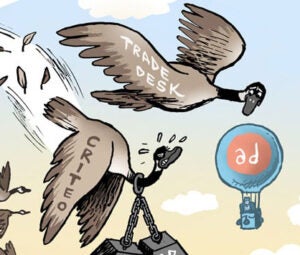
Sonos Says ‘Sooooo … No’; Competing For Coca-Cola’s Crown
Sonos’s woes ding The Trade Desk; WPP’s AI investments may not keep Coke from switching to Publicis; and feminized Swedish tobacco products find an audience in the US manosphere.
Publicis Groupe continued its years-long streak of acquiring non-agency ad tech and data sales companies with the announcement on Thursday that it has bought Lotame, a data management system for advertisers and publishers.
Publicis looks to capitalize on potential fallout from the Omnicom/IPG merger; Google Cloud is seeing an influx of ad sales talent; and Spotify advises investors to be patient with its growing programmatic ads biz.
Criteo’s Brian Gleason shared how it is working with agencies to capitalize on curation and measurement opportunities in retail media and CTV.
Enjoy this weekly comic strip from AdExchanger.com that highlights the digital advertising ecosystem …
Mohegan and LiveRamp partner on a “casino media network;” Criteo hires its new CEO from the agency side; and Publicis Groupe consolidates
Morgan Pomish, head of innovation solutions at Digitas, shares what brand leaders and advertisers should consider before jumping on a tech bandwagon.
2024’s most popular guest columns offer a snapshot of an industry in flux – and one that’s grown cynical due to repeated promises of unrealized change.
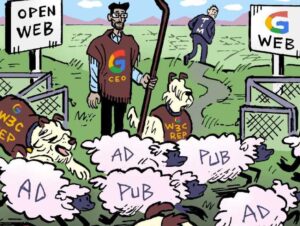
Rival browsers raise an objection to Google being forced to sell Chrome; ad agencies pivot to software and services; and people are turning to chatbots instead of search, with error-filled results.
“It’s going to be harder for [indie agencies] to compete,” said Rob Rivenburgh, the CEO of Mars United, who also now leads the Publicis Commerce global group.
IPG buying Node continues the trend of agencies trying new business models; IPG and Publicis support principal-based buying while WPP opposes it; and billionaire owners believe controlling their newsrooms will win back public trust.
Why the agency pivot to alternative payment models is good for M&A; Zeta Global responds to a short-seller’s explosive claims; and X sees a mass exodus after the election.
In today’s newsletter: Google Demand Gen is the industry’s latest over-attribution controversy; data from third-party brokers might not be worth it; and The Trade Desk launches a CTV operating system.
Sensodyne wanted to do more than just get a sense of whether people were paying attention to its TV ads – it also wanted to optimize for attention.
Many of Publicis’ fastest-growing and most strategic business units – including CitrusAd, Profitero, Epsilon and Conversant – earn a large chunk of their revenue from other agencies. Is that a problem?
Advertising is still Reddit’s meal ticket – but until its ad revenue tops the $2 billion per year mark, it can’t really be considered competitive with other social platforms.
With attribution-based platforms taking over, there aren’t many ways for an advertiser to bet (and win) big. Plus, what about the Google advertising ID?
Some brands are turning away from larger media agencies in favor of smaller, independently run shops. Plus, licensing sports content is Reddit’s next revenue diversification play.
While agencies push for more programmatic buying options, publishers want to maintain control in TV ad buying negotiations – and particularly over their “premium” content.
Cookie loss is happening, even if it doesn’t feel imminent, and there’s no point in procrastinating, according to Sisi Zhang, chief data and analytics officer at Publicis-owned Razorfish.
In today’s newsletter: Big Tech may be best positioned to take advantage of generative AI’s ad tech uses; ad tech leaders waffle on investing in Chrome’s Privacy Sandbox; Google faces an innovator’s dilemma.
In today’s newsletter: Ad tech data can compromise Americans; Reddit has a hard road ahead revenue wise; CTV ad-buying startup tvScientific raises a funding round.
AdExchanger consulted with agencies about how they are evaluating new generative AI tools for marketing use cases as well as the tech companies behind these startups breaking new ground in generative AI.
The results of Haleon’s recent test of Adelaide’s attention scoring solution within Amazon’s DSP could strengthen the case that low-attention inventory isn’t worth buying.
“Standard advertising services” shouldn’t include recording intimate patient-doctor conversations to help drug companies guide doctors on how to push opioids.
In today’s newsletter: The FTC is suing Kochava (again); marketers are complacent about third-party cookie deprecation; and Publicis Health pays the piper for its role in the opioid epidemic.
DEI is increasingly coming under scrutiny from activists and politicians. But some minority-owned and -targeted media and advertising businesses are thriving despite the increasingly fraught atmosphere around DEI initiatives.
Here’s today’s AdExchanger.com news round-up… Want it by email? Sign up here. What’s In Store? Netflix’s latest effort to push ads onto subscribers is – you guessed it – a retail bundle. The company is piloting a new package deal with French retailer Carrefour, Bloomberg reports. Customers in the French cities of Bordeaux and Rouen […]
Marketers will fold generative AI into more of their creative processes and ad creative in 2024.
Here’s today’s AdExchanger.com news round-up… Want it by email? Sign up here. Heads Will Roll CEO Kirk McDonald is out at GroupM North America, Insider reports. WPP’s revenue growth tumbled in the US this year, which the company blamed on tech clients curtailing their ad spend. GroupM North America has fared particularly poorly, putting GroupM, […]