
Jeff Green On Why Everyone’s Up OpenPath’s Pipes; Amazon Sues Perplexity’s Shopper Bot
Jeff Green doubles down on OpenPath’s value; Amazon wants Perplexity to disable agentic shopping; and the creator economy takes on political fundraising.
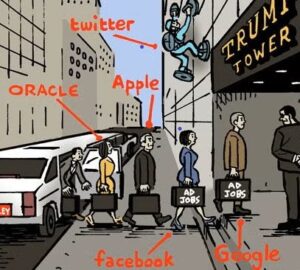
Jeff Green doubles down on OpenPath’s value; Amazon wants Perplexity to disable agentic shopping; and the creator economy takes on political fundraising.

The divergence between the DSPs reveals shifting buy-side priorities. Advertisers have grown wary of how The Trade Desk earns margin, where its algorithm steers inventory and how these strategies compete with buyer goals.

PubMatic says adoption of its AgenticOS, combined with strong CTV and mobile demand, set the stage for double digit growth in the second half of this year.

What’s the deal with viral apps?; Dentsu and WPP are off of OpenPath; and AI coding has its downsides.

Supply-path optimization may not be the trendiest three-letter acronym in ad tech anymore, but the SPO trend is still playing out – especially in the CTV category.

Two sources at ad tech platforms that observe programmatic bidding patterns said they’ve seen Omnicom agencies shifting spend from The Trade Desk to Amazon DSP in Q3. The Trade Desk denies any such shift.

In July, PubMatic saw a temporary drop in ad spend from a “large” unnamed DSP partner, which contributed to Q3 revenue of $68 million, a 5% YOY decline.

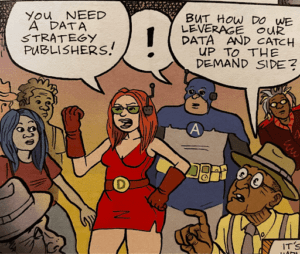
Traffic-starved publishers are hopeful that their long-undervalued audience data will fuel advertising’s automated future – if only they can finally wrest control of the industry narrative away from ad tech middlemen.

Our industry has done a terrible job rewarding publishers for monetization choices that align their supply to quality and outcomes vs. short-term yield bumps. But is it overly optimistic to think The Trade Desk’s recent moves prove that’s changing?
A peek inside PubDesk, The Trade Desk’s new dashboard that gives sellers detailed info on how buyers value their inventory.

With its PubDesk wrapper, The Trade Desk is putting roots into ad tech’s sell side. But publishers are wary.
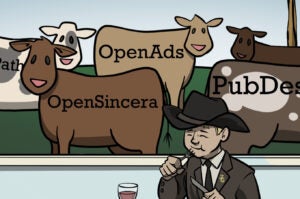
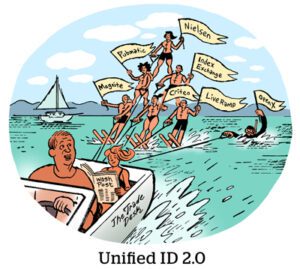
Enjoy this weekly comic from AdExchanger.com that highlights the digital advertising ecosystem …

TTD says OpenAds is not just a reaction to Prebid’s TID change, but a new model for fairer, more transparent ad auctions. So what does the DSP need to do to get publishers to adopt its new auction wrapper?
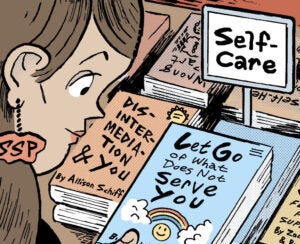
GAM’s dinner with ad agencies sparked speculation that Google is preparing to spin off its bundled SSP and ad server as a remedy to its ad tech monopoly. But Google says it’s just part of the trend of SSPs going direct to buyers.
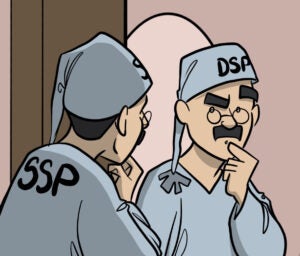
TTD turns its back on SSPs; scientists are finding a home on Bluesky; and a hacker used Anthropic’s Claude to plan a cybercriminal operation.

Is TTD forcing agencies to adopt the new Kokai interface despite claims they can still use the interface of their choice? Here’s what we were able to find out.

In 2017, Mediaocean CEO Bill Wise predicted the demise of supply-side platforms. The category survived, but he’s sticking to his theory that pureplay SSPs are a thing of the past. Plus: An update on Mediaocean’s $550 million Innovid acquisition and Wise’s counterpoint to recent criticisms of The Trade Desk.

After adopting OpenPath, Freestar pubs now see 3x higher inventory fill rate from The Trade Desk demand and 27% higher programmatic revenue from these buyers.

An Adalytics report released Friday details numerous instances of brands serving ads to known bots that appear on the IAB Tech Lab’s International Spiders and Bots list and TAG’s Data Center IP List.
Warner Bros. Discovery officially launched OpenPath last week, with the goal of driving demand for its news sites’ display inventory. But for now, CTV is not part of the integration.

The first half of this decade has left publishers reeling from a pandemic jab and an AI uppercut that rearranged our reality and knocked us to our knees. Here’s how pubs and their ad tech partners can punch back in the years ahead.

Curation is a reaction to programmatic’s worsening queries-per-second problem, says Permutive’s Joe Root. DSPs are biased toward impressions that have an identifier attached, so SSPs are using curated deal IDs as a stand-in for third-party cookies.

Ari Paparo’s Marketecture acquires another ad-tech publication; Spotify is launching an SSP; and CPG brands turn to “chaos packaging” to stand out among the crowd.

In today’s newsletter: Publishers fear they’ll be excluded from The Trade Desk’s “premium internet”; buyers weigh in on Netflix’s plans to offer an ad server; and PayPal launches an ad network and data brokerage.

What is Google’s true motive in launching the Chrome Privacy Sandbox? An optimist might give Google credit for not dropping the hammer like Apple did. But it’s hard not to be a little cynical about Google’s goals, according to Samantha Jacobson, chief strategy officer at The Trade Desk.

There are other motivating factors for crossing the LUMAscape, besides increased efficiency and less ad fraud. These businesses are trying to position themselves to win in a transformative era that will make or break many ad tech companies.
Bonbon gives users rewards – such as discounts or chances to win merchandise – for setting up email registrations with publishers. Now The Trade Desk’s OpenPass will include that same rewards functionality.

The past decade has been tumultuous for supply-side platforms. But SSPs will be fine, according to SSPs. They’re simply evolving.

Disney just took the next stop on its journey to automate as much of its ad sales as possible by the end of this year with the release of DRAX Direct, an expansion of its real-time ad exchange.

Third-party cookie deprecation creates an opportunity for publishers to increase inventory value, efficiency and partnerships in the open exchange. Here are some efficiency initiatives that should make your inventory more valuable to advertisers.