
Consumer Trust Shouldn't Be A ‘Differentiator’ For Your Business
Why should establishing consumer trust be a differentiator – and wouldn’t it be great if that was just every company’s MO?
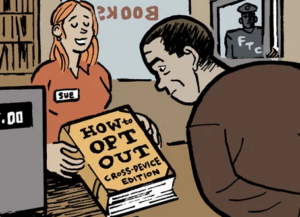
Why should establishing consumer trust be a differentiator – and wouldn’t it be great if that was just every company’s MO?

What exactly are joint business partnerships? Plus, AI chatbot responses may be susceptible to Russian propaganda.

The IAB predicts what privacy laws might be passed by the new congress; AI-generated newsletters are competing with local news; and the IAB Tech Lab ramps up production of new OpenRTB specs.

Sen. Ron Wyden shared his stance on a federal privacy law, consumer data brokers and, for good measure, his thoughts on Meta CEO Mark Zuckerberg cozying up to President Trump. (“I thought it was god awful,” he said.)
AI-generated slop content is growing exponentially online. Plus, publishers and new organizations are strategizing for a post-TikTok future.

The IAB gave us new retail media standards for Christmas. But will the industry actually adopt them? Plus: how AI will be used in advertising in 2025.

The in-game advertising market’s stagnation is both unsurprising and frustrating. The onus is on the gaming industry to make gaming an essential channel for advertisers, rather than a nice-to-have.

Brands’ relentless drive for efficiency in media spending has far-reaching consequences that have significantly reshaped the industry and perpetuated longstanding issues with media quality.

The deal is a “platform investment,” in which Inverness Graham sees Alliant as a foundation to build on, potentially through further acquisitions.
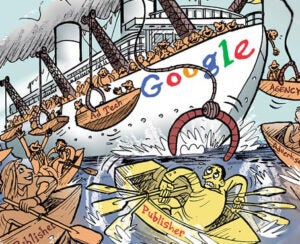
Retracing DPG Media’s journey to disentangle itself from the influence of Google’s ad platform and compete for direct ad budgets.
Adelaide may become the first vendor to receive accreditation for an attention metric. Plus, the IAB is leading a lawsuit against the FTC.
Freestar adopted a new approach to curation developed by Audigent that gives buyers a priority lane to publisher inventory with higher viewability and attention scores than most open-auction inventory.
Outbrain is trying to shed its chumbox rep by bringing social media-style vertical video to mobile publishers on the open web.

During certain periods this year, advertisers blocked more than 40% of The Washington Post’s inventory over brand safety concerns.

Randomized controlled trials are the best source of evidence of cause-and-effect relationships, including advertising’s impact on sales. Imagine the potential for conducting geo experiments using ZIP codes instead of DMAs.

For two days, retail media luminaries gathered to discuss how best to expand the category’s effectiveness (and budgets) for brands and advertisers – without, of course, overlooking how the end goal consumer will react.

If attention is treated like viewability 2.0, high or low attention could become a blanket requirement for a campaign and hinder performance.

The IAB’s annual advertising outlook has mostly rosy news. Plus, can sludge videos be wielded for good – or, at least, for effective political organizing?

The initiative will kick off this month, and the IAB and MRC expect to have draft accreditation guidelines open for public comment by Q1 2025.

Despite setbacks, the mobile advertising industry has not only recovered but thrived post-ATT. What can overcoming the impact of ATT teach us about overcoming the latest uncertainty around the future of the cookie?

The industry shouldn’t let Google’s repeated delays slow down the progress we’ve made toward a more privacy-friendly advertising ecosystem. The need for innovation and collaboration is greater than ever.
Business outcomes are now the most important KPI for determining success with digital video, according to the IAB’s annual report.

With a multifaceted approach, companies can manage the risks while reaping the rewards of more consumer-conscious ad targeting strategies.

The Global Media Sustainability Framework, which was announced Monday during a panel at Cannes, saw collaboration across all parts of the industry. Supporters include the 4As, IAB, Dentsu, Google, GroupM, L’Oréal, Omnicom, Publicis Groupe, Mastercard, Meta and Unilever.

Even if the industry finds a way to replace the cookie, it won’t matter if publishers no longer have traffic to monetize.

Appealing to advertisers’ better angels is never going to bring ads back to the news. But appealing to their bottom lines might.

The IAB projects digital video ad spend will rise to $63 billion in 2024, representing a 16% increase from last year. Of the three video ad categories the report breaks out (social and online video and CTV), the clear winner is social video.

In today’s newsletter: President Joe Biden signs the TikTok ban into law; upscale grocery and convenience store chain Foxtrot closes down; and IPG has a rough Q1.

US digital ad revenue grew at a slower rate in 2023 compared to 2022, hampered by inflation, climbing interest rates and advertising industry layoffs, according to the IAB/PwC Internet Advertising Revenue Report released Tuesday.

In today’s newsletter: The FTC finalizes order barring Outlogic from selling location data; even Snap is sending publishers less referral traffic; Chase Bank’s advertising (and ad tech) opportunities.