
How The Minnesota Star Tribune Protects Advertisers While Covering ICE Crackdowns
Amid a federal crackdown and local unrest, Minnesota’s biggest newsroom is proving brand safety and hard news can coexist.

Amid a federal crackdown and local unrest, Minnesota’s biggest newsroom is proving brand safety and hard news can coexist.

Google faces another antitrust investigation; Americans want free, ad-supported news; and the K-shaped economy dings mass-market manufacturers.

As brand safety standards evolve and oversight shifts from platforms to third-party vendors, Brittany Scott, SVP of global partnerships at Zefr, explains what the rise of generative AI – and Meta’s decision to step away from MRC brand safety audits – means for the future of media quality.

The generative AI trend generated endless hot takes this year, but the ad industry also had plenty to say about growing competition between DSPs and SSPs. Here are AdExchanger’s top 10 most popular guest columns of 2025 and why they resonated.

For years, MFA was a mostly web-based problem. Now, generative AI has supercharged the made-for-advertising model, and it’s infecting social media feeds and vertical video platforms.
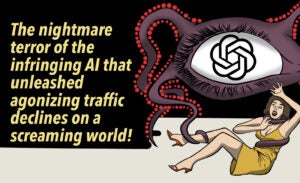
After pulling back on moderation, Instagram gets flooded with antisemites; BidSwitch builds a programmatic way for AI bots to pay to crawl websites; and nearly half of Gen Z dislikes AI content.

Most of what’s sold as “contextual” today still runs on the same keyword logic we used a decade ago. The industry didn’t reinvent contextual targeting; it simply replaced one keyword with a cluster.

The real challenge is drawing a clear line between the AI-generated content that adds value and the kind that erodes trust and leads to significantly lower ad effectiveness.

Social CPMs have risen. The ability to find incremental audiences on social platforms has declined. Add the growing brand-safety concerns, and the equation looks even worse.

CTV has become a powerful full-funnel channel, attracting advertisers of all sizes – and the momentum isn’t slowing.
CTV ad spend is projected to rise another 16% this year to $26.6 billion, according to the IAB. But with rapid growth comes complexity. Advertisers now face a maze of platforms, apps and channels, each with different buying models, audience access and inconsistent measurement. For SMBs without large teams or budgets, this fragmentation is especially challenging to navigate.
Advertisers are still having a lot of the same brand-safety problems today as he did years ago – and it’s pretty damned frustrating.
Alvaro Bedoya shared his qualms with digital advertising’s more controversial targeting tactics and how kids use gen AI and social media.
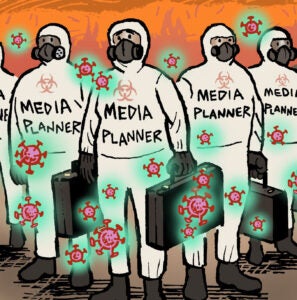
YouTube backpedals on banning COVID and political misinfo; Tylenol pushes back against Trump’s claims that it causes autism; and Disney doubles down on linear TV and raises Disney+ prices after its Kimmel boycott threat.

Publishers like News Corp are walking a fine line—suing AI companies for scraping their work while cutting multimillion‑dollar licensing deals with others.

Protected by Mediaocean, Mediaocean’s ad verification division, is partnering with the Internet Watch Foundation to crack down on CSAM and ensure children’s online safety.

Television advertising has undergone a remarkable transformation in recent years, with connected TV (CTV) emerging as a powerful channel for marketers seeking the impact of traditional television with the precision of digital targeting.

New social media content moderation policies will enable connections with audiences that reflect a broader range of perspectives, expand inventory, and provide opportunities for contextual alignment.

In today’s digital advertising landscape, speed, scale and sophistication have become both a promise and a problem. Innovation has accelerated – but so too has fragmentation. Marketers are expected to drive performance across an ever-expanding universe of platforms, formats and data streams – often without the clarity or confidence they need to succeed.

TV audiences are rallying around CTV, and advertisers are following suit . But with this shift comes a persistent challenge: How can advertisers ensure brand safety, campaign efficiency and audience relevance in a fragmented, opaque streaming ecosystem?

Curated deals were once seen as a smart way to bring structure to programmatic chaos. Today, they’ve become table stakes.

YouTube accounts are uploading recent Hollywood movies, racking up views while advertisers (and sometimes creators) remain in the dark. Plus: Could Cloudflare’s AI bot blockers provide a salve for digital media’s traffic declines?
Critics say the FTC’s deal with OMG/IPG prohibits agency practices that don’t exist. And it distracts from legitimate concerns about brand safety news blocking and principal media.

On Wednesday, AI-powered audio intelligence platform Sounder launched a new version of its brand suitability and contextual targeting tool for podcasts that can understand the nuances of Spanish-language audio content.
The FTC approved the Omnicom-IPG merger, but with a brand-safety caveat: The agencies cannot create agency-level blocklists of any media that’s political or ideological. With Ad Fontes CEO Vanessa Otero, we unpack the consent order’s ramifications.
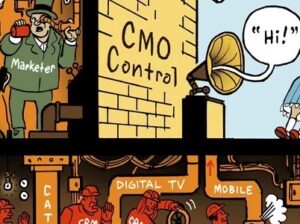
CEOs fear their marketing has lost the plot; WhatsApp introduces ads; Meta’s making its users feel unsafe.
For proof of the uncertainty facing marketers in 2025, look no further than the industry’s ping-ponging projections for ad spending. WPP Media’s revised forecast is just the most recent example.

Can the IAB Tech Lab’s Trusted Server initiative really help restore publishers’ ownership of monetization and wrestle back control from Big Tech and walled gardens?

Former Goodway Group CEO Jay Friedman shares hot takes on everything from curation (“absurd”) to brand safety (“botched”).

AdExchanger spoke with DoubleVerify CEO Mark Zagorski just a few days after the company sued Adalytics alleging defamation over the latter’s recent report on bot detection.

Concern over brand safety and suitability is now tied with campaign underperformance as the top reason for why advertisers pull back on budget.