
News Publishers Are Banding Together To Beat Brand Safety Blocking
Prohaska Consulting debuted the ProNews Collective, a private marketplace of premium news publishers whose ad inventory will be exclusively available via Index Exchange.

Prohaska Consulting debuted the ProNews Collective, a private marketplace of premium news publishers whose ad inventory will be exclusively available via Index Exchange.

During certain periods this year, advertisers blocked more than 40% of The Washington Post’s inventory over brand safety concerns.

Albert Thompson, a buy-side veteran with 20+ years of experience, weighs in on attention metrics, the value of MFA sites, brand safety backlash and how publishers can improve their inventory.
Enjoy this weekly comic strip from AdExchanger.com that highlights the digital advertising ecosystem …

With political ads flooding every channel, how can brands remain relevant and connect with their audience without adding to the noise?
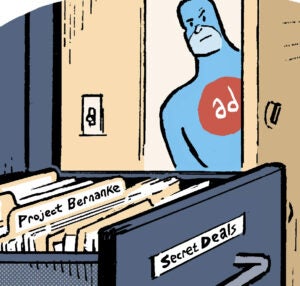
In today’s newsletter: Google paid $445 million in rebates in 2018; publishers across the ideological spectrum blame brand safety for hurting the media biz; and Mark Zuckerberg apologizes to Congressional Republicans for Meta’s content moderation.

The publication still makes most of its on-site digital revenue from programmatic. But it’s doubling down on direct-sold custom content, especially when it comes to video and social media.

Instead of erasing the idea of brand safety, we should be developing smarter, more nuanced solutions that protect both news publishers and advertisers.

Since introducing ads two years ago, Netflix’s ad team has clashed with streaming management and studio execs. Plus, “brat” summer is over; “demure” autumn might be next.

Enjoy this weekly comic strip from AdExchanger.com that highlights the digital advertising ecosystem …

Inside Publicis’ play to be both an agency and an ad tech company. Plus: the dissolution of GARM and what it means for the future of brand safety.

The decision by WFA leadership to succumb to Elon Musk’s pressure is disappointing and dangerous – but it presents an opportunity to rethink our industry’s broken approach to brand safety, writes Arielle Garcia.

With an approved list of sites and contextually segmented content, publishers don’t risk getting caught up in automated keyword blocklists, which consistently demonetize the news.

Open social platforms need established content policy that is underpinned by transparency, advanced technology and feedback loops for constant improvement, writes Zefr’s Cameron Cramer.

It’s time for advertisers to get more nuanced with their approach to brand safety, says Mia Libby, The Wall Street Journal’s SVP of enterprise. It’s okay to be cautious, but excluding all news from programmatic media plans isn’t the answer.

The end of Oracle’s ad business is a major shift in the ad landscape. Here’s how to assess the impact on your business and begin to find a new path forward, according to Alliant’s Christopher Morse.

Media governance measures advertisers can put in place to navigate the complexity of brand safety and gain better control of the quality of their media spend.

How big of a deal is The Trade Desk’s top 100 list? AdExchanger spoke to industry experts for their reactions and bounced some of their hot takes off The Trade Desk.

Integral Ad Science had a decent Q1 – especially in comparison to its direct competitor, DoubleVerify. Even so, frustration with the opacity of third-party brand safety and ad verification providers is increasingly bubbling to the surface.

Enjoy this weekly comic strip from AdExchanger.com that highlights the digital advertising ecosystem …

Appealing to advertisers’ better angels is never going to bring ads back to the news. But appealing to their bottom lines might.

AdExchanger caught up with Zefr’s new chief AI officer, Jon Morra, about his role and how digital media will adapt (or acquiesce) to AI tech.

The vast majority of advertisers who buy ads in video games (91%) no longer consider gaming to be an experimental media channel. But ad spend in games still lags behind audience engagement.

It’s been more than a year since Bloomberg stopped running third-party programmatic display ads on its website – and it was the right move, says Christine Cook, Bloomberg Media’s global CRO.

Programmatic advertising is rife with misinformation. Brands can protect themselves this election season without blocking the news.

G/O Media introduced a new contextual targeting solution that combines first-party contextual signals and data on audience browsing behavior to create cross-site contextual segments that can be activated programmatically.

In addition to establishing another pipe for programmatic demand, Colossus SSP will add SHE Media’s network of minority- and woman-owned publishing brands to its own minority-focused PMPs.

Reaching a scaled audience is important for publishers, but scale at all costs is just a race to the bottom in disguise. When publishers have a deep and direct relationship with their readers, advertisers see stronger performance, says Semafor CRO Rachel Oppenheim.

A small bone is being thrown. AdExchanger has learned that Google is offering advertisers information on certain ad placements across its Search Partner Network in response to the most recent Adalytics report.

Here’s today’s AdExchanger.com news round-up… Want it by email? Sign up here. Second Chance Jezebel lives again. The snarky feminist digital pub relaunched Monday, and it is modeling its digital ad strategy on that of its new parent, indie publisher Paste Magazine, Adweek reports. About a quarter of Paste’s revenue stems from private marketplace deals […]