
Alphabet Smashes Ad Revenue Earnings Again – But Does It Still Care About Ads?
Investors didn’t bring up Google’s advertising business or ads in general once during the Q&A portion of Alphabet’s earnings report call on Wednesday.
Investors didn’t bring up Google’s advertising business or ads in general once during the Q&A portion of Alphabet’s earnings report call on Wednesday.
Amazon is optimistic about agentic commerce; the costs of AI may soon outweigh profits; and AMC Global Media thinks old shows deserve new ads.
Google announced new features and ad types for AI Max, its AI-based bidding product for search and shopping or sponsored product ads. The company also touted “hundreds of thousands” of advertisers using AI Max.
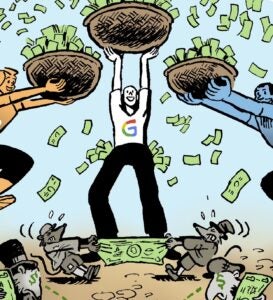
Alphabet earned $109.9 billion in Q1 this year, up from $90.2 billion a year ago. And that’s not even the truly gobsmacking number.
Describing Google’s revenue growth has become a problem, it so vastly outpaces the human capacity to understand large numbers and percentage growth rates. The company earned more than $113 billion in Q4 2025, and more than $400 billion in the past year.

Everyone has an opinion on OpenAI’s revenue prospects; Threads rolls out ads universally; and sports are a bastion of strength for Paramount.

Human-made creative is in again; The Atlantic accuses Google of (another) monopoly; and it turns out brands like to have a say in their sponsorships.

Thanks to mitigated tariff effects and the AI boom, WPP Media’s 2025 ad spend forecast has good news for marketers.
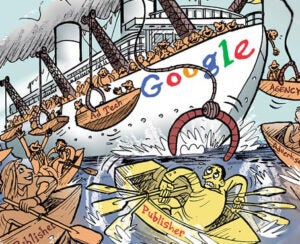
Alphabet reported on Wednesday that its total Q3 revenue was $102.3 billion, up 16% year over year, while net profit increased by a third to $35 billion.

YouTube backpedals on banning COVID and political misinfo; Tylenol pushes back against Trump’s claims that it causes autism; and Disney doubles down on linear TV and raises Disney+ prices after its Kimmel boycott threat.

Google is running a search monopoly, but the remedies are light. How will this decision affect advertisers and competitors? Plus, Google Ad Manager is acting like a standalone SSP, a move that appears connected to the looming remedies phase of Google’s second antitrust case.

The web is hurting. Google is doing splendidly. Q2 was a “standout,” Alphabet CEO Sundar Pichai told investors on Tuesday, with “robust growth across the company.”

AI Overviews are even dinging Google Search ads’ traffic; WPP downgrades its earnings forecast; and Google’s AI competitors launch their own web browsers.

Magnite’s SpringServe deal illustrates why SSPs need a video ad server; Google grapples with AI search’s impact on publisher traffic; and Anthropic’s AI assistant is a law enforcement snitch.

Alphabet had another stellar earnings report. But neither its leadership nor investors ever mentioned the two landmark ongoing antitrust suits. Chrome’s reversal on third-party cookies also never came up.

Alphabet is beset by challenges on all sides. But the company’s revenue growth remains unchecked.

OpenAI’s ChatGPT will launch a web search engine. Plus, this year’s $12-billion-plus deluge in political advertising has priced brands out of certain markets.
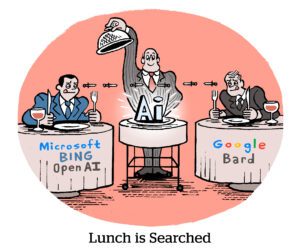
Google hit some impressive revenue benchmarks in Q3. But investors seemed to only have eyes for AI.

Alphabet is so big that, even when it’s growing slowly – YouTube, for example, disappointed with a lower-than-expected growth rate – it’s still outpacing competitors.

Paramount Global finally agreed to merge with Skydance Media, but it’s not out of the woods yet. Plus, is YouTube really worth $455 billion?

Media governance measures advertisers can put in place to navigate the complexity of brand safety and gain better control of the quality of their media spend.

By next year, Google will have three separate business lines – Search, YouTube and Cloud – with an annual run rate to generate at least $100 billion, CEO Sundar Pichai told investors.

In today’s newsletter: Data broker Adstra sues IPG-owned Acxiom and Kinesso; Apple could strip the P address of its status as a useful identity signal; and Roblox will introduce video ads later this year, with SSP PubMatic as its programmatic vendor.

In today’s newsletter: Adalytics reveals Forbes was running a separate MFA sub-domain; The New York Times seeks to use attention benchmarking to validate its premium publisher status; and Google is reportedly looking to buy HubSpot.

In today’s newsletter: Microsoft Edge debuts its Ad Selection API, a PAAPI competitor; the EU’s DMA is live; and OhHello aims to help ad industry employees network.
Google has always been the internet waystation. People arrive to be shuttled someplace else. Increasingly, though, Google is the destination.

Last week, FTC Chair Lina Khan announced a probe into Big Tech’s relationship with generative AI companies at an FTC forum to address competition concerns related to AI technology – its first AI-focused tech summit.

Crunchtime The EU’s Digital Markets Act has teeth – and now it’s biting, TechCrunch reports. The DMA regulates anti-competitive practices within “gatekeeper platforms” that have an annual turnover of at least 7.5 billion euros. Meta, Apple, Alphabet, Amazon, Microsoft and ByteDance all tick that box. Gatekeepers have until March to ensure their operations in the EU […]

Here’s today’s AdExchanger.com news round-up… Want it by email? Sign up here. Bean Counter A split between two state privacy laws in Maine shows how more data-driven businesses – not just Silicon Valley giants – are invested in the nuances of privacy standards and how consumer data can be used (or not). Lobbyists at the […]
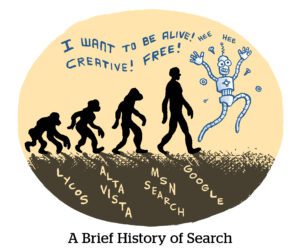
Alphabet’s strong revenue numbers were “led by solid growth in the retail vertical” across search and YouTube, Google Chief Business Officer Philipp Schindler said during Alphabet’s earnings call.