AI-thentic
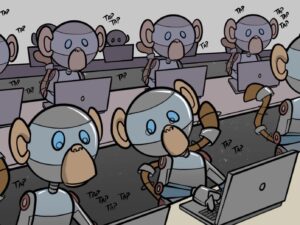
Consumers have grown so weary of AI-generated content and straight-up slop, they’re taking extra time to find work made by real people.
And so advertisers, in turn, are embracing (human) creators, Digiday reports. Collabing with an up-and-coming creator is preferable to showing up in AI videos that may have bigger audiences, but that people disdainfully stop watching once they realize it’s AI.
And some brands are going even further. Instead of airbrushing flaws, they’re celebrating them – even going so far as to seek out imperfections in the influencer marketing deals they’re planning. The dirty countertop or overflowing garbage can in the background is no longer grounds for a reshoot; it’s a way to let viewers know that what they’re watching is, well, real.

More brands are now steering clear of AI-generated content in their creator deals, while others are adding stricter guardrails or disclosure rules, according to influencer marketing experts.
“AI can’t replicate the messiness of human creativity,” says Becky Owen, CMO of influencer marketing agency Billion Dollar Boy.
In other words, get ready to hear the word “authenticity” a lot more.
The More Things Change
A lawsuit? Against Google? That alleges an ad tech monopoly?
Feels like déjà vu.
On Tuesday, The Atlantic sued Google and its parent company, Alphabet, accusing them of operating an ad tech monopoly, effectively forcing publishers to sell ads through Google at lower prices, The Wrap reports.
This is nowhere near the first time that Google has been sued over misuse of its ad tech tools – and it’s not even the first time this week. Penske Media filed a similar lawsuit of its own on Monday.
The Atlantic’s suit alleges violations of state and federal antitrust laws and, unlike the DOJ’s complaint, seeks both damages and a jury trial.
Adding insult to injury, the complaint points out that although Google publicly claims its ad exchange helps publishers earn more, in reality it mostly boosts Google’s own margins, a fact even some employees have reportedly acknowledged.
Some things never change. Let’s just hope that Google’s monopolistic practices eventually do.
You Don’t Know Jack
Here’s a free tip if you’re partnering with an advertiser on a sponsorship: Make sure you reach out to the brand before you start designing mockups.
CBS News found this out the hard way after staffers leaked to Zeteo’s Prem Thakker on Tuesday that the network was testing out set designs for a new segment called “Whiskey Fridays with Tony Dokoupil,” featuring a prominent ad for Jack Daniels.
On Wednesday, beer industry reporter Dave Infante received confirmation from Brown-Forman, Jack Daniel’s parent company, that it “is not involved in any such segment” and is not aware of any sponsorship plans. Okay.
It’s a bad look for CBS News for a number of reasons. Firstly, ratings fell 23% year over year in Dokoupil’s debut week as lead anchor for CBS Evening News, so tacking on a sponsored segment (without an actual sponsor in place!) already feels a bit desperate.
Then, there’s the cognitive dissonance inherent in CBS’s choice of advertiser for its mockup.
Brown-Forman has faced significant sales losses in Canada as a result of President Trump’s tariff policy. However, since the Paramount Skydance merger closed last year, CBS News has made obvious efforts to align itself with Trump’s right-wing politics.
During an interview that aired Tuesday, Trump even told Dokoupil to his face that he “wouldn’t have a job right now” if Kamala Harris was president.
Maybe next time, CBS News should try a protein supplement brand instead.
But Wait! There’s More!
Speaking of, expect to see a lot more CPG brands marketing themselves as being full of protein and devoid of seed oils very soon. [WSJ]
Like seemingly every other social media algorithm these days, TikTok Shop has a lot of products with Nazi symbols for sale. [Wired]
Parents can now block Shorts from their children’s YouTube feeds. Great, now do a version for adults! [TechCrunch]
Precisify (formerly Precise TV) announces $26 million in private equity funding for its influencer and creator marketplace. [Tubefilter]
Consent management platform Usercentrics acquires MCP Manager, a governance platform for managing AI infrastructure. [The AI Journal]
Netflix revised its bid for Warner Bros. Studios and HBO Max into an all-cash offer amid increasing pressure from Paramount Skydance. [Variety]
California AG Rob Bonta announced an investigation into xAI’s Grok chatbot over its recent proliferation of AI-generated, nonconsensual explicit material. [release]
Ian’s Shoelace Site, a niche website about shoelace-tying and lacing techniques, is one of the many internet-based passion projects struggling against the rise of ad blockers, AI-generated content and plagiarism. [Aftermath]
You’re Hired!
FreeWheel appoints Don Amboyer as general manager of Strata, the company’s media management software. [release]
Airbnb hires Ahmad Al-Dahle, Meta’s former head of generative AI, as its new CTO. [Bloomberg]
Performance media agency Net Conversion expands its leadership team with three new VPs. [release]
OpenX appoints former TTD exec Akhil Savani as VP of publisher development and promotes Rebecca Bonell to regional VP of publisher development, Americas. [release]
Madhive appoints Nicki Harkrider-Probey as CRO and Mindy Buckalew as SVP of operations. [release]
Here’s today’s AdExchanger.com news round-up… Want it by email? Sign up here.