A brief heads-up that December 24 will be our last Daily News Roundup of 2025! We’ll return on January 5, 2026, right before CES begins. Until then, happy holidays!
Discontent To Commerce
Starting around 2019, The Chernin Group, a private equity fund with stakes in Substack, smart-ring maker Oura and personalized video marketplace Cameo, bet big that niche publishers could earn more with a content-to-commerce business model.
Which is to say, turning editorial businesses into direct shopping channels, often by adding a marketplace to a publishing business, although the same idea could also work in reverse by tacking editorial operations onto an ecommerce site.
Chernin acted on this hypothesis by acquiring media companies and investing tens of millions of dollars into their operations. There was Hodinkee (fancy watches), Food52 (recipes and cookware), The Pro’s Closet (preowned bikes) and Epic Gardening (which covers gardening, of course).

However, this theory hasn’t responded well to reality, Adweek reports.
To be fair, Chernin was a victim of crazy macro-effects. Shortly after beginning its multiyear media acquisition spree, quarantine hit, and ecommerce sales skyrocketed. Marketplaces for luxury used bikes and home cooking supplies were massive beneficiaries, encouraging further investment.
Now, though, publishers have changed their focus and mentality amid Google Search’s affiliate marketing and ecommerce crackdowns. In many cases, their native ad businesses have fallen by the wayside and into disrepair.
Mixed Model
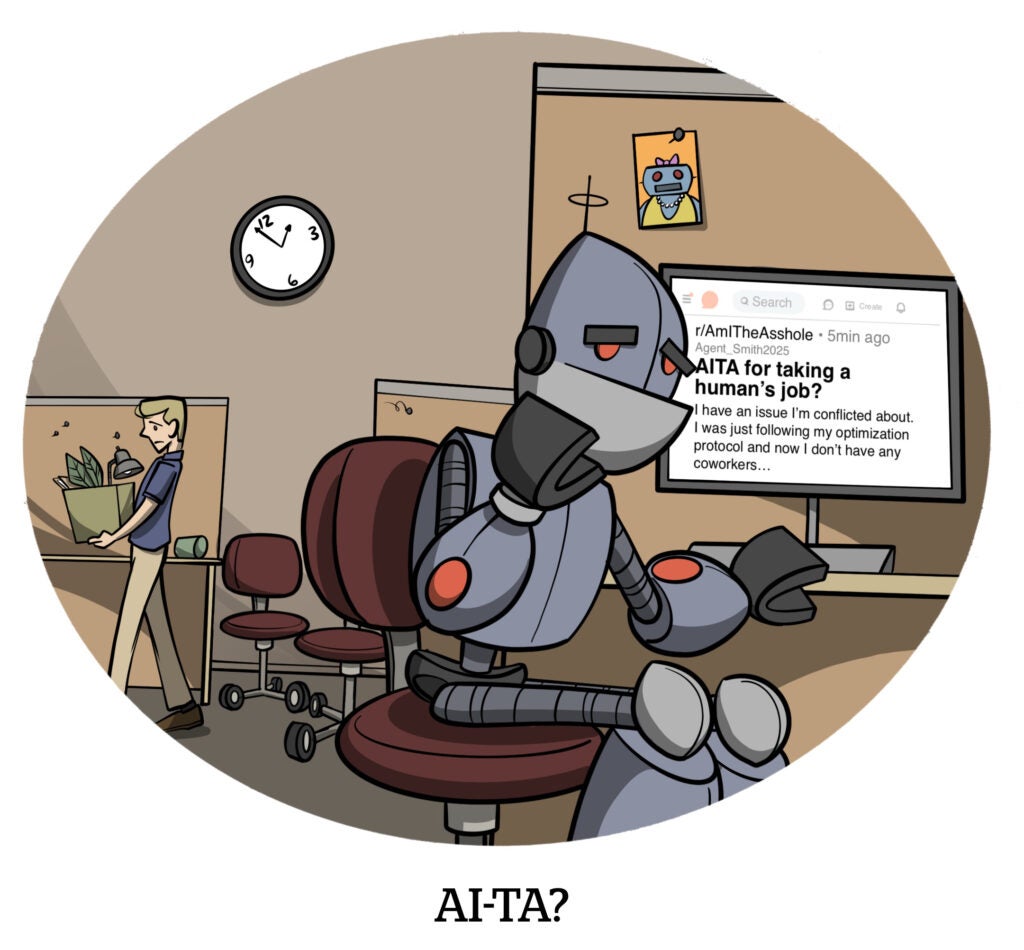
Let the great backpedaling on agentic AI begin?Throughout most of this year, Salesforce has been hyping its Agentforce solution as helping businesses create agentic tools that automate multistep processes and reduce reliance on human employees.
But, more recently, a report in The Information claims that Salesforce execs have been telling customers Agentforce works best when it relies on more “rudimentary” automation, rather than generative AI and LLMs.
Salesforce disagrees with this characterization. The engineering behind Agentforce “is sophisticated” and “combines generative AI with ‘guardrails’ to ensure safety,” according to a Salesforce spokesperson who reached out to AdExchanger. “That is a feature, not a regression.”
Be that as it may, Agentforce’s automation has been increasingly using old-school “if, then” computer programming, rather than newfangled AI “reasoning.” And Salesforce’s website now says Agentforce can help “eliminate the inherent randomness” associated with generative AI.
“We all had more trust in the LLM a year ago,” says Sanjna Parulekar, Salesforce’s SVP of product marketing.
In addition, Salesforce has been getting more hands-on helping customers troubleshoot their Agentforce applications – which you could argue discredits the company’s original pitch that AI agents would be easy to set up. Not to mention that the AI has been dropping the ball on basic tasks, like not sending customer satisfaction surveys.
Salesforce maintains that these issues don’t indicate a product failure but reflect the natural process of tuning enterprise software to meet each customer’s specific workflow, the company spokesperson told AdExchanger.
Meanwhile, the need for more white glove service isn’t causing Salesforce to rethink its pivot to using AI agents for account management – a move that Salesforce CEO Marc Benioff said earlier this year has allowed the company to cut 4,000 customer service jobs, with some staff redeployed into other positions rather than fully laid off.
Updated 1/8/26 to reflect to reflect additional comments from Salesforce.
Can’t Stop The Signal
Paramount Skydance’s political troubles could end up costing the company a lot more down the line.
On Sunday, CBS News kicked off its very own version of “The Streisand Effect” (or maybe the “Weissand Effect,” to borrow a now-common Bluesky joke) when it abruptly pulled a “60 Minutes” segment just hours before airtime. The segment, called “Inside CECOT,” describes the abuse suffered by Venezuelan migrants who were sent to an El Salvador mega-prison by the Trump administration in March.
Except, whoops! The segment still aired as planned on Canada’s Global TV before it was taken down there, too.
Now, bootlegged copies of “Inside CECOT” are making their way across the internet with all the virality (arguably more so, in fact) of a leaked “Avengers: Doomsday” trailer. Most notably, reports Ars Technica, users are sharing the story via LimeWire and other peer-to-peer torrenting networks – the typical tools of internet pirates.
Ironically, a few years ago, it seemed like digital piracy was actually on the decline. But, as The Guardian reported earlier this summer, it’s recently come back in a big way, partially due to rising costs and increased ad loads on streaming services.
So here we have a situation where viewers are upset with Paramount for what looks like politically motivated censorship, which in turn incentivizes them to view piracy, at least in this case, as a moral good against the company.
Which raises a very awkward question: What’s to stop them from, you know, continuing to pirate Paramount’s other content now that it’s cool again?
But Wait! There’s More
Instacart ends its price-testing in response to customer pushback. [WSJ]
Italy’s competition authority fined Apple $116 million for implementing a stricter data consent policy for third-party app developers, making it harder for them to deliver personalized ads. [Reuters]
Heather Carver, chief revenue officer at publisher monetization network Freestar, announced that she’s leaving the company. [post]
Dating apps are embracing AI and machine learning technology to power their matchmaking algorithms. [Business Insider]
How brand marketers navigated the messiness of shifting tariff policies this year. [Digiday]
Instagram’s growth has far surpassed Facebook’s in the EU. [Emarketer]