
Sour Scrapes; (Anti)-trust The Process
Reddit sues four companies for scraping and selling (and buying) its data; Unity Software’s new zero-fee product is good news for mobile developers; and brands aren’t thrilled by TikTok shop’s latest updates.

Reddit sues four companies for scraping and selling (and buying) its data; Unity Software’s new zero-fee product is good news for mobile developers; and brands aren’t thrilled by TikTok shop’s latest updates.

The fate of the open web will be decided on who controls the data that drives monetization and the AI that determines distribution. Google controls both, and proposed remedies to its ad tech monopoly do not address this imbalance.

Google’s SSP and ad server businesses have been ruled monopolies. And Google Chrome isn’t going to change its third-party cookie opt-ins, further preserving third-party cookies. Go inside this momentous news.

If the court ultimately orders Google to spin off AdX or DFP, the result would be a fundamental rebalancing of power across the digital advertising supply chain. For marketers, the implications are just as significant.

More competition between SSPs and ad servers should be a boon for publishers in the long term. But publishers will feel some growing pains if there is a sudden disruption in Google’s ad payouts or if their ad server fees increase.

The wave of ad tech headlines in recent weeks represents a long overdue moment of reckoning for companies who (still) hold disproportionate control over publishers’ website traffic and revenue potential.

But beyond making his parents proud, participating as a witness in a historical antitrust trial was gratifying for another reason, says Kevel CEO James Avery. “I never thought I’d have a chance to really say my piece like this.”

Covering Google’s ad tech antitrust trial in Virginia is surreal for anyone who’s been in ad tech as long as Ari Paparo. He knows most of the people on the stand.

A lot has already been said and cited during the Google ad tech antitrust trial, with more to come. Here are a few of the most notable quotables from the first two weeks.

It’s not often one gets to hear sworn witnesses in federal court explain the intricacies of header bidding under oath. But that’s what happened during the first day of the Google ad tech-focused antitrust case in Virginia on Monday.

Google doesn’t want AppNexus founder Brian O’Kelley – you know, the godfather of programmatic – to testify during its ad tech antitrust trial starting on September 9.
We set the scene for Google’s upcoming antitrust trial in September, including details from the recently released witness list, a who’s who of the ad tech world.

The DOJ published the witness list for its upcoming antitrust trial against Google, and it reads like the online advertising industry’s answer to the Social Register.

Setting price floors can unlock additional revenue. But only by setting the “right” floor for any given impression can you increase and not harm yield.
There are other motivating factors for crossing the LUMAscape, besides increased efficiency and less ad fraud. These businesses are trying to position themselves to win in a transformative era that will make or break many ad tech companies.

Publishers and online video platforms that rely on accompanying content video ads could see their revenue drop after Google AdX’s April 1 update.

Privacy Sandbox’s Protected Audiences API causes increased latency, decreasing viewability and yield. Given these issues, publishers simply cannot afford to test PAAPI at scale.

The new version of header bidding software makes it easier to identify specific ad transactions, gives publishers more granular control over how they express user consent to downstream partners, and enables testing of Google’s Privacy Sandbox.

The alternative ID landscape is incredibly fragmented. So how are publishers – especially long-tail publishers that tend to be strapped for tech resources – supposed to pick the ID solutions that work best for them?

The Department of Justice wants to break up Google’s ad tech stack. But how would separating Google’s publisher technology into a standalone entity affect the ad ecosystem? There are pros and cons.

In 2022, SPO solutions largely revolved around creating direct connections to so-called premium publishers. But machine learning (ML) and artificial intelligence (AI) also took on a bigger role in SPO this year. And 2022 was the year the ad industry began touting SPO as the solution of choice for sustainability-focused marketers.

The Financial Times has long avoided chasing open web programmatic ad revenue. Now, with signal loss prompting a renaissance for contextual targeting and direct deals – and with momentum behind attention metrics, of which the FT was an early proponent going back to 2015 – the publisher’s longtime strategy seems prescient. Brendan Spain, the FT’s VP of advertising for the Americas, spoke with AdExchanger.

Chrome Unboxed, which started in 2015 as a YouTube channel for unboxing videos featuring Google’s Chromebook products, is emblematic of the early struggles upstart publishers have in monetizing their content. Its path to ad-supported profitability shows there’s still hope for the little guys in digital media.

What happens when your main monetization partner starts flagging your content as spam? Freecycle turned to header bidding to reduce its reliance on Google AdSense, but the company’s one-person engineering team had trouble managing the header-bidding system and the constant stream of Prebid updates on top of web development duties. So, after a 70% drop in ad revenue, Freecycle handed its digital ad business over to PubWise’s managed service.

Another shoe has dropped. On Tuesday, the European Commission, which is the main executive body of the EU, opened a formal investigation into whether Google unfairly advantages its own ad tech services. The Commission, which was rumored late last week to be on the verge of launching an official probe, will focus on display advertising, […]

Google’s AdX is a primary demand source for many small- and mid-size publishers. But the way they access that demand is about to change as Google gears up to revamp the partner program that smaller ad sellers use to access AdX. Pubs need a direct integration with Google in order to tap into AdX. Because […]
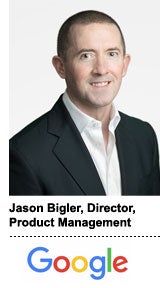
Jason Bigler, who has headed up Google’s sell-side business since April following Jonathan Bellack’s exit, wants publishers to know that Google Ad Manager isn’t going to be a black box anymore. Bigler will prioritize sharing more information with publishers about the Google Ad Manager team’s decision-making process. “With every change we make, we are providing […]