
OPINION: Data-Driven Thinking
Advertising’s ID-Less Future Depends On More Than DSP Adoption
If we’re to leave behind the third-party cookie era, the rest of the ecosystem must reassert the role it plays in setting the agenda.

If we’re to leave behind the third-party cookie era, the rest of the ecosystem must reassert the role it plays in setting the agenda.

To solve ad tech’s intractable problems, there’s a solution that the advertising industry could borrow from the hacker world: bug bounties.

Basis Technologies introduced Unify, a new feature in its DSP that facilitates data access and campaign planning across a brand’s in-house departments and external teams.

AdExchanger reached out to a number of major DSPs to gauge the current state of adoption of the IAB Tech Lab’s new video ad standard.

A new storyline is emerging around curation, one in which publishers feel they’ve lost out to middlemen on yet another opportunity to monetize their audiences.

Curation is a reaction to programmatic’s worsening queries-per-second problem, says Permutive’s Joe Root. DSPs are biased toward impressions that have an identifier attached, so SSPs are using curated deal IDs as a stand-in for third-party cookies.

Forrester released its first SSP wave since 2014 last week, and there’s a surprise. The research firm ranked Google – whose sell-side ad tech platform is facing federal antitrust charges – as a mere challenger.

IRIS.TV will remain an independent company, and Viant will push for CTV platforms to adopt its IRIS ID to provide contextual signals beyond what streamers typically share about their ad inventory.

By implementing the anti-MFA playbook detailed in the ANA’s November report, brands were able to reduce the portion of their programmatic budgets going to made-for-advertising sites to about 1%.

At Tuesday’s Prebid Summit, a panel of publisher and pub tech execs shared tips for how publishers can get the most out their flooring strategies.

The catalyst for Google’s future success – regardless of any legal ruling – is its YouTube strategy. Opening YouTube’s ad inventory to outside demand will increase its value.

Dotdash Meredith’s Lindsay Van Kirk says the cookie-based buying tools she helped develop in her early career at AppNexus placed too much value on unreliable third-party audiences. But contextual tools like DDM’s D/Cipher, which she now oversees, can build a better ad ecosystem for buyers and sellers.

Competing agendas are limiting the tools publishers have at their disposal in ways that aren’t always primarily motivated by user privacy. Here are five things about privacy in digital media that should keep publishers up at night.
VIA Rail and The Globe and Mail are combining their first-party data sets to create bespoke ad targeting audiences in partnership with data clean room provider Optable.

While CTV has emerged as a powerful and unique advertising medium, venue-based DOOH streaming is distinct and requires its own marketplace to fully realize its potential.
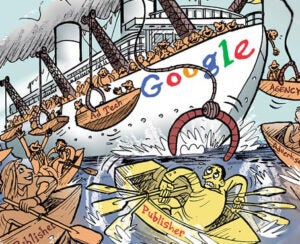
Publishers were encouraged to see the DOJ highlight Google’s stranglehold on the ad server market and its attempts to weaken header bidding.

Adopting standards and interoperable IDs can benefit the entire ecosystem, enabling solutions that can help solve for omnichannel ROI and more effective tracking of ads across platforms.

PubMatic’s $5 million loss from DV360’s bidding algorithm fix earlier this year suggests second-price auctions aren’t completely a thing of the past.

ID bridging isn’t the problem. Buyers are objecting to unexpected, undisclosed manipulation of critical data in bid requests by sellers.

The partnership makes MFA-blocking tools more accessible to mid-size buyers. Plus, AdLib can block MFA regardless of whether a DSP is willing to proactively filter it.

The SSP revised its full year outlook down by $10 million, due to a DSP partner adopting first-price auctions and weakness in key ad verticals. But it highlighted mobile in-app as a new key revenue stream.

Publishers and SSPs aren’t incentivized to accurately label their video inventory. But increased pressure from the buy side could correct the skewed pricing dynamics that result from outstream being sold as instream.

TTD confirmed to AdExchanger that, as of June 17, it had removed support for at least some of the online video inventory sold by Yahoo as a publisher.

PilotDesk offers AI- and machine-learning-based workflow software for ad buyers and sellers. These solutions are based on the company’s experience with how ad servers like SpringServe function.

How big of a deal is The Trade Desk’s top 100 list? AdExchanger spoke to industry experts for their reactions and bounced some of their hot takes off The Trade Desk.

Who gets to decide what is premium? Is it dangerous to outsource that decision to The Trade Desk (or any one DSP)? And how should publishers position themselves within the future of this so-called premium internet?

Since launch, 82% of advertisers that buy inventory through the Yahoo DSP have tried Backstage at least once. And buyers are seeing lower CPMs from cutting out SSPs.

In today’s newsletter: Publishers fear they’ll be excluded from The Trade Desk’s “premium internet”; buyers weigh in on Netflix’s plans to offer an ad server; and PayPal launches an ad network and data brokerage.

Audience targeting and online information campaigns have had some gnarly byproducts. Advertisers need to own our contributions to political polarization before it can get better.

The phaseout of third-party cookies kicked off the sell-side curation trend. But it’s also being driven by advertiser concerns about open web media quality and the need to enhance publisher contextual signals with audience data.