
The Good, Bad And Overblown About The Trade Desk’s Top 100 List
How big of a deal is The Trade Desk’s top 100 list? AdExchanger spoke to industry experts for their reactions and bounced some of their hot takes off The Trade Desk.

How big of a deal is The Trade Desk’s top 100 list? AdExchanger spoke to industry experts for their reactions and bounced some of their hot takes off The Trade Desk.

Who gets to decide what is premium? Is it dangerous to outsource that decision to The Trade Desk (or any one DSP)? And how should publishers position themselves within the future of this so-called premium internet?

Since launch, 82% of advertisers that buy inventory through the Yahoo DSP have tried Backstage at least once. And buyers are seeing lower CPMs from cutting out SSPs.

In today’s newsletter: Publishers fear they’ll be excluded from The Trade Desk’s “premium internet”; buyers weigh in on Netflix’s plans to offer an ad server; and PayPal launches an ad network and data brokerage.

Audience targeting and online information campaigns have had some gnarly byproducts. Advertisers need to own our contributions to political polarization before it can get better.

The phaseout of third-party cookies kicked off the sell-side curation trend. But it’s also being driven by advertiser concerns about open web media quality and the need to enhance publisher contextual signals with audience data.

Curation’s shift to the sell side is giving DSPs less control over how advertisers curate audiences, which is creating new tensions in the programmatic ecosystem.

Buyers could solve many of the issues they have with the open web by focusing less on viewability and clicks and more on driving performance outcomes, says Goodway Group director of strategic partnerships Andrea Kwiatek.

Multiple factors such as buy-side practices, the CTV industry structure and shortcomings in ad tech contribute to CTV’s ad frequency problem. Yet there are several ways to overcome these limitations.

There are other motivating factors for crossing the LUMAscape, besides increased efficiency and less ad fraud. These businesses are trying to position themselves to win in a transformative era that will make or break many ad tech companies.
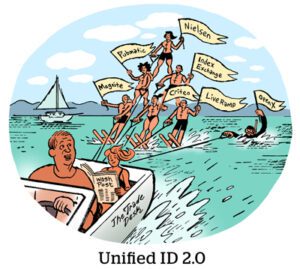
Bonbon gives users rewards – such as discounts or chances to win merchandise – for setting up email registrations with publishers. Now The Trade Desk’s OpenPass will include that same rewards functionality.

Buyers will soon have far more transparency into video ad inventory sold through Google’s platform. But some publishers and video platforms have concerns.

Now, advertisers have more flexible access to the MTA’s four million daily riders while they’re inside the stations, waiting for their trains.

In today’s newsletter: Big Tech may be best positioned to take advantage of generative AI’s ad tech uses; ad tech leaders waffle on investing in Chrome’s Privacy Sandbox; Google faces an innovator’s dilemma.

The results of Haleon’s recent test of Adelaide’s attention scoring solution within Amazon’s DSP could strengthen the case that low-attention inventory isn’t worth buying.
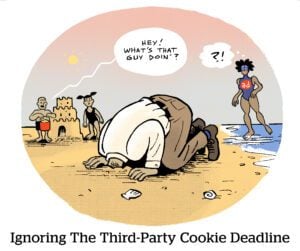
In today’s newsletter: could an open-source website template fix programmatic advertising?; The Trade Desk’s new tool for targeting only the top 500 sites; and some of Apple and Microsoft’s services won’t fall under DMA regulation.

Viant announced AI updates to its existing data platform, including the rollout of its Chat with Data tool. The tool delivers data reports and analysis directly to marketers, nixing the need for business intelligence analysts, data scientists or SQL knowledge.

Fyllo will shift its focus from targeted ad compliance in highly regulated verticals – namely, legalized weed – to more general contextual targeting. The company is also rebranding as Fyllo|Semasio.

Although Optable participated in the W3C Privacy Sandbox working groups and has been testing Sandbox API integrations for the past eight months, its early access program represents its first foray into running real campaigns.

Index Marketplaces activates the curation capabilities of DSPs, DMPs and RMNs – and the demand for their PMP deals – across Index Exchange’s network of publishers.

Programmatic auctions are creating so many carbon copies of themselves that it threatens to topple the entire structure of programmatic.

While 2023’s return to fiscal responsibility made for rough waters, it will pale in comparison to 2024. Here are eight trends worth watching.
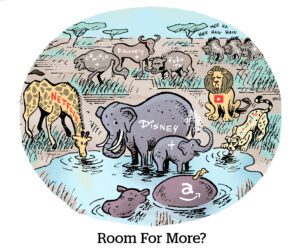
Here’s today’s AdExchanger.com news round-up… Want it by email? Sign up here. Take Initiative Meet yet another TV ad standards initiative. GroupM announced the Ad Innovation Accelerator on Thursday, which it hopes could lead to more nonstandard streaming ad formats – and technical standards for those formats to make sure they can run on any […]
2023 saw SPO become further cemented in the strategies of DSPs and SSPs for capturing market share. But the long-term trend might see SPO become the default for programmatic advertisers.

From clear-eyed looks at the industry’s shortcomings and conflicts of interest to prognostications that presage the next batch of conference panel talking points, you can count on these astute industry voices to drive the conversation.

Here’s today’s AdExchanger.com news round-up… Want it by email? Sign up here. Sandboxers In The Ring The Trade Desk is saying farewell to the Chrome Privacy Sandbox, and it’s firing parting shots on the way out. In its view, the APIs in the Privacy Sandbox will devalue open internet advertising, while Google’s ad tech business […]

Pathlabs, which refers to itself as a “media execution partner,” takes care of the mundane tasks and daily minutiae an agency shouldn’t be worrying about, like vetting the tools it’s using or overseeing its DSP or DMP partners.

Here are the pros and cons of client-side and server-side header bidding, and some typical use cases for each.

While LLMs are demonstrating their usefulness for marketing, they are less well suited to solving challenges in performance advertising, which require learning from numerical data, not words.

The first ever AdExchanger comic offers a look at how the ad tech industry has – and hasn’t – changed in the 13 years since it was published.