

To find out what truly matters in digital advertising, there’s no better source than the professionals who work in the trenches.
The thought leaders highlighted here have their fingers on the pulse of programmatic. From clear-eyed looks at the industry’s shortcomings and conflicts of interest to prognostications that presage the next batch of conference panel talking points, you can count on these astute industry voices to drive the conversation.
And our audience is listening. The columns collected below generated the most engagement with AdExchanger’s readers throughout 2023 and are sure to drive discussions into next year.
All of the key topics are here: the tensions between user privacy and financial incentives, the rise of generative AI, ad waste and fraud, walled gardens as black boxes, open questions about made-for-advertising inventory, consolidation among SSPs and DSPs, the push for more sustainable ad tech and, yes, the ever-present concerns about the end of third-party cookies.

1. An Industry In Conflict: It’s Time For Tough Questions And Hard Decisions
By Arielle Garcia, Founder, ASG Solutions, and former Chief Privacy & Responsibility Officer, UM Worldwide
This year’s most popular column by far was Arielle Garcia’s statement on why she resigned from her role as UM Worldwide’s privacy chief after a decade at the agency holding company.
Garcia’s column pulls no punches about the status quo of digital advertising and the industry’s determination “to sleepwalk into an existential crisis.” She describes the agency holdco model as “rife with competing interests and conflicting loyalties” and calls the industry’s efforts to regulate itself “little more than theatrics, semantics and mental gymnastics.”
The entrenched bad practices Garcia calls out clearly resonated with AdExchanger’s audience. Her mic-drop moment drew more than four times as many page views as the next most popular column on this list.
2. How To React To YouTube’s Fraud Scandal? Treat It As If It Were TV
By Sean Cunningham, President & CEO, VAB
How The YouTube Scandal Exposes A Double Measurement Failure
By Nico Neumann, Melbourne Business School
Google’s Second, Worse Wave Of Alleged Ad Fraud Means Advertisers Need Full Transparency
By Sean Cunningham, President & CEO, VAB
We’re grouping this next crop of columns together as “reactions to Adalytics airing out Google’s dirty laundry.”
The VAB’s Sean Cunningham got the conversation started by calling out a double standard in how buyers and agencies treat Google/YouTube compared with other media owners and platforms.
In response to the Adalytics report over the summer that shed light on low-quality inventory in the Google Video Partner program, Cunningham poses a simple thought experiment: Imagine the outrage if this deceptive attempt at audience extension was carried out by a TV network, then treat Google the same way you’d treat that network.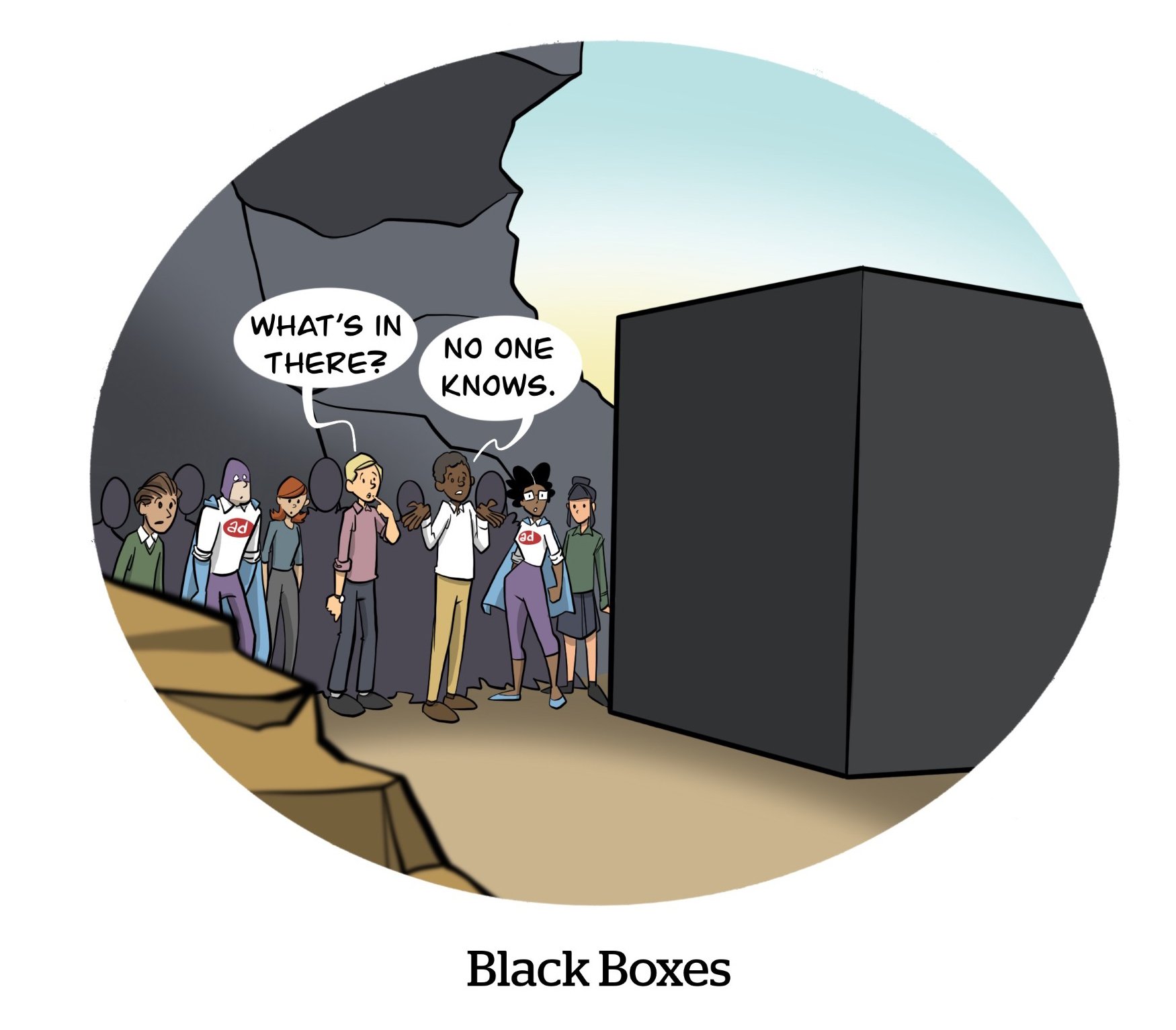
Meanwhile, ad tech academic Nico Neumann explains how the TrueView scandal illustrates a two-tier failure in ad-quality measurement. When walled gardens refuse to provide ad-placement-level data, it’s a willful lack of transparency. And where were the third-party measurement vendors? If they’d flagged discrepancies in campaign efficiency, it might have tipped off buyers that their ads were appearing against nonpremium content.
And then a second Adalytics report dropped around a month later accusing YouTube of serving targeted ads to kids – and Cunningham was fed up. In a follow-up column to his first, he argues that nothing less than “complete transparency” from Google and unrestricted access for third-party measurement vendors would suffice to re-earn the trust of advertisers.
3. Cookies Are Behind Us. Probabilistic Data Is Ahead
By Drew Stein, CEO & Founder, Audigent
Audigent’s Drew Stein declares that if advertisers want to build a digital ad ecosystem that respects user privacy, they must break their addiction to deterministic data. He writes that the widespread use of deterministic signals like email addresses to target impressions and measure ad effectiveness “does not always reflect sound privacy practices.”
Instead, he advocates using probabilistic signals for targeting, such as contextual data and predictive audiences, and a mix of probabilistic and deterministic data for attribution.
4. Unpacking The Latest Changes To The IAB Tech Lab’s Video Ad Guidelines
Jenn Chen, President & CRO, Connatix
When the IAB changed its definition of in-stream video in August 2022, it triggered pushback from publishers. Suddenly, around 90% of what had previously been considered instream was declared outstream. That pushback prompted the IAB to again revise its definition of in-stream video in March 2023.
In her piece, Connatix’s Jenn Chen clarifies what’s new, defines terms and explains how publishers, SSPs and DSPs can adopt the new video.plcmt attribute in their header-bidding stacks to transparently classify video inventory and ensure fair pricing.
5. Cannes Contemplations: 5 Takeaways From The 2023 Event
By Lou Paskalis, Chief Strategy Officer, Ad Fontes Media
Ad industry veteran Lou Paskalis recounts the most hotly debated topics from the 2023 Cannes Lions – trends that will no doubt carry into 2024.
At the top of the list was the industry’s binary thinking on generative AI as either a “doom” or “boom” scenario. Then there was the ANA’s bombshell report on programmatic spending, which kicked off a reckoning over made-for-advertising sites. Read on to find out what else made his list.
6. Many Cookieless Alternatives Still Rely On IDs – That Has To Change
By Geoffroy Martin, CEO, Ogury
Ogury’s Geoffroy Martin points out that many popular cookieless alternatives, including unified IDs and cohort-based targeting, aren’t future-proof or viable at scale.
They rely on persistent identifiers and user opt-ins – and consent is hard to get. Instead of finding workarounds to continue targeting individuals, Martin argues advertisers should shift to persona-based targeting to ensure privacy compliance and scalability.
7. Strong Client Services Couldn’t Save MediaMath From A Lack Of Product Innovation
By George Tarnopolsky, VP, Programmatic, Good Apple
MediaMath’s bankruptcy and its downstream effects were a persistent concern this year. But while the DSP’s flameout burned many SSPs and publishers, its closest partners appreciated the white-glove service it provided – until the hammer fell on June 30.
Good Apple’s George Tarnopolsky argues that where MediaMath truly went wrong wasn’t in how it worked with customers, but in its failure to innovate on its product offering while operating in an increasingly competitive DSP market.
8. It’s Time To Move To A SaaS Model For SSPs
By Samuel Youn, VP, Programmatic, Chegg
Another noteworthy 2023 bankruptcy – the demise of EMX in February – ignited a debate over whether SSPs provide enough value to publishers to justify taking a percentage of revenue.
Chegg’s Samuel Youn argues that since most SSPs don’t offer publishers access to unique demand, they should be paid as a software provider rather than a revenue partner. He suggests that some SSPs could differentiate themselves from an increasingly commodified pack by offering a software-as-a-service payment model instead.
9. ‘Money Doesn’t Stink’: The Sad State Of Affairs In Ad Tech
By Ruben Schreurs, Chief Strategy Officer, Ebiquity
Ebiquity’s Strategy Chief Ruben Schreurs offers a simple explanation for the ad industry’s persistent problems with made-for-advertising inventory, vanity metrics, waste and lack of accountability: Everyone looks the other way as long as the money keeps flowing.
10. Two Ways Publishers Can Improve Programmatic Supply Efficiency
By Emry Downinghall, SVP, Programmatic Revenue & Strategy, Unwind Media
The push for a more environmentally sustainable ad tech industry has been gaining momentum for the past year or so.
Unwind’s Emry Downinghall shares two changes publishers can make to their header bidding wrappers to reduce the number of wasteful ad requests sent to SSPs, thereby improving both the efficiency of their supply chain and their sustainability scores – and without having a negative impact on revenue.
The AdExchanger team would like to extend its thanks to all of the contributors listed above, everyone whose thoughts we published this year and the hundreds of others who pitched us. Please keep those pitches coming!
(You can send column pitches to submissions@adexchanger.com. Our contributor guidelines will give you an idea of what we’re looking for.)