
AI Is Rewriting The CTV Advertising Playbook
Despite deepening consumer distrust of AI content, marketers and streamers are embracing AI-powered products. Now, generative AI is complicating the already rather bloody streaming wars.

Despite deepening consumer distrust of AI content, marketers and streamers are embracing AI-powered products. Now, generative AI is complicating the already rather bloody streaming wars.

The era of “managed decline” is over; the era of existential clarity has begun. Publishers are no longer guessing what the post-platform world looks like. We are living in it.
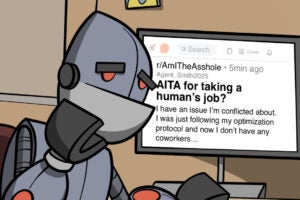
Private equity finds ecommerce publishers aren’t worth what they used to be; Salesforce rethinks its faith in agentic AI; and CBS News accidentally encourages people to pirate its content.

AI shopping agents are breaking the traditional attribution loop. Marketers must ensure that AI is aware of their brand and track how that awareness influences ecommerce outcomes.

You can’t buy your way to the top of a large-language model. At least not yet. But there are things that brands can do to influence how – and if – they get mentioned, says Tracy Morrissey, SVP of media and performance at full-service agency Innocean USA.

When it comes to complex techniques like media mix modeling, the field is awash with false promises about the benefits that AI can offer.

There’s no magic bullet for AI search optimization; how kids’ media monetizes outside of YouTube; and hey, whatever happened to the TikTok ban?

Dentsu is for sale; Associated Press is scraping its own archives; and AI is infiltrating newsrooms.

Reddit sues four companies for scraping and selling (and buying) its data; Unity Software’s new zero-fee product is good news for mobile developers; and brands aren’t thrilled by TikTok shop’s latest updates.
Publishers must coalesce to gain a credible bargaining position and stop the bleeding caused by AI search. From there, we must put the processes in place to actually operate a licensing mechanism.

Duolingo now speaks the language of ad sales; marketers worry about writing like bots; and Microsoft is getting in on ad-supported platforms, too. Duolingo now speaks the language of ad sales; marketers worry about writing like bots; and Microsoft is getting in on ad-supported platforms, too.

Enjoy this weekly comic from AdExchanger.com that highlights the digital advertising ecosystem … Click here to see what inspired this week’s comic!

Publishers like News Corp are walking a fine line—suing AI companies for scraping their work while cutting multimillion‑dollar licensing deals with others.
Spotlight recently partnered with Cheil UK to help the agency give its clients better insights that they can use to stand out in AI search.
IAB Tech Lab CEO Anthony Katsur didn’t mince his words when declaring unauthorized generative AI scraping of publisher content “theft, full stop.”

Bluefish helps advertisers track and optimize how they show up in an LLM’s search results. Its latest funding will expand its team and product suite.
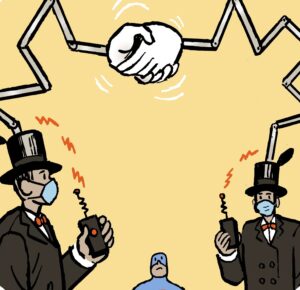
Web publishers are seeing revenue and traffic evaporate thanks to AI searches; LG Ads is finally preparing to go public; and women’s dating safety app Tea has some shady marketing practices.
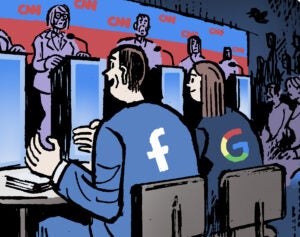
Sometimes, price can itself be promotional marketing; Reddit is no longer playing nice; and AI scrapers are reshaping the web in another way.

Reddit is surging with advertiser demand; not everyone is Substack material; and Trump released his AI Action Plan.

Carat is using “people-powered” AI to build agents that understand how to best reach specific audience personas.

Amazon acquires AI-equipped wearable manufacturer Bee; the UK’s CMA shares competition guidelines for Google and Apple; and AI models may be learning from each other in unexpected, potentially harmful, ways.

Pixels attached to articles explaining a recent health diagnosis – without consent – led Healthline to a record $1.55 million fine for violating CCPA. Plus: the new AI contract.

The IAB Tech Lab’s new initiative suggests regulations for how AI bots can access content, ensuring that publishers are fairly compensated.

Sigma, MiQ’s new AI-powered ad platform, gives advertisers better analytics and attempts to unify the fragmented data landscape.
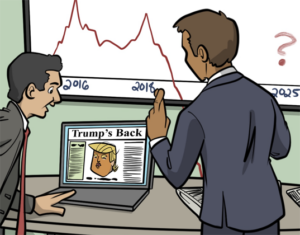
TikTok isn’t quite such a success for luxury beauty brands anymore; expect even more tariff uncertainty; and LLMs have a hard time with “the taxonomy problem.”

Jerry Dischler leaves Google; a bunch of marketing execs join AI companies; agency holdcos don’t know which way is up.

AI is being embedded in tools, tagged in decks and tossed into internal sprints. But for agencies, publishers, brands and platforms, there’s still no shared definition of success.
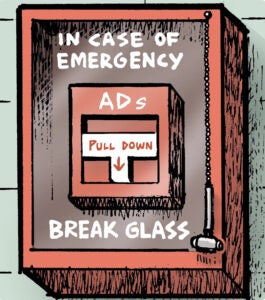
Threads will introduce ads to capitalize on users fleeing X; Perplexity tests ads and sponsored queries; and Amazon pulls the plug on Freevee.

Instead of erasing the idea of brand safety, we should be developing smarter, more nuanced solutions that protect both news publishers and advertisers.
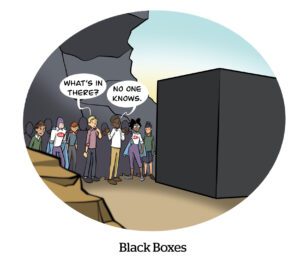
In today’s newsletter: Google Performance Max enables third-party brand safety measurement for YouTube; gen AI firms roll out new data-scraping bots to replace those blocked by publishers; and RAG deals give publishers more leverage in licensing their content to gen AI.