
The Great Meta Migration
Meta alumni are on the move – and they’re bringing the world’s most successful ad playbook with them to the next generation of would-be ad platform greats, with OpenAI at the top of the list.

Meta alumni are on the move – and they’re bringing the world’s most successful ad playbook with them to the next generation of would-be ad platform greats, with OpenAI at the top of the list.

In the modern streaming landscape, everything old is new again. At least that’s the case for NBCUniversal, which is trying to bring back bundled distribution deals and appointment viewing.
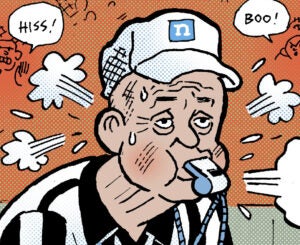
This documentary streamer found new life as an AI trainer; the NFL is taking public shots at Nielsen, but is it a negotiating tactic?; and Nielsen’s new focus on 18+ audiences dings streaming viewership.

Agentic AI just ran a CTV campaign end-to-end through a new, agent-driven buying workflow with far less manual optimization and a lot less waste. Butler/Till’s Scott Ensign explains what that means for the future of programmatic.

New York, NY (August 25, 2026) — AdExchanger, the leading voice in data-driven advertising and marketing, today announced the finalists for the 2026 AdExchanger Awards, recognizing the organizations, technologies and leaders driving measurable impact across advertising, media and ad tech. Selected by an independent panel of senior industry practitioners, this year’s finalists represent the companies […]

Systems built for one purpose, governed by the interests of a narrow group of stakeholders, are being used in ways the people subject to them never even imagined.
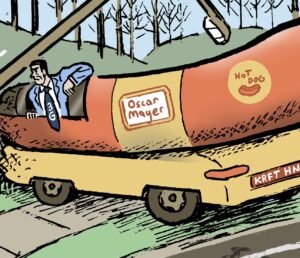
The potential for ads in robotaxis; Crocs is back to seeing year-over-year growth; and ad-free streaming tiers continue to grow more expensive.

Winning a pitch takes more than a polished story. See how agencies can use competitive spend, channel mix, creative, DMA, audience and performance data to uncover stronger insights, challenge assumptions and build recommendations clients can believe in. Get a practical framework for turning advertising intelligence into proof throughout the pitch.

OpenX CTO Joel Meyer, who was named Prebid’s new chairman, previews the org’s next phase and helping publishers navigate competing agentic protocols.

Alphonso – LG’s ad tech division – finally has a way out of its legal drama with parent company LG Electronics. Actually, it has three potential options.

Per-token price for frontier models may go up or down, but the cost to solve complex problems is going to increase, writes Zefr’s Jon Morra.
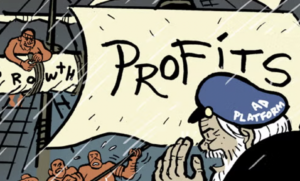
Say hello to the Charity Action Network; marketers are maxxing like everyone else; and Discord is trying to gamify its ads.

Senior editors Victoria McNally and Alyssa Boyle chat about why ad tech insiders should learn more about the larger TV media industry (via our sister brand Cynopsis!), and what’s new in the world of home screen ads.

Much like the ecosystem of life that surrounds a blue whale, a market of AI SaaS vendors is springing up around the biggest AI companies. And AI data startup Micro1 is emblematic of the shifting nature of these early-stage AI vendors.
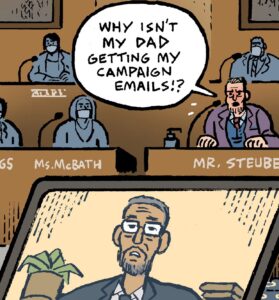
What’s with the myriad of retail media networks?; YouTube offers creators millions to refuse deals with Netflix; and political advertisers get a free pass.
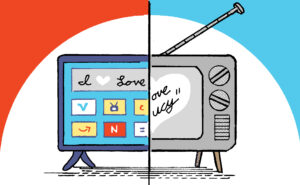
How long does it take you to decide what to watch after you turn your TV on?

A report dropped last month from eMarketer that made me curious. Social networks will capture 27.7% of all US ad spend this year, despite accounting for just 12.5% of the time Americans spend with media. Convergent TV (linear and CTV), where consumers spend 38.5% of their media day, gets 18% of budgets. As Digiday put it, “The pendulum is swinging back to the feed, signaling that the crown of digital video dominance is going to social media.”

What happens when you let an AI agent handle back-to-school shopping – and realize you may have outsourced the fun parts, too?

NBC News strikes an ad reseller deal with Taboola; a new short-form video app is born; and people care more about social video than TV.

Just in time for new TV programming to hit the screens in September, Nielsen is rolling out a few upgrades to its video measurement currency that will go live by the end of August

According to Horizon Media’s Bob Lord, most agencies are trying to solve the wrong problem by obsessing over cost efficiency at a time when AI has quietly unlocked something far more valuable: the ability to become a growth partner to advertisers.

Marketing teams are getting faster with AI, but the real question is whether they’re actually getting better outcomes, writes Devart’s Margaret Lee.

Google’s Spirit Airlines data stockpile is feeding AI; ChatGPT’s advertiser switcheroo; and X’s rage-baiting isn’t the engagement signal advertisers are looking for.

Tuple is entering the DSP market at a strange and tense moment for third-party ad tech. “There’s just so much animosity” between the programmatic buy and sell sides, says Founder and CEO Doug Lauretano.

The accepted narrative says linear TV can no longer provide what modern advertisers want. The real story is more complicated.

Thousands of advertisers are taking Google to arbitration over alleged ad overpayments. Attorney Ashley Keller explains the legal strategy and what a positive outcome could mean for claimants.

Why prebiotic soda brand Poppi describes its marketing strategy as “community first.” Plus: Apple’s transformation into a Google-grade advertising machine continues apace.

Wanna chat with your marketing mix model? Well, open-source tools and AI agents are making that possible.

The parts of AI that touch real money should always sit on deterministic infrastructure that’s been doing this long enough to know how to do it right, writers Fluency’s Eric Picard.
Reddit’s readers don’t take kindly to being marketed to; What’s an online retailer without any retail?; and AI slop is affecting the news market.