
Magnite Doesn’t Want To Be A DSP. It Just Wants To Own The Decisioning Layer
On Wednesday, Magnite CEO Michael Barrett painted a picture of a company that’s edging into the buy side by adding more DSP-style capabilities for planning and activation.

On Wednesday, Magnite CEO Michael Barrett painted a picture of a company that’s edging into the buy side by adding more DSP-style capabilities for planning and activation.

Disney got some cash back in its pocket after the OpenAI deal fell apart – but the company still plans to lean into AI.

Cuisinart’s marketing team has been eager to take advantage of generative AI-based creative.

With the right safeguards in place, open-market CTV can match PMP performance, proving that quality controls – not deal type – drive results, argues Ayse Pamuk, director of platform operations at Basis.
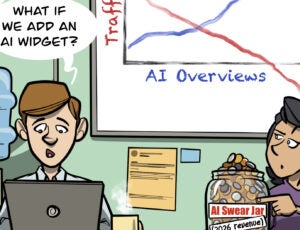
People Inc. holds the line on ad revenue as quality inventory gets harder to find in a sea of AI slop. Plus: BMW is running a first-of-its-kind campaign featuring in-car Spider-Man takeovers.

During Paramount Skydance’s Q2 earnings call, CEO David Ellison limited his remarks to a two-minute monologue about the company’s confidence in the intended merger.

Newton Research introduced a fully agentic layer to its platform that can handle each step of a campaign lifecycle and better predict future outcomes.

Chalice AI’s COO and co-founder, Ali Manning, explains how the AI startup – don’t call it a custom algorithm company – is helping brands like Bayer use advertiser-specific bidding models to drive real outcomes as opposed to poor proxies.
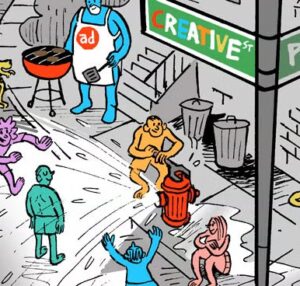
Holdcos get creative with M&A; striking a balance with influencer marketing; and social influencers are given marketing titles at brands.
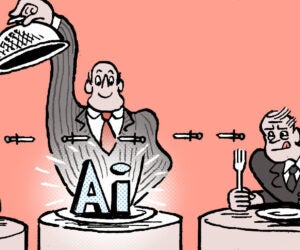
IAB offers new guidelines as to how brands and publishers should be tracking their AI search analytics. But don’t call it a framework – they have enough of those.
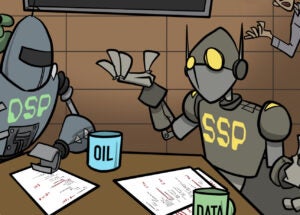
Here’s how PubMatic and Optable are using AI to help publishers turn first-party data into new ad deals and reach more buyers.
New Jersey’s new data broker law is already live, and the real compliance clock isn’t the 2027 registration deadline – it’s the immediately effective ban on selling sensitive data.

Big agencies wrestle with offsetting the rising cost of token consumption. Plus: OpenAI shared policies on how brands can apply ad credit to campaigns.

Women’s sports is having a moment as publishers, advertisers and the tech vendors in between try to capitalize on rising viewership. Digital out-of-home is having a moment, too.

Sweetgreen turned the World Cup into a marketing moment for its new wraps, running video ads in public viewing spaces through Atmosphere TV.
Serves You Right The ad industry has found a new audience to bombard with ads: AI bots. Time recently began serving ads to bots in an attempt to monetize its growing bot traffic. The ads are formatted as FAQ-style brand content and labeled as sponsored. Influencing agents may eventually become even more important than influencing […]
Amazon’s advertising businesses earned a total $19.8 billion in Q2, the company reported in its quarterly earnings on Thursday. That’s up from $15.7 billion in Q2 2025, and good for a 26% year over year growth rate.

Guess there’s no pleasing investors. Despite Reddit delivering an objectively solid Q2, its stock cratered, in part because of search-related headwinds and low referral traffic.

Performance marketing has fundamentally changed how marketers define success. Better targeting, attribution and optimization finally give marketing leaders what they’ve always wanted, which is a concrete way to prove that advertising works, expressed through performance metrics that CFOs understand.
Freewheel will begin reporting show-level data; Xbox will let users stream games for free if they watch ads; and Meta and Google can develop AI ads without even a prompt.

A combination of layoffs, lawsuits and AI operating costs set back Meta’s Q2 earnings, despite increased revenue.

Omnicom is halfway through a major sell-off of IPG agencies. Its future looks healthier as it prunes lower-growth firms, including eliminating certain specialist firms and overlapping agencies in certain countries.

Women’s sports are a lot more popular than they used to be. But ad inventory remains scarce, because women’s sports still gets way less mainstream media exposure.

Marketing consumer products comes with plenty of challenges. But just try selling a political candidate in a hyper-polarized, 24-hour news environment, says Mark Jablonowski, CEO of DSPolitical, a political ad platform that caters to Democrats and progressive causes.

Eyewear company Blacksheep claims that Google replaced its site with a lookalike domain that led to an error page, causing the brand to lose its position in organic search.
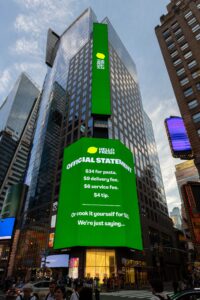
Hightouch’s new creative generation tool helped HelloFresh develop creative at a larger scale and launch a Times Square activation.

Somewhere between what the ad industry says and what the market rewards is often where the truth lives. Here are the three industry storylines most in need of debunking.

Some holdcos will pay AI costs in exchange for principal inventory commitments; Google will require Ads API customers to have passkeys; and microdramas struggle with the ethics of AI likenesses.

Earlier this month, PubMatic shelved its Prebid integration wrapper, known as OpenWrap Web, and announced it would begin recommending Playwire as an offloading-onboarding partner for the 250-odd publishers that use its wrapper.

Two-thirds of consumer attention lives on the open internet, but only one-fifth of ad spend follows it there. That gap is no accident. Walled gardens spent the past decade creating it.