
Sharing Is Caring; Why LLMs Won’t Hate On Authoritarian Governments
Google has to hand over some of its AI features to competitors; when LLMs will (or won’t) be critical; and publishers are productizing GEO offerings.

Google has to hand over some of its AI features to competitors; when LLMs will (or won’t) be critical; and publishers are productizing GEO offerings.

Netflix knows it’s in trouble. Or, rather, it knows people think it’s in trouble.

Georgia-Pacific spent years building an in-house media and measurement team, and ended up with a hybrid model that keeps digital execution inside while leaving TV and CTV to its agency.

Triggers’ latest feature tracks how brand perceptions change over time by looking at consumer memories and subconscious associations.

Private equity is hungry for challenger ecommerce marketplace players. Plus: Brands and creators aren’t thrilled with TikTok Shop’s AI-generated shoppable videos.

TV convergence has largely been framed as a national conversation: advertisers looking for more connected ways to plan across linear and streaming, measure performance, and understand audiences. But as buyers push for more accountable, performance-oriented TV campaigns, that national-first approach starts to lose precision in local markets.

Most brands worry about competitors. Whisker is worried about complacency, says CMO Hew Loyd – specifically, the millions of cat owners who have decided that scooping an open box of poop in their home is just one of life’s little chores.

Attribution isn’t all it’s cracked up to be. Just ask Cimin Ahmadi Cohen, founder and CEO of Idea Peddler, a full-service agency based in Austin Texas.

When an advertiser trains a model on its full organic converter base, it can better identify patterns that distinguish a casual browser from someone close to buying.

Megaphone becoming part of Spotify’s Ad Server impacts campaign setups; IAB finds 43% of buyers have little confidence in CTV ad supply quality; and Netflix’s ad-filled MLB Home Run Derby broadcast gets panned.
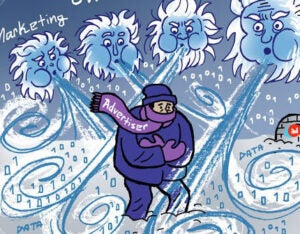
Google and Meta are quietly rewriting the rules of ad measurement, and they’re doing it with open-source marketing mix modeling tools that many marketers don’t even realize they’re using.

The SAIL initiative compensates publishers when AI scrapes their content and guarantees the outputs adhere to the same cultural standards they apply to their own coverage.

Brands can’t just focus on how often they show up in AI search. They also need to pay attention to accuracy – and know what to do when AI gets it wrong.

Advertising in AI-native destinations and experiences is already starting to look less like a series of experiments and more like an emerging market.

Meta’s AI creative products still need work; the role of humans in agentic media buying; and how Vizio TV owners can opt out of sharing data with Walmart.

Every retail media network claims its data is different. PayPal Ads actually has a structural reason to back that up. AdExchanger Editorial Director Sarah Sluis sat down with Mark Grether, SVP and GM of PayPal Ads, to talk about what it means to sit horizontally across 25 billion transactions, 400 million accounts, and 30 million […]

Incremental growth is what every marketer says they want. Proving it is another story. At Cannes 2026, AdExchanger Editorial Director Sarah Sluis sat down with Fabrice Beer-Gabel, SVP of Strategy and Partnerships at Intent IQ, and John Koenigsberg, EVP and Head of Platforms at Horizon Media, to talk about what happens when audience amplification actually […]

The “K” in “K-beauty” stands for “Korean.” But it should also stand for “kaboom” because Korean beauty product sales are exploding internationally, especially in the US market.

Instead of relying on rigid audience segments, modern systems can interpret a real-world moment in real time, combining layers of information to better predict what someone might actually care about right now.

Netflix considers live TV channels; Ofcom tells social media to cool it with the scam ads; and Meta gets weirdly nonconsensual with its AI images.
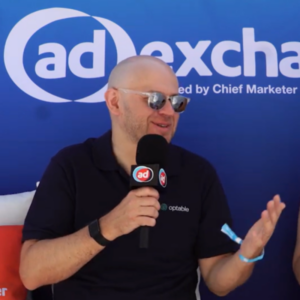
A year ago, agentic advertising was mostly theoretical. AdExchanger Managing Editor Allison Schiff sat down with Vlad Stesin, CEO and Co-Founder of Optable, to talk about what’s actually changed — and which companies are doing real work rather than chasing the buzzword. Stesin breaks down why workflow automation is the unglamorous but essential starting point […]

What does it take to sell “media quality” in 2026, when AI is making the content and placing the ads? That’s what new IAS CEO Lidiane Jones has to figure out.

The cinematic trope of people stopping to watch the news on a storefront TV display feels pretty out of date today. But sometimes, life can still imitate art.

Jessica Padula, Nespresso’s VP of marketing, on tapping into existing communities, hanging out in Reddit threads and how the coffee brand is using data to stay close to its customers.

Intuit shakes up its media business; the OpenAI ads pilot continues to expand; and the MLB seems to have changed its tune on gambling.

Ask five people in ad tech to define “CTV” – or any other streaming-related three-letter acronym – and you’ll get five different answers. The IAB wants to fix that.

For years, algorithmic decisioning lived on the buy side — inside DSPs that only ever saw a fraction of available inventory. Containerization changes that, moving custom AI decisioning models directly into SSP environments and reshaping the programmatic supply chain in the process. At Cannes Lions 2026, AdExchanger Editorial Director Sarah Sluis sat down with Pirouz […]

From avoiding AI slop to achieving show-level transparency on a CTV buy, we talk through how buyers are supercharging performance by focusing on the content where they place their ads.

The CMS migration helped unify TIME’s fragmented content data after years of platform transitions under multiple owners. This enabled TIME to launch its own AI search product and convert archival content into AI-friendly “markdown” pages.

Xpln.ai announced the launch of Ideal Attention Time, an attention metric that helps advertisers understand exactly how much attention their creative needs to resonate and drive brand recognition.