Can An AI Solution Fix Misaligned Marketing Orgs?
Opal launched Gem, a new AI solution, to help large brands unify the layers of media and tech within their organizations.
Live sports is one of programmatic’s biggest opportunities, even if the buying process is still kind of a mess. But efforts are being made.
For years, programmatic advertising has operated on the assumption that most buyers didn’t really want to know how the system works. That’s changing. More advertisers are asking harder questions about where their media dollars actually go, and those questions are increasingly come from mid-market agencies that would historically rely on DSPs to manage the complexity of supply for them.
In-store audio ads grow, but attribution and headphones raise doubts; Hidden fees persist as drip pricing draws scrutiny; World Cup ad costs surge.
Mula’s AI native content feed helps On3 keep its engagement and RPS consistent amid traffic drop-offs to publisher sites and the growing scarcity of online attention.
Hearst is stitching together its far‑flung news properties into a single programmatic marketplace to simplify buying local news and shore up its business as the ad market shifts.
AI is only as good as the data that fuels it. In advertising, however, that foundation is often flawed.
CTV never fit cleanly into campaign execution models built for RTB-based trading. Whether agentic AI solutions can simplify the complicated CTV landscape for publishers will be their first real test case.
ChatGPT’s ads manager leaves something to be desired; beware booking vacations via search ad; and YouTube is jacking up its premium prices again.
Earlier this year, datafuelX rehired Dan Aversano, one of the company’s co-founders, to take the helm as CEO. Aversano will lead the company through its next growth phase, which revolves around – surprise, surprise! – connected TV and digital expansion.
If a brand wants to improve its search visibility, there are all sorts of well-understood mechanisms – paid, organic and earned – to do so. But for a brand marketer whose CEO says, “We need to appear in these customer journey recommendation engines, and we’re willing to pay for it,” what can they do?
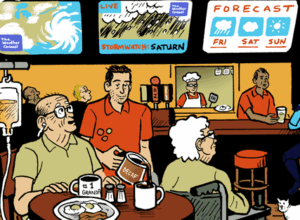
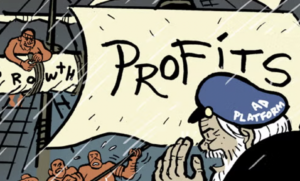
Enjoy this weekly comic strip from AdExchanger.com that highlights the digital advertising ecosystem …
Measurement and performance are expected to dominate convos at upfronts; Tubi doubles down on AI; and Meta takes down ads encouraging anti-Meta lawsuits.
Every company wants an AI-powered product. So what do they all look like? From A/B testing and media optimization to agentic interfaces for customers, we give a rundown on AI’s most popular applications in ad tech.
When Apple launched AppTrackingTransparency (ATT) in 2021, access to deterministic identifiers fell sharply as roughly 80% of users opted out of tracking. User-level feedback loops became sparse and biased, and iOS performance marketing shifted into a different measurement environment under SKAdNetwork (SKAN). Apple’s AdAttributionKit (AAK) later delayed postbacks, compressed conversion values and set privacy thresholds that made signal availability dependent on campaign structure and scale.
European TV has never been an easy ad market, with content distributed across different languages, currencies and regulatory frameworks. RTL Group’s total video strategy aims to help global advertisers navigate this fragmented market.
Pepsi cut ads, raised prices, and now must reverse both; YouTube is bringing interactivity to TV content; Instagram kills “link in bio,” sidelining publishers.
Behind its edgy marketing, Liquid Death faces a familiar CPG problem: Most sales happen at the register, where media measurement goes to die.
The programmatic supply chain is “pretty flawed,” says Danny Spears, COO of publisher alliance Ozone, and value is leaking away from digital media brands. But that doesn’t mean they need to stand there and take it.
We now have plenty of evidence that AI can be an incredibly useful tool. But proof is also piling up that it erodes our creativity.
Could Epic’s rough patch mean ads in Fortnite?; TV’s shot to end the reign of direct insertion orders; and publishers learn how to game AI search summaries.
There’s MMM and MTA, but no single ad measurement works for brands with multiple points of sale. On Tuesday, Northbeam launched an incrementality tool to complete what it calls “the trifecta of digital attribution.”
A new marketing intelligence platform helps brands like nutpods address fragmentation by unifying data and inventory across the digital ecosystem.
If you want to know what privacy regulators think about online advertising, it’s not a mystery. Just listen to what they’re saying.
Last week, the SSP Kargo announced a closed beta of its AI unified buying platform, Project Kera. The independent ad agency, Wpromote, is an early tester. Plus, the agency reveals a deeper look into its overall AI strategy.
Medvi caught in AI deepfake scandal; Delta SkyMiles members get 24-hour free NYT access. Source Golf launches a YouTube network.
The effect wasn’t just limited to news content. The Reuters.com/lifestyle vertical also had some of its brand-suitable pages blocked.
I’m keenly interested by emerging grocery aisle trends, snacks especially. So, I was quick to grab an interview with Andrew Thomas, head of marketing for the meat snack brand Archer, who was being offered to speak to a case study with GumGum regarding CTV pause ads.
The industry has spent years debating third-party cookies, but AI has settled the debate. First-party data isn’t just preferred; it’s structurally necessary. And the capital is already moving.
DSPlease Brand marketers and agency buyers are skeptical of DSPs’ transparency claims. After Publicis announced last month that it’s no longer recommending The Trade Desk to its clients, other DSPs saw an opportunity to strike. Since then, other DSPs (Viant being “the most aggressive,” according to one media buyer) have been reaching out to TTD […]