
Combat By Trial
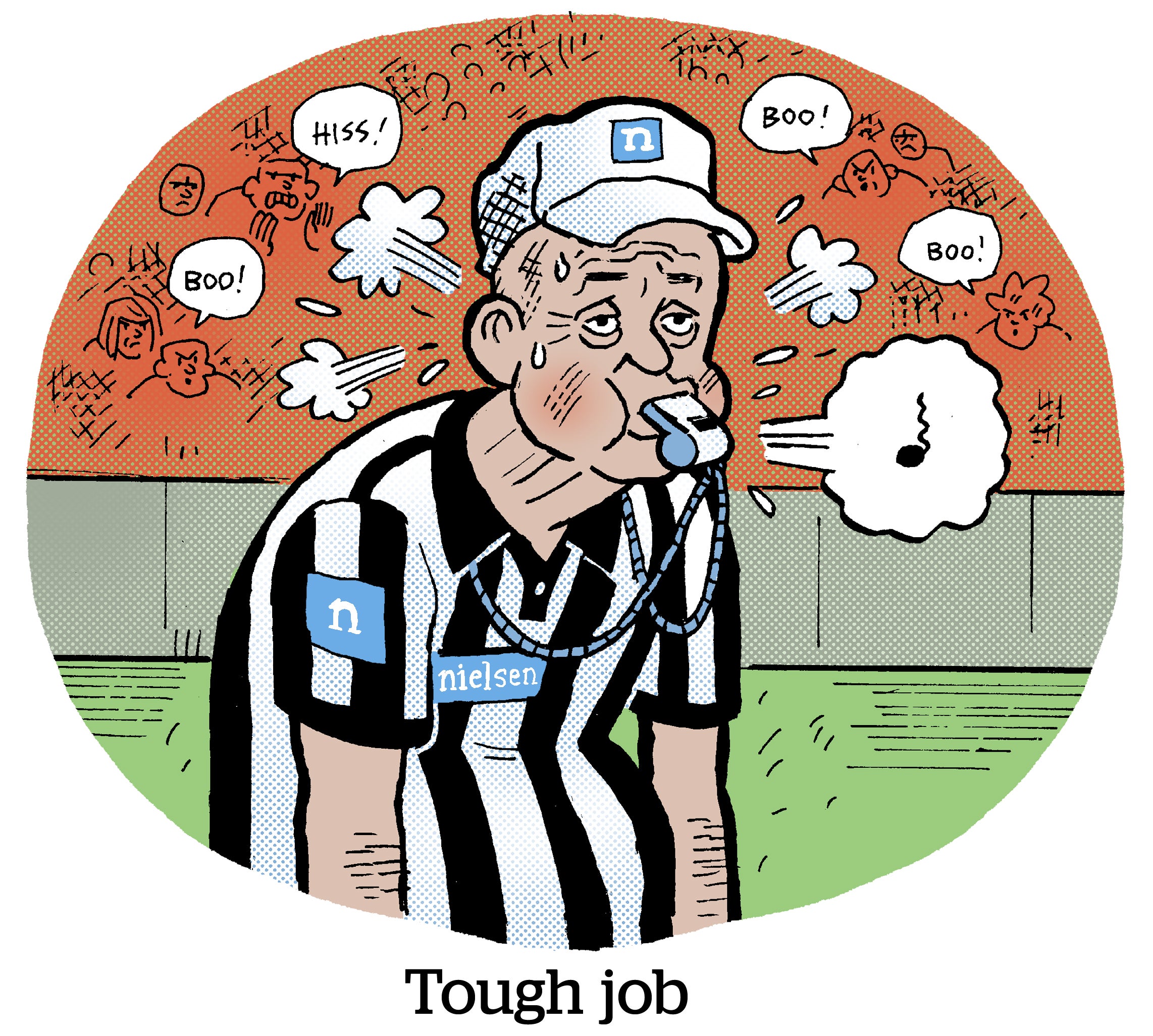
For the past four years or so, Nielsen has pursued a strategy of rapid-fire litigation against its keenest startup competitors when it comes to panel-based data modeling and smart TV data collection.
One could argue that the suits are largely frivolous. Hyphametrics was initially sued in 2021 on a lackluster case for allegedly duplicating Nielsen’s creative assets and for using software to recognize when a TV has been turned on or off, which Nielsen claimed to have copyrighted. The jury found Nielsen had no evidence HyphaMetrics actually used the tech. A simultaneous TVision suit involved technology to connect contextual TV data to ad impressions.
The suits have resulted in a string of losses for Nielsen, including news this week that TVision won a jury trial regarding its use of digital signatures to recognize audio content, which Nielsen again alleged was infringement.
Yet Nielsen continues filing appeals and additional suits of a similar nature, seemingly with the aim of hamstringing startup rivals with nonstop litigation and potentially scaring off investors or buyers.
“Every industry requires innovation,” TVision CEO Yan Liu tells AdExchanger, and the world of TV measurement is no different. The industry is evolving from “a ratings-only era to a full-funnel era,” he added.
Nielsen will presumably review the record, because, in the words of Katy Perry, it’s never really over.
Nielsen declined to comment.
The Ad-Less Wonders
Consumer wearable hardware businesses often grow quickly but lack staying power.
Peloton’s Icarus-like trajectory is one example. Fitbit also carved out a sizable independent share of its market before crashing and selling to Google for a relative song (roughly $2 billion).
The Wall Street Journal covers several other companies with IPO plans and seemingly strong, loyal customer bases that now face wary investors. Oura, which makes a ring that tracks health and sleep data, as well as Whoop, producer of a fitness data-tracking band, are in the same spot as Fitbit was. (As in literally almost exactly the same valuation and revenue multiple as Fitbit near its height.)
What goes unsaid by the Journal, but is an interesting through line for the health wearables and hardware category, is that the startups aren’t supported by data and ad sales.
There was no Peloton retail media business, and Oura’s and Whoop’s brands are built around their not having screens. Plus, since the data is highly sensitive, it’s far too risky to try and monetize.
But, ironically, now that Fitbit is part of the Googleverse and its accounts sync to the holistic Google Ads identity graph, data is what makes Fitbit a stronger hardware competitor.
Ad-Supported Xbox
Can advertising save Microsoft’s flagging Xbox division?
New Xbox CEO Asha Sharma inherited a mess, with Xbox having lost the last two video game console generations to rival PlayStation and spending the past year cutting costs, canceling games and closing studios. Now, more cuts are looming, as Sharma plans a new round for next month.
With these stories hanging over Xbox, Chief Strategy Officer Matthew Ball highlighted CTV as a model for ad-supported growth during a recent interview with The Game Business. He said that, for years, streaming subscriptions in the US have seen “in excess of 100%” growth in the ad-supported tier.
Ball later clarified to Windows Central that he wasn’t implying Xbox will expand in-game ads across console games. Instead, he sees ads as supporting “more affordable alternatives” to fully paid experiences.
For example, programmatic home screen ads are gaining popularity among CTV manufacturers and could be a way to offset skyrocketing console manufacturing costs.
Meanwhile, Xbox lost “millions of subscribers” when it raised the price of its Game Pass subscription by 50% in October, according to Ball. And Sharma endeared herself to Xbox fans by lowering the price as one of her first moves as CEO.
But how popular would an ad-supported Game Pass tier be? We might soon find out.
But Wait! There’s More!
AI is getting expensive – which is good news for smaller, previously overlooked LLMs. [WSJ]
Publicis and The Trade Desk have made up, which is either a triumph of negotiation or a sign the whole thing was never quite as dramatic as it seemed. [Ad Age]
SpaceX breaks the record for the largest IPO in history, making Elon Musk the world’s first trillionaire. [BBC]







