
Not On My Dime
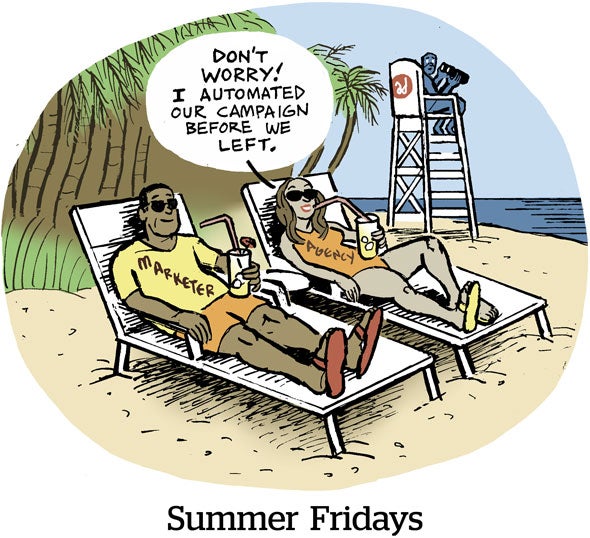
Marketers are increasingly using AI, but mostly for low-stakes tasks, not media-buying decisions.
A Digiday survey of more than 100 marketers names data analysis and content creation as the most popular AI use cases. Advertisers surveyed also prefer AI for social and retail media compared to other channels.
One could argue that the closer a task is to media spend and performance outcomes, the less likely marketers are to rely on AI. Among marketers using AI for social campaigns, two-thirds use it for data analysis and 57% for content creation – but only 32% use it to buy ad placements, which matches the percentage of advertisers who let AI buy ad space for retail media campaigns.
Without human oversight, brands worry AI could make poor media-buying decisions that hurt performance or even go totally awry, and marketers would be on the hook. Thus their reticence.
In contrast, marketers appear comfortable delegating AI grunt work, such as stock-style creative generation or data analysis, so long as they’re subject to human approval.
In other words, marketers draw a distinction between assistive AI and autonomous decision-making.
The M&A Trend
Brands need experts that can help them connect to young people in authentic ways. So ad agencies are opening up their wallets to attract that expertise.
Agency holding company Havas has acquired experiential youth culture agency Archrival, Adweek reports. Archrival will be folded into Havas Play, a division the holdco relaunched last summer in North America that’s focused on youth-oriented channels like creators, gaming, music, sports and live events.
The plan is for Archrival to use Havas Media Network’s Converged.AI tool to find new ways to engage with communities and be more responsive to shifting trends.
Havas isn’t alone in making this bet.
Accenture Song made a similar acquisition earlier this week by buying creator-focused agency Whalar. The deal represents a coming-of-age moment for creator marketing, with the large agency budgets managed by Accenture finally moving into the sector, according to Tristan Rice, a partner at M&A firm SI Global.
And these are just the latest influencer-focused acquisitions on the buy side. Since 2023, Havas has also bought Wilderness, WPP has acquired The Goat Agency and Publicis has added Influential and Captiv8.
When it comes to creators, agencies seem to prefer M&A to DIY.
LinkedInfluencing
Remember when LinkedIn was for job hunting and posting about career advancements?
Cute.
Nowadays, the professional networking-focused social media platform is leaning into the creator economy model, following the playbooks of YouTube and TikTok. And we all know what that means: new monetization products for influencers.
Business Insider reports that LinkedIn is planning to release a slate of influencer tools during the company’s 2027 fiscal year (which starts in July 2026 – don’t ask).
The new releases include a dealmaking marketplace where creators can partner with brands on sponsored content, a subscription feature and a direct purchase or consultancy-type way to “buy ‘experiences’ from creators, like a paid advice session,” per BI.
Although LinkedIn is “investing heavily in creators and creator marketing,” it’s still “early stages” for the platform, says Gigi Robinson, a creator in LinkedIn’s partner program.
LinkedIn has started down a long road that may take it from a business networking and prospecting site toward something that looks a lot more like TikTok or YouTube – although hopefully not a full slide into dating-app territory. (We shudder, cross ourselves and throw salt over a shoulder at the prospect.)
But Wait! There’s More!
OpenAI announces a data partnership with LiveRamp using the latter’s conversion API hub. [Adweek]
Meanwhile, OpenAI is in talks with NVIDIA to lease a $500 billion data center in Ohio that would require 10 gigawatts of energy, which is roughly 4.5 times the energy-generating capacity of the Hoover Dam – and enough to increase US total emissions by 0.5%. [The Information] (h/t to @ketanjoshi.co for calculating the total emissions increase)
Oh, and a proposed $100 billion data center project in Utah has AI super PACs spending more than $1.3 million to influence the state’s congressional primaries for the upcoming midterm elections. [Deseret News]
What the future of Google might look like. [Search Engine Journal]
The Trump administration is urging the UK government to reconsider a proposed social media ban on users under 16 because the measure would “impose disproportionate compliance burdens on American companies.” [The Guardian]
TV and streaming networks are laying the groundwork for outcome-based buying. [Digiday]
Media agency Mile Marker acquires creative agency LIFT. [release]
You’re Hired!
Disney promotes Brette Lipari to VP of advertising sales. [post]







