
Charter Makes Its Linear Inventory Programmatic
Charter’s full linear footprint is going programmatic, the result of a partnership between Spectrum Reach, the ad sales division of Charter, and supply-side platform Beachfront.

Charter’s full linear footprint is going programmatic, the result of a partnership between Spectrum Reach, the ad sales division of Charter, and supply-side platform Beachfront.
Who needs friends when you can converse with your data clean room, chat with your ad platform and, uh, talk to your marketing cloud?
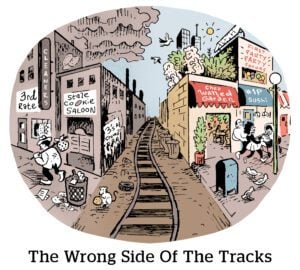
Microsoft’s purchase of Xandr from AT&T in late 2021 might have looked like an embrace of third-party ad tech. But while parts of the Xandr tech are considered valuable by Microsoft, the future of Xandr as an SSP integrated with thousands of outside publishers is in doubt.

There’s a prevailing narrative that supply-side platforms are releasing tools to cut out demand-side platforms in a desperate attempt to differentiate. But “it’s much more nuanced than that,” says Magnite CRO Sean Buckley.

Dotdash Meredith bet on contextual with its launch of D/Cipher, but it remains to be seen whether it can turn its revenue numbers around.

Apple has a knack for making privacy-related product announcements that cast aspersions on the data practices of any company whose name isn’t “Apple,” and there were a handful of those.

The vast majority (72%) of people say they would choose brands that use humor effectively over their competitors. The challenge is helping brands “find their funny” while also standing out from the deluge of branded content, says Stephen Loguidice, SVP and head advertising at Hartbeat, a media venture owned by actor and comedian Kevin Hart.

In honor of National Streaming Day – an informal holiday cooked up by Roku in 2014 that takes place every May 20 – several streaming services celebrated by slashing the price of their subscriptions.

Cars.com is trying to resonate with younger and first-time car buyers in hopes that they become lifelong customers.

Russia’s invasion of Ukraine is a test case for how ad tech can be used as an instrument of psychological warfare. But some ad tech companies are fighting back with their own AI-powered tools.

Dish is making its linear TV inventory addressable. Advertisers will be able to buy addressable TV programmatically on Dish alongside buys on Sling TV, Dish’s streaming service.

Amazon accounts for more than 40% of retail media’s multibillion-dollar total addressable market. But that doesn’t mean there isn’t a big opportunity to scale retailer audiences across the open internet, says Criteo CEO Megan Clarken.

YouTube creators like Smosh are embracing livestreaming to bring in bigger bucks with appointment viewing through brand sponsorships and ticket sales.

Host-read ads are a staple of podcasting, but they have a different – and compelling – flavor when converted into video form for podcasts that also have a video component.

Oracle is subtracting social sharing widget AddThis from its marketing cloud. As of May 31, Oracle will permanently terminate all AddThis services globally, including in the US.

ArcSpan’s new DMP, called AMS, was specifically built to organize a publisher’s first-party data into buyable contextual audiences and also highlights which audiences are likely to drive the most revenue.

What’s in a name? Quite a lot, says David Placek, founder and CEO of Lexicon Branding, which specializes in inventing product names, including Dasani, Swiffer, Impossible Burger and Febreze, to name just a few.

Connected TV may be online advertising’s go-to golden child – but buyers beware. CTV buys can be risky, says Chris Kane, founder of Jounce Media.

Streaming is arguably the TV industry’s most powerful growth engine, but it’s still far from a mature business. Which is why programmers took ad tech off the backburner during their upfront presentations this year.

Forget Skynet. The robot revolution will be fought between large ad platforms (mainly Google, Meta and Amazon) trying to woo advertisers with generative AI and promises of better performance.

Programmers that held upfronts came bearing gifts for advertisers, most of which were packaged as improvements to ad targeting and/or buying.

The end of third-party cookies isn’t “Armageddon for marketers,” says Wendi Dunlap, Mediahub’s newly appointed EVP of business intelligence and audience science. It’s an opportunity to test, learn and do better.

It’s up to technology and media companies to decide whether AI will be an atomic bomb that annihilates countless jobs or if it will power the workforce’s next leap in productivity.
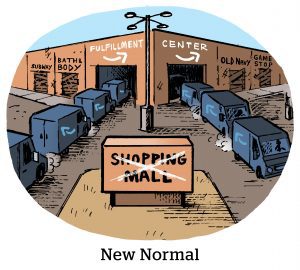
Retail media is due for a reality check, according to Max Willens of eMarketer/Insider Intelligence. Willens spoke at the Programmatic I/O conference.

Automation is also making its way onto TV advertising with a heavier focus on programmatic buying and better content recommendation algorithms.

Netflix addressed advertiser frustration with its lack of measurement and targeting at its first-ever upfront this week. Nielsen’s Digital Ad Ratings and EDO outcomes-based measurement will both be available to Netflix advertisers this year.

As broadcasters do their best razzle dazzle routines at the upfronts, streamers and MVPDs alike, including Roku and DirecTV, are busy building programmatic ad tech stacks.
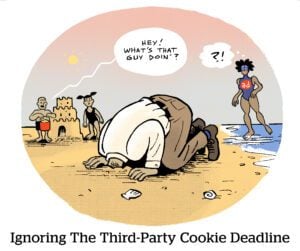
In Q1 2024, Chrome will deprecate cookies for 1% of a randomly selected group of Chrome users and slowly expand deprecation to more users throughout the year.

Supply-path optimization conjures an image of SSPs and DSPs dueling it out to each render the other obsolete. But it’s actually not that dramatic.

Many DTC brands are turning to TikTok to boost ecommerce sales. Bushbalm is also using TikTok to encourage people to buy its products in stores.