
Google Ads Will Now Use A Trusted Execution Environment By Default
Confidential matching – which uses a TEE built on Google Cloud infrastructure – will now be the default setting for all uses of advertiser first-party data in Customer Match.

Confidential matching – which uses a TEE built on Google Cloud infrastructure – will now be the default setting for all uses of advertiser first-party data in Customer Match.

If your marketing strategy isn’t data-driven, you’re not alone. Data has played a role in advertising for decades, going back to market research focus-grouping to understand feedback on branding. In the health care space, however, data is often underutilized due to fragmented systems and a lack of integration between marketing and clinical data. With over 97% of health care data still untapped, vast opportunities for creative, targeted solutions remain undiscovered.
Day three of the Google ad tech-focused antitrust trial in Virginia was like a guided tour of arcane auction mechanics.

In typical data analysis, you need to know what you’re looking for before starting. But deep learning models can reveal links between cause and effect regardless of whether anyone would think to look for them.

Is there a secret society of socialists within programmatic? Probably not. Plus, rumor has it that The Trade Desk is building its own smart TV OS.

PubMatic’s $5 million loss from DV360’s bidding algorithm fix earlier this year suggests second-price auctions aren’t completely a thing of the past.

Many marketers are eager to learn what generative artificial intelligence products can do for their brands. But before everyone gets too preoccupied with “could,” the Brandtech Group believes it’s time to consider the “should.”
Day Two of the Google antitrust trial in Alexandria, Virginia on Tuesday was just as intensely focused on the intricacies of ad tech as on Day One.
Google and the DOJ are currently questioning witnesses regarding how particular ad channels are established as defined markets. Plus, a wave of freelance advertising consultants has arrived.

It’s not often one gets to hear sworn witnesses in federal court explain the intricacies of header bidding under oath. But that’s what happened during the first day of the Google ad tech-focused antitrust case in Virginia on Monday.

Advanced audience targeting is perhaps the most significant change in TV ad buying structures, says Alison Levin, NBCUniversal’s president of advertising and partnerships, on this week’s episode of AdExchanger Talks.

The inspiration for creating Actionable is right there in the company’s name. Its aim is to help companies predict whether their customers are satisfied and then take action on that information.

If attention is treated like viewability 2.0, high or low attention could become a blanket requirement for a campaign and hinder performance.
Oracle’s growth rate will increase without its declining ad business. Plus, Ad-supported news no longer brings home the bacon.

Pacvue has promoted COO Rahul Choraria to chief executive.

The ad tech antitrust trial against Google begins today in Alexandria, Virginia. Who’s on the stand and what will Google argue?

It might be surprising to learn the government fights against monopolies the same way now as it did in the late 19th century – partly because the laws haven’t needed to change all that much.

The discovery process in the lead-up to Google’s ad tech antitrust trial has unearthed nuggets of information that aren’t directly related to the case, yet are no less fascinating.

In today’s newsletter: How loosened ad restrictions helped snacks take over America; Brazil’s X ban dings stan culture; and Roblox partners with Shopify as it expands real-world ecommerce to all creators.

More than one antitrust regulator is circling around Google. On Friday, the UK’s Competition and Markets Authority published a statement of objection to Google’s ad tech practices.
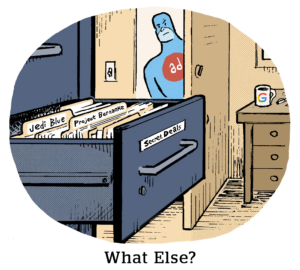
What do Hercule Poirot, Ben Bernanke, Star Wars and C.S. Lewis have in common? If you’re an ad tech nerd, you’ll know the answer immediately.

Inside a cloaking scam that funneled ad spend to piracy websites. Then: your AI agency assistant is here, and it’s ready to build your media plan.

Viewers – and ad buyers – are giving FAST channels a chance. Still, the FAST channel market has a long way to go, says Michael Scott, VP and head of ad sales & operations at Samsung Ads.

Enjoy this weekly comic strip from AdExchanger.com that highlights the digital advertising ecosystem …

The IAB’s annual advertising outlook has mostly rosy news. Plus, can sludge videos be wielded for good – or, at least, for effective political organizing?

Artificial intelligence is often incorrectly touted as a one-size-fits-all solution to any problem. But Omnicom’s new generative AI virtual assistant, Omni Assist, is narrowing AI’s focus to solve for specific agency challenges.
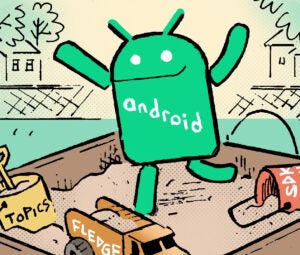
AppsFlyer announced its integration with the Attribution Reporting API in the Android Privacy Sandbox and released a related dashboard for campaign optimization.

Wonderful hadn’t done an out-of-home (OOH) marketing push in more than 15 years. That is, until a week ago, when it began a campaign across six major markets to promote its new no-shell pistachio packs.

As AI eases one process, it creates new concerns around data privacy. And with more regulations like California’s AI safety bill surely coming soon, marketers need to stay on top of their ethics game.

The bottom is falling out of the mass multichannel TV bundle. Plus, Amazon crushed its first-ever upfront this year.