Comprehensive Supply Access: How Marketers Can Efficiently Reach Their Audience
The big promise of programmatic is expanded reach. But we all know the reality is a lot more complicated.
For a moment in time, agencies and brands upped their efforts to reach diverse audiences and spend on diverse-owned media. But that hype has since petered out, in part because brands lack the data to effectively target this audience.
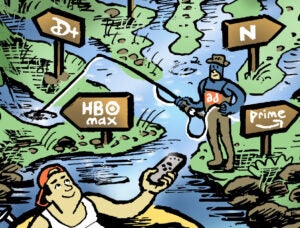
It’s that time of year again. See you in Cannes! (This classic comic first ran in June 2015.)
In today’s newsletter: What the surge in political ad spend on CTV looks like for the end user; Mars Wrigley tries to make gum stick online; and Google neglects Fitbit after mining it for data.
TransUnion is proposing advertisers target what it calls the “movable middles,” or category buyers who are not loyal to a particular brand.
PilotDesk offers AI- and machine-learning-based workflow software for ad buyers and sellers. These solutions are based on the company’s experience with how ad servers like SpringServe function.
Advertisers see the value in AI. Still, there’s plenty of potential that remains untapped when it comes to developing creative.
Some ecommerce pros were surprised recently to log in to their Google Merchant Center and see the “Feeds” tabs gone. The disappearance of the word “Feeds” is a sign Google is becoming less reliant on information provided by the brand or merchant to inform its marketing services.
Media governance measures advertisers can put in place to navigate the complexity of brand safety and gain better control of the quality of their media spend.
Equativ (formerly known as Smart AdServer) announced its acquisition of Sharethrough, an SSP with a specialty in native advertising.
Between 2019 and 2021, two-thirds of advertisers bought ads on sites flagged for repeatedly publishing false or misleading content, a recent study found.
The co-founders of a new privacy tech startup called Precise.ai are two names you’ll probably recognize: Adam Helfgott and Jesse Redniss.
Roku unveils what it’s calling the Roku Exchange, a more direct path between Roku’s ad supply and programmatic demand.
The best way for a brand to devise a company-wide policy for using generative AI responsibly is to get in there and start experimenting with the technology first, says The Brandtech Group’s Betty Louie.
Here’s today’s AdExchanger.com news round-up… Want it by email? Sign up here. BeReal Gets Real French photo-sharing app BeReal was a sensation in 2021 and 2022. But even when its organic growth was through the roof, the app – which is free to use and has no ads – faced the question of how it would eventually […]
The New York Times and Instacart are partnering for shoppable recipe videos.
TV-focused demand side platform Madhive acquires Frequence, an omnichannel marketing platform with roots in broadcast TV. Both companies have a foothold with local advertisers.
Experian entered the third-party data onboarder market on Tuesday with a new product based on its Tapad acquisition.
Apple has released developer documentation for “AdAttributionKit,” the framework that will now house all its privacy-focused ad attribution technology.
Here’s today’s AdExchanger.com news round-up… Want it by email? Sign up here. The Pub Trawl With generative AI tech, publishers are speeding through decades’ worth of web monetization cycles, which is a fancy way to say publishers are making the same mistakes. Last month, Jessica Lessin, founder and CEO of The Information, published a column for […]
E.W. Scripps becomes the first CTV publisher to adopt OpenPass, The Trade Desk’s single sign-on product for user authentication.
How big of a deal is The Trade Desk’s top 100 list? AdExchanger spoke to industry experts for their reactions and bounced some of their hot takes off The Trade Desk.
Who gets to decide what is premium? Is it dangerous to outsource that decision to The Trade Desk (or any one DSP)? And how should publishers position themselves within the future of this so-called premium internet?
In today’s newsletter United Airlines gets into retail media; why AI fails to catch AI-generated content; and political advertisers flock to X for cheap impressions.
Albertsons is taking that first step into non-endemic advertising next week via a partnership with Rokt to serve ads to people who have already purchased groceries.
The more new FAST channels there are, the harder it is for them to stand out to advertisers that have long perceived them as the bargain bin of streaming. One way to grab the attention of advertisers is to provide the data and transparency they’ve long been asking for from CTV partners.
Tech companies have developed AI solutions that shift budgets and strategies toward contextual. But the AI-driven transition to black-box optimization requires agencies to build and develop new skills, custom tools and processes.
Enjoy this weekly comic strip from AdExchanger.com that highlights the digital advertising ecosystem …
Here’s today’s AdExchanger.com news round-up… Want it by email? Sign up here. The Guinea Pig Farm Google rushed generative AI search responses before the product was ready for primetime. In a recent blog post, Google announced a series of hasty updates after the rollout resulted in some glaring errors. (Would you like some glue in your […]
SPO is moving from efficiency to curation to ranking the top 500 publishers. We talk through industry reactions to The Trade Desk’s SP500+ product. Plus: Seedtag acquired Beachfront, a deal that’s emblematic of multiple trends in CTV, privacy and the rise of contextual.