
The Bidstream Is A Duplicative, Chaotic Mess – But It Doesn’t Have To Be That Way
Publishers are initiating more and more auctions – but doesn’t mean DSPs are listening to more bids, according to Chris Kane.

Publishers are initiating more and more auctions – but doesn’t mean DSPs are listening to more bids, according to Chris Kane.

With its focus on scale and its homegrown programmatic buying platform, Revry, an LGBTQ+ owned-and-operated streaming service, is in a better position to compete for minority-owned media.

Oracle’s advertising and third-party data businesses are officially kaput; political pollsters are abandoning misleading online data; and AI-generated slop is already overtaking the internet.

During certain periods this year, advertisers blocked more than 40% of The Washington Post’s inventory over brand safety concerns.

The streaming landscape is rapidly expanding, with over 2,000 streaming services vying for US consumers’ attention. This surge has not only increased content availability but also heightened competition and subscriber churn. Samsung Ads’ data shows that, for every active user on a streaming app, eight users churned last year. This poses a significant concern, complicating media planning and monetization.

Hear what the ad tech industry is saying about Google’s antitrust trial. Then, a rundown on how the election is playing out for political advertisers and news publishers.

How, exactly, do campaigns know what issues to focus on? Companies like contextual ad platform GumGum are trying to help political buyers answer that question.

Enjoy this weekly comic strip from AdExchanger.com that highlights the digital advertising ecosystem …
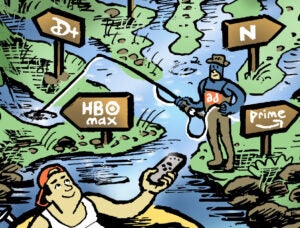
Winners and losers are emerging from the streaming melee. (Or at least the winenrs are.) Plus, CNN will begin testing metered content.

Data platform Quorum wants to serve publishers and advertisers at the same level as walled gardens can, but without all the walls.

Identity chaos – that’s what a customer recently called the current state of identity management (or lack thereof). It became clear that the customer’s plethora of options, methodologies and use cases – all with their own trade-offs and a lack of interoperability – resulted in significant confusion and limitations.

As we lean heavily on AI tools to enhance content efficiency, we may have reached a tipping point where we are creating more content in service of media algorithms, rather than for the benefit of consumers and brands.

Curation is the new hot topic, but it’s just another incarnation of bundling. Plus, Google is playing the long game with its US-based antitrust trials.

Open programmatic ad spend has only grown 3% since 2021, according to Wolfe Research – but there’s hope for the open internet.
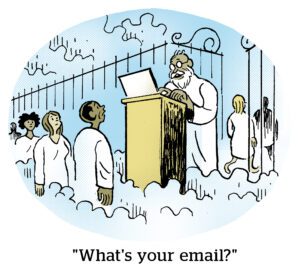
For fashion company Perry Ellis, the development of a strong first-party data strategy has also meant a ground-up rethinking of the company’s email marketing.

At the risk of sounding like “the year of mobile,” we’re at the beginning of a new phase in ad tech with the rise of AI. Advertisers and ad tech partners alike are overwhelmed with AI opportunities, eager to implement it in meaningful ways. But when seemingly everything is powered by AI, how can you make sure you’re using it successfully?

Randomized controlled trials are the best source of evidence of cause-and-effect relationships, including advertising’s impact on sales. Imagine the potential for conducting geo experiments using ZIP codes instead of DMAs.

Welcome to Week Three of the US vs. Google ad tech antitrust trial. Plus, ews publishers are turning to WhatsApp for traffic.

On Tuesday, mar tech company GrowthLoop announced the launch of its new customer data platform, called The Loop.
VIA Rail and The Globe and Mail are combining their first-party data sets to create bespoke ad targeting audiences in partnership with data clean room provider Optable.

The controls and measurement for performance advertising keeps getting more granular, more precise and more sophisticated. Yet brand advertising – even on digital channels – may feel like it’s stuck in the 1950s. Advertisers blanket broad audiences with high-level brand messages, accepting that the value and impact of these efforts may be largely intangible or […]

Covering Google’s ad tech antitrust trial in Virginia is surreal for anyone who’s been in ad tech as long as Ari Paparo. He knows most of the people on the stand.
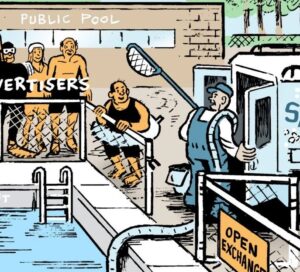
Here’s today’s AdExchanger.com news round-up… Want it by email? Sign up here. The Crusts Are Off The growth of online groceries and retail media puts new pressure on false advertising. It is not a coincidence that false advertising lawsuits have risen sharply. For one thing, claims made on packages on a store shelf or in a […]

A lot has already been said and cited during the Google ad tech antitrust trial, with more to come. Here are a few of the most notable quotables from the first two weeks.

The TV industry has come a long way from the early days of cord-cutting skepticism. Today, consuming entertainment on the living-room screen over the internet is the norm.

Let’s clear the air. The Federal Trade Commission does not hate advertising, says Samuel Levine, the agency’s consumer protection chief. But the FTC does have a few suggestions for the ad industry.

The EU is preparing charges against Alphabet for breaching the Digital Markets Act. Plus: Meta’s ad platform has been quite buggy lately.

Getting an approved CTV ad creative ready for delivery is still a mostly manual process. Which is why NBCU is launching a new product to centralize different quality assurance checks and creative ad tech partners.

While CTV has emerged as a powerful and unique advertising medium, venue-based DOOH streaming is distinct and requires its own marketplace to fully realize its potential.
