
Here’s today’s AdExchanger.com news round-up… Want it by email? Sign up here.
Cabin Pressure
The retail media parade isn’t done yet. Not by a long chalk.
The latest entrant on Friday was United Airlines, which announced the launch of Kinective Media, its advertising and data sales business.
You’ll have to gate check the direct ad targeting.
United’s ad platform uses “the insights of US customers aged 18 and over to create aggregated and anonymized audience segments that it offers to Kinective Media advertisers,” according to the release.

United has a fair bit of ad inventory: in-flight screens and entertainment based in the app, along with other ad slots potentially placed within a plane. The airline also has its MileagePlus program, where travelers earn miles and rewards, including by shopping or booking with the same partners as boasted by Kinective Media, including Macy’s, IHG Hotels and Norwegian Cruise Line.
And United is drumming up the airline’s retail media debut: “We’ve built a first-of-its-kind, real-time, ad tech-enabled traveler media network where brands have already started connecting to premium audiences at an unmatched scale,” according to a statement from MileagePlus CEO Richard Nunn.
What’s New?
AI-generated news is often comically easy for a person to spot.
But they slip by Google’s and Microsoft’s automated filters and safeguards. And the carrot tempting them forward is … programmatic. At least that’s what a Cambridge professor tells The New York Times.
It is worth quoting the double-byline story at length, since it sums up how easily bad actors can siphon money from advertisers by feasting on the errors of AI and automated advertising products.
“Even though AI-generated stories are often poorly constructed, they can still outrank their source material on search engines and social platforms, which often use AI to help position content. The artificially elevated stories can then divert advertising spending, which is increasingly assigned by automated auctions without human oversight.”
As always, the problem remains up to reporters and researchers to identify indisputable bad actors and bring negative attention to get a publisher removed. But changing the URL remains a surefire old standby.
Putting The ‘X’ In ‘Election’
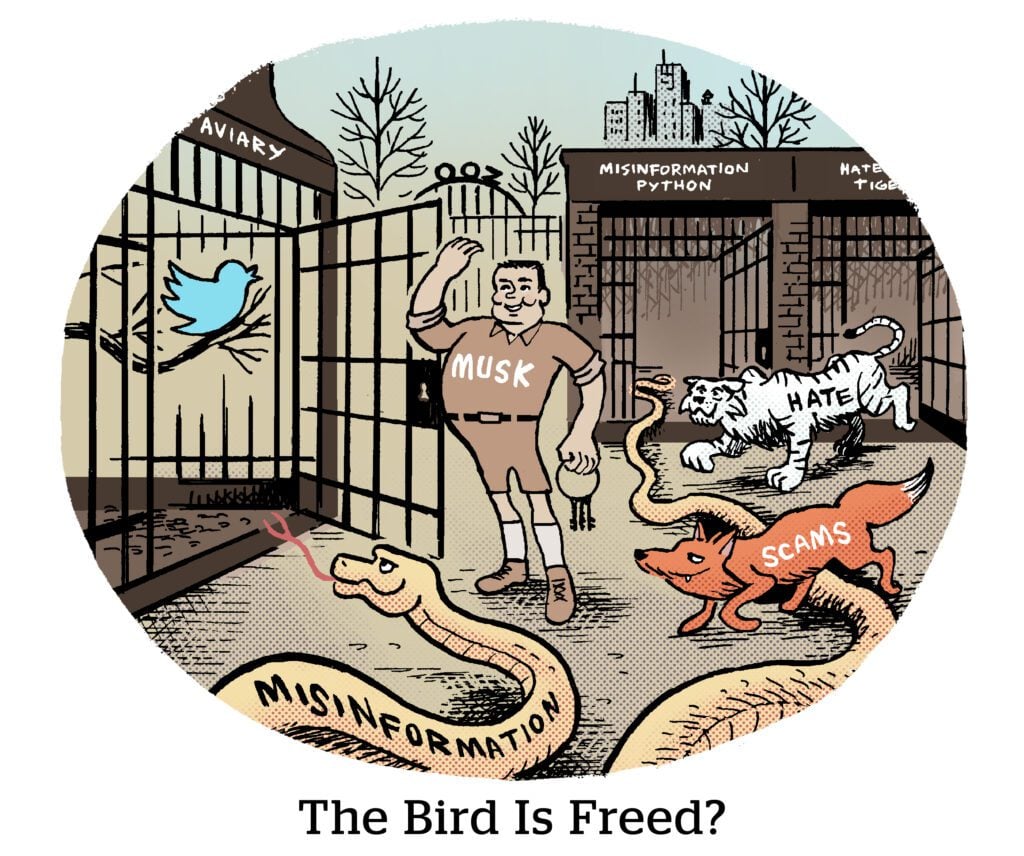
X, the artist formerly known as Twitter, was never a high-brow political environment. But it’s a downright cesspool since Elon Musk’s tenure began.
Which might be just the way political advertisers like it. Campaigns are seeing higher returns this cycle, political news outlet Notus reports.
But it depends on how you define returns. Divisive content isn’t necessarily driving ROAS – at least not directly. The biggest brands have largely fled the platform. Twitter still has a large user base and serves more ads on average, but it has limited demand. Political advertisers love the low CPMs and jacked-up frequency rates.
Another thing working in X’s favor is that political advertising is hamstrung on Google and Meta. The revenue isn’t worth the headache for those two.
Senator John Fetterman (D-PA), who ran a campaign with a heavy dose of Twitter posts, called it “a tool I don’t enjoy.”
Which reinforces that it remains useful.
“A lot of people who said they were leaving Twitter are back,” says HuffPost reporter Igor Bobic. Users who said, “‘Well, this is it for me. I’ll be on Bluesky,’ or ‘I’ll be on whatever the hell else,’ are back.”
But Wait, There’s More!
Discord unveils new ways for developers to make money. [The Information]
Microsoft will turn off by default an AI-based feature that records user activity on Windows devices after researchers exposed security flaws. [Wired]
AI’s energy needs conflict with media agencies’ carbon reduction efforts. [Digiday]







