
Here’s today’s AdExchanger.com news round-up… Want it by email? Sign up here.
The Waiting Game
The IAB’s annual advertising outlook has mostly rosy news. Ad growth is up overall and accelerating beyond expectations in key verticals, including retail media and CTV.
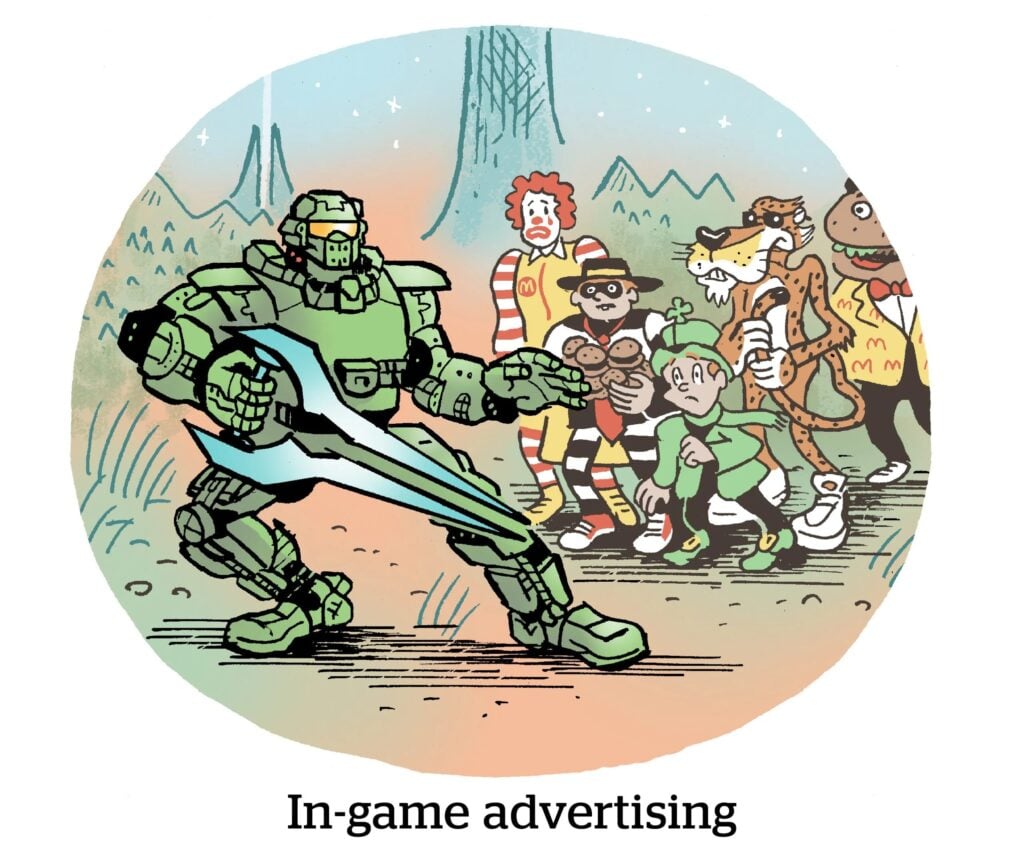
But we’re going to cherry pick a stubbornly pessimistic trend to focus on: gaming ads.

While growth is up in every category aside from legacy terrestrial media (direct mail, radio and print), gaming ad revenue growth was flat at 5.1% year over year. This is a particularly poor showing, considering gaming ads are growing off a relatively low base. Gaming media is actually losing market share to other channels.
Digital out-of-home, podcasting and other smallish channels have had an uphill slog to attract data-driven online ad budgets – but they’re still growing their market share, per the IAB report. Gaming’s ad revenue share, however, dropped from 3.8% to 3% over the past year.
Apple’s ATT policy change did undercut mobile game developer revenue and ad spend. But that can’t be the only reason these things are stalling. ATT affected a lot of different channels. Even while other verticals prove their worth and start to reach a critical mass, gaming ads seem perpetually stuck in first gear, despite what seems like a massive opportunity.
Political Brain Rot
Can sludge videos be wielded for good – or, at least, for effective political organizing?
Even if you’re unfamiliar with the term, you’ve definitely seen a sludge video. Also sometimes called “ADHD” or “overstimulation” videos, these vids feature several overlapping types of “oddly satisfying” content in a vertical, TikTok-friendly format. (Think a split screen of Minecraft Let’s Plays with a cake-decorating video while a voice-over reads aloud infamous stories from Reddit.)
Normally, sludge content is considered the bottom of the social media barrel. But 404 Media reports that the Harris campaign is now using the format for political ads, with the top half of a video featuring something relevant to the campaign (for example, a clip from a Kamala Harris speech or a montage of Trump statements) and the bottom using a generic 3D animation.
It’s not the first time the Harris campaign has copied popular social media content formats, but it’s an interesting evolution in its quest to target young, terminally online audiences. Especially because sludge videos, as the name implies, are not particularly popular even as they garner millions of views.
Is it worth getting more eyeballs if the Harris campaign indirectly associates itself with a type of content nobody really likes?
You’re Welcome
Google Ads customers received an email that on October 3 they will automatically have their ads accounts linked to Google Merchant Center, Search Engine Roundtable reports.
This is part of a broader trend of Google forcing its business customers to make certain moves. Google Analytics 4 was foisted on customers who preferred Universal Analytics. Performance Max, Google’s AI-powered ad product, has subsumed Shopping Ads, Google Maps ads, Gmail ads, YouTube Reels and YouTube TV.
And just this week, Google announced that Demand Gen, a PMax lookalike that’s focused primarily on social media-style vertical video, will take over video action campaign ads, which are YouTube ads with text or a call-to-action.
Many video action campaign advertisers hate this “upgrade,” because action campaigns are on YouTube, not third-party sites, and have higher-quality controls. The Demand Gen black box forces those advertisers into media formats or potentially unsavory placements the brands likely wouldn’t choose themselves.
What’s more galling than this black-box spending, though, is Google’s patronizing tone.
Advertisers are “missing out on the opportunity” to link Google Ads to Google Merchant Center, per the email. “To save you time,” the email gushes, Google will do so for you starting next month.
But Wait, There’s More!
Ad ops startup Aditude acquires Hashtag Labs. [Axios]
Location-sharing application Life360 just launched its direct advertising sales business. [ADWEEK]
A new Kantar survey says only 4% of marketers believe X offers brand safety. [Business Insider]
The Internet Archive has lost its appeal over ebook lending in a major copyright case. [The Verge]
BDG, publisher of Bustle and Nylon, raises an undisclosed amount from new investor Medici Capital. [Axios]
The decline of local news is reshaping how political campaigns work. [Columbia Journalism Review]
You’re Hired!
Accenture Song taps former IPG exec Arun Kumar as head of AI. [Ad Age]
AI-based recommendation startup Qloo hires former Google exec Jim Janson as CRO. [release]
GroupM elevates Richard Hartell to CEO of EssenceMediacom US. [release]
R3 promotes Jane Lacher to lead media consulting. [release]








