

What’s behind PubMatic’s missing $5 million in 2024 revenue?
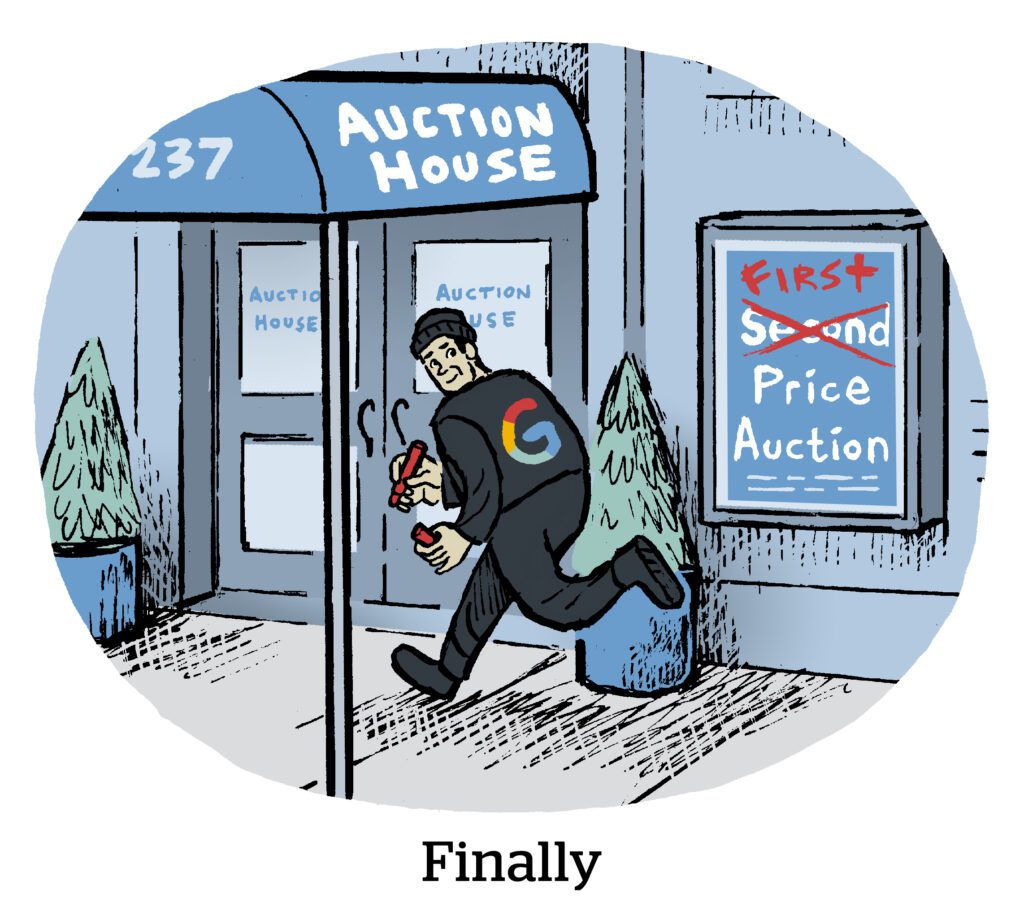
In its Q2 earnings report in August, the SSP revised down its revenue projection for the year after it saw shortfalls from an unnamed DSP partner shifting to first-price auctions in May of this year.
The unnamed DSP was Google DV360, a PubMatic spokesperson confirmed to AdExchanger.
Until earlier this year, DV360 contained a bidding logic that increased its bid slightly if an SSP tagged its bid requests as second-price auctions, according to two SSP sources who spoke to AdExchanger but requested anonymity. By tagging auctions as second-price to DV360, PubMatic was able to win more auctions from the DSP, the sources said.

Google confirmed that DV360 updated its prediction and bidding logic earlier this year, and that the change affected all SSPs. The mystery is why one SSP, PubMatic, will be down $5 million for the year from the change.
A Google spokesperson said its DSP runs both first-price and second-price auctions, and it trusts SSPs to correctly signal which auction they run.
“DV360 participates in both first-price and second-price auctions, and it is the SSP that determines what type of auction to run,” the Google spokesperson told AdExchanger. “We always recommend exchange partners send requested OpenRTB signals for every impression to help DV360 accurately assess and optimize bidding for available inventory.”
But if DV360 accepts bids from both first-price accounts and second-price auctions, that seems to contradict PubMatic’s framing in its earnings call that it lost revenue because a DSP partner forced a switch to first-price auctions.
What’s more, most SSPs, including PubMatic, proclaimed that they switched to first-price auctions years ago. In a 2018 blog post, PubMatic CRO Kyle Dozeman wrote that the SSP “now runs first-price programmatic auctions on all multi-level inventory (i.e., header bidding).” And all major SSPs, including Google Ad Manager, have been running first-price auctions since 2019.
PubMatic declined to comment when asked to clarify.
Redistributed revenue
What’s clear is that PubMatic was still running second-price auctions well after the industry was supposed to have migrated to a first-price auction model. But how could a change to this setup cause a $5 million revenue shortfall?
Prior to May, PubMatic tagged its bid requests to DV360 as second-price auctions. And presumably, other SSPs used a first-price auction flag.
DSPs use different bidding logic for second-price auctions compared to first-price auctions. Usually, buyers bid higher in second-price auctions, since the clearing price will be lower, just a penny higher than the next bid. This dynamic may explain why PubMatic was able to win more impressions (and perhaps at higher prices) when using the second-price auction flag.
But with that advantage stripped away, PubMatic’s win rate would dip. And the $5 million would be reallocated to other exchanges.
“Marketer budgets don’t just fly out the window because you change your auction type,” said one SSP source who asked to remain anonymous. “So where’d the $5 million go? It didn’t leave the market. It’s simply been redistributed to competition.”
The SSP source added that their SSP saw a bump in revenue in May after DV360 implemented the fix required to stop honoring second-price bid requests.
The fact that PubMatic was running second-price auctions at all – seven years after the industry moved to transparent first-price auctions en masse in 2017 – perplexed even experienced ad tech insiders.
So, despite the prevailing storyline, it seems second-price auctions aren’t entirely a thing of the past.








