
Comic: PET Shop
A weekly comic strip from AdExchanger that highlights the digital advertising ecosystem…

A weekly comic strip from AdExchanger that highlights the digital advertising ecosystem…

Here’s today’s AdExchanger.com news round-up… Want it by email? Sign up here. So Sue Me One of the myriad sticking points standing in the way of a US federal privacy law is the question of whether people will be able to sue tech companies in open court. Terms of service often stipulate that signatories give […]

Whenever there’s a sociopolitical or economic crisis, the lowest rung of online marketers finds a way to prey on the vulnerable and disenfranchised. The pending overturn of Roe v. Wade is no different – it’s creating a new class of online audiences that are potential prey, and publishers can stand to take more steps to filter out misleading ads (like donation scams and brand infringement) that harvest and sell users’ personal information.

You’ve probably heard (dozens of times) by now that first-party data will be the key to post-third-party-cookie ad targeting. But what exactly is first-party data? How does it differ from second-party, third-party and zero-party data? And what makes first-party data more suited to a privacy-centric ad experience?

Marketing typically depends on the thoughtful and strategic allocation of limited financial resources. Creative matters, but putting money behind the channels that will truly drive growth is the key to success, writes Cory Davis, VP of media and madtech at Infutor – which is why marketers will have to continue testing, learning and adjusting to new channels as they grow their businesses.

Here’s today’s AdExchanger.com news round-up… Want it by email? Sign up here. TV Spree “When it’s time to unwind and watch TV, I always sit down with my two must-haves: my favorite snack and my smartphone,” Google TV product manager Hanwook Kim writes in a Google blog post on Wednesday, announcing a new iOS app that […]

In order to gain access to performance advertising budgets (and prove out the power of publisher first-party data), Vox Media is relaunching Group Nine’s G9 Direct performance marketing solution under the new name VM Connect. The relaunch is also a milestone in Vox Media’s integration of Group Nine’s digital properties and tech stack following its […]

The IAB Tech Lab announced its Global Privacy Platform (GPP), a framework to standardize the sharing of consent signals so companies can more easily comply with global privacy regulations. “It’s a protocol for streamlining and managing cross-jurisdictional privacy compliance,” said IAB Tech Lab CEO Anthony Katsur – which is why the platform will be ready to incorporate new consent strings within the framework as they emerge.

Airship has acquired app store optimization specialist Gummicube for an undisclosed sum. Combining Airship and Gummicube makes sense, says Airship CEO and President Brett Caine, because marketers want greater insight and control over the full app marketing funnel, from discovery and download through to monetizing and retaining users.

The erosion of third-party cookies and the fragmentation of identity have compelled publishers to rebuild their first-party data strategies. And the IAB Tech Lab’s Self-Defined Audiences (SDA) might be one of the most significant standards building toward a set of post-cookie digital advertising solutions that aggregate and normalize audience data points across publishers’ domains, writes Vlad Stesin, Co-Founder and Chief Strategy Officer of Optable.

Here’s today’s AdExchanger.com news round-up… Want it by email? Sign up here. WWD-See It To Believe It Ad tech is on tenterhooks waiting for privacy-related news from Apple’s upcoming Worldwide Developers Conference next week. Sandwiched between glitzy announcements about shiny new products and hardware, many expect a momentous mention as to whether Apple will start […]

Vibenomics announced a $12.3 million Series B round on Tuesday, led by Panoramic Ventures, bringing its total funding to just over $30 million. Vibenomics expects to grow its roster of 6,000 retail locations (just over half of which are grocery stores like Hy-Vee, QuikTrip, Kroger and GetGo) to more than 20,000 locations by the end of 2023.

With the lines blurring between traditional TV content and streaming media, YouTube made its upfronts debut this year. YouTube VP Debbie Weinstein explains why.

The old adage that consumers must hear an ad at least seven times in order for it to stick no longer rings true when over-serving ads costs brands billions (and ruins the viewing experience), writes Valerie Bischak, GM and head of growth at Amobee. Data enables advertisers to reach their desired viewers, but technology can help maximize reach and control frequency against these most desired audiences.

Here’s today’s AdExchanger.com news round-up… Want it by email? Sign up here. Advertising Amazon Amazon is a top-10 global ad business, and it’s been able to achieve that status without doing all the things that platforms typically do to butter up the guys with the budget (feting advertisers with open bars and hosting glitzy, star-studded events). […]

A weekly comic strip from AdExchanger that highlights the digital advertising ecosystem… Happy Memorial Day, everyone! This comic first ran in January 2019.

The investment bank Needham estimates that Alphabet, Meta, Amazon and Disney combined will grab around $650 billion of ad dollars in 2023. By comparison, The Trade Desk earned just $1.2 billion in 2021, its first time clearing the billion-dollar mark in a single year, and even the strongest programmatic companies earn in the hundreds of millions, which is peanuts by walled garden standards. But “what that means is that a tiny 1% or 2% shift in budgets from the big platforms could double or even triple.”

TikTok’s content relies heavily on influencers and creators. As prime ad real estate for targeting younger “video native” audiences, TikTok is using its market positioning with brands to capitalize on both the creator marketplace and ecommerce through shoppable video trends, said Melissa Yang, TikTok’s head of ecosystem partnerships, speaking at AdExchanger’s Programmatic I/O conference earlier this week.

The programmatic market continues to boom as marketers shift more of their budgets to digital channels. But despite the incredible scale of this ecosystem, the market is still maturing – and true price discovery and price setting at a level of granularity that reflects true marketplace dynamics can help fill some of those gaps, writes Andrew Casale, president and CEO of Index Exchange.

A weekly comic strip from AdExchanger that highlights the digital advertising ecosystem…

Here’s today’s AdExchanger.com news round-up… Want it by email? Sign up here. Since You Asked … When the National Telecommunications and Information Administration (NTIA) asked what tech companies thought of Apple, Meta happily chimed in. Meta, which has lost billions of dollars due to Apple’s new tracking prompt, says its ability to innovate has been […]
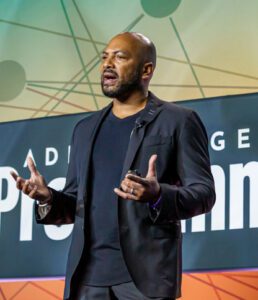
To help programmatic ad dollars flow more easily to Black-owned publishers, Procter & Gamble builds multicultural audience segments and shares them with The Trade Desk to power private marketplace deals. “We’re looking at all of the broken pipes within the programmatic ecosystem, and we’re making things along the way that promote inclusivity,” P&G’s Eric Austin told attendees of AdExchanger’s Programmatic I/O conference in Las Vegas earlier this week.

At Programmatic I/O in Las Vegas, CafeMedia’s Paul Bannister, Tinuiti’s Nirish Parsad and Insider’s Jana Meron weighed in on the ad industry’s worsening signal-loss problem due to the deprecation of device identifiers and third-party cookies.

The NewFronts are old news. Now it’s all about the upfronts, which are old. But don’t forget about the podcast upfronts, which are newer than the NewFronts but named after the TV oldfronts … or upfronts. Okay. Now that we’ve cleared that up, tune in for frontline reporting from the upfronts (TV and podcast varieties).

CTV is a no-brainer for political advertising today – viewership is up, it costs less, there’s more ad inventory, it’s addressable and it allows incremental reach on top of linear spend, writes Iván Markman, Yahoo’s chief business officer. The sooner political campaigns get serious about CTV, the sooner they can gain valuable insights about what their video strategy needs to look like in the future.

Here’s today’s AdExchanger.com news round-up… Want it by email? Sign up here. PET Lovers Privacy-enhancing technologies (PETs) are the industry’s latest attempt to program privacy compliance into data-driven advertising. But it’s not enough to just hire a vendor and check privacy off your to-do list. “Technology is not a silver bullet – internal governance needs to […]

The word “cookieless” crops up in virtually every conversation about the future of online identity. But what exactly do people mean when they say “cookieless”? Although the definition seems simple enough – the absence of cookies – it lacks the nuance to encompass the true complexity of signal loss. It’s also a misnomer.

Real estate franchise Coldwell Banker, like the rest of the housing biz, has been targeting buyers who might be in the market for a new abode. But due to various macroeconomic factors, the company launched a new campaign to shift gears and start talking directly to home sellers – which also means targeting an older audience across channels.

The advertising industry is taking a few hits these days. Legislators are looking hard at treating ad platforms like utilities. Nefarious state actors have hacked our political discourse and even our understanding of facts. But this isn’t the first time the ad industry is facing choppy waters. The ad world is in desperate need of a new position: the Chief Morality Officer, writes Marilois Snowman, CEO and founder of Mediastruction.

In the affiliate marketing world, publishers pursued the same goal retailers are pursuing today: to convert online intent into a shopper journey. Affiliate nets work with performance marketers, so retailers should branch out to digital-native marketers, writes Michael Jacobi, co-founder and CEO of Button.