
AUTHOR ARCHIVE FOR:
AdExchanger Content Studio
Articles By AdExchanger Content Studio
-

Live Sports Streaming Has The Fans. Now Advertisers Need A Smarter Way To Reach Them
Live sports delivers something increasingly scarce in today’s fragmented media landscape: large, highly-engaged audiences that show up together in real time.
-

TV Budgets Are Following The Wrong Scorecard
The last decade saw television audiences steadily shift from linear toward streaming. The fact that advertising budgets followed isn’t too surprising. If more people are watching streaming, more TV advertising dollars should move there, too, right?
-
Fixing The Back-Office Problem That Eats Into Agency Margins
Don Draper would be overwhelmed by the sophistication of digital advertising. But he’d laugh at how unsophisticated financial reconciliation remains.
-

Reaching The World’s Next 7 Billion Consumers Takes More Than Just Ad Tech
The US combined with Europe’s five largest ad markets are home to roughly 8% of the world’s consumers. Together, they account for nearly half of global ad spend.
-

There’s More To The Fall Sports Audience Than Football Fandom
On a Tuesday in early September, I found myself bouncing between the NFL, the US Open quarterfinals and Women’s College Volleyball, with a baseball game or two in the mix. Oh, and the FIBA Women’s World Cup had already finished for the day. Multiply that by every American with a remote and a phone, and you get a picture of what fall sports season looks like.
-

A Bigger Role For Retail Media Comes With A Higher Bar For Measurement
Retail media’s explosive growth over the past few years is the result of a straightforward pitch to advertisers: the ability to reach consumers close to the point of purchase, connect media exposure to transactions and prove conversion. Retail media is exceptionally effective at capturing existing demand as a lower-funnel performance channel.
-

Closing The Gap Between The Brief And The Buy
The advertising market needs a more cohesive path from the campaign brief to the live buy. Answering a mobile RFP can take three to five days and require four teams across research, audience building, supply vetting and deal setup. Much of that time goes toward assembling evidence and moving information between functions rather than making the decisions that shape the campaign.
-

This Is What Sports Media Looks Like When Athletes Have the Right Technology
It seems like every athlete has a podcast or docuseries these days. From Travis Kelce and the Mannings to LeBron James and Cam Newton, athletes have gone from being the subject of sports media to becoming media businesses in and of themselves.
-

Agentic AI Is Rewriting The Pharma Marketing Playbook
AI is transforming how the pharma industry approaches drug development. On average, the industry invests $2.6 billion to bring a new treatment to market, taking 12 to 15 years with a 10% success rate. But pharma pioneers are leveraging AI to rethink traditional models. Sanofi, for example, is developing a “lab-in-a-loop” that uses AI agents to potentially compress elements of discovery work from years to weeks.
-

Everyone In Ad Tech Will Soon Have An AI Operational Layer. Are You Building Yours Or Renting Someone Else’s?
Look at ad tech’s press releases this year. Magnite is rebuilding SpringServe to own the decisioning layer, AI-driven demand routing, price setting and coordination between buyer and seller agents. Raptive launched an intelligence division, appointed a chief AI officer and outright acquired an AI company.
-
Why Live Sports Is the Ultimate Stress Test For Your Unified Video Strategy
This summer’s high-profile sports events, highlighted by the World Cup, reaffirmed their unique power to capture attention and unite global audiences. But, for many brands, turning that attention into impact is hard: Demand is high, inventory is limited and audiences are fragmented across a complex media landscape.
-

Why Social Media’s Ad Dominance Is A Billion-Dollar Measurement Illusion
A report dropped last month from eMarketer that made me curious. Social networks will capture 27.7% of all US ad spend this year, despite accounting for just 12.5% of the time Americans spend with media. Convergent TV (linear and CTV), where consumers spend 38.5% of their media day, gets 18% of budgets. As Digiday put it, “The pendulum is swinging back to the feed, signaling that the crown of digital video dominance is going to social media.”
-

Linear TV’s Biggest Barrier Isn’t Audience. It’s Agency Economics
The accepted narrative says linear TV can no longer provide what modern advertisers want. The real story is more complicated.
-

Performance Marketing’s Biggest Success Created Its Biggest Blind Spot
Performance marketing has fundamentally changed how marketers define success. Better targeting, attribution and optimization finally give marketing leaders what they’ve always wanted, which is a concrete way to prove that advertising works, expressed through performance metrics that CFOs understand.
-

The Open Internet Is Closing The Gap With Walled Gardens
Two-thirds of consumer attention lives on the open internet, but only one-fifth of ad spend follows it there. That gap is no accident. Walled gardens spent the past decade creating it.
-

The Real Convergence Story Is Happening in Local Markets
TV convergence has largely been framed as a national conversation: advertisers looking for more connected ways to plan across linear and streaming, measure performance, and understand audiences. But as buyers push for more accountable, performance-oriented TV campaigns, that national-first approach starts to lose precision in local markets.
-
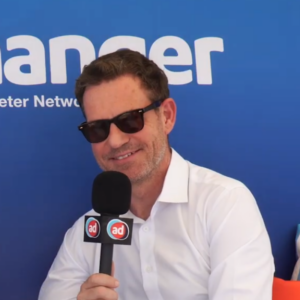
How PayPal Ads Proves Retail Media ROI With Cross-Merchant Data | Cannes 2026
Every retail media network claims its data is different. PayPal Ads actually has a structural reason to back that up. AdExchanger Editorial Director Sarah Sluis sat down with Mark Grether, SVP and GM of PayPal Ads, to talk about what it means to sit horizontally across 25 billion transactions, 400 million accounts, and 30 million […]
-
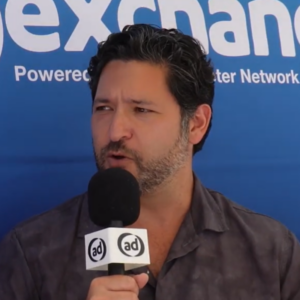
55% Net New Audience: How Horizon Media and Intent IQ Are Turning Signal Loss Into Incremental Growth
Incremental growth is what every marketer says they want. Proving it is another story. At Cannes 2026, AdExchanger Editorial Director Sarah Sluis sat down with Fabrice Beer-Gabel, SVP of Strategy and Partnerships at Intent IQ, and John Koenigsberg, EVP and Head of Platforms at Horizon Media, to talk about what happens when audience amplification actually […]
-
Viva La Workflow: Optable's Vlad Stesin On What's Actually Changed In Agentic Advertising
A year ago, agentic advertising was mostly theoretical. AdExchanger Managing Editor Allison Schiff sat down with Vlad Stesin, CEO and Co-Founder of Optable, to talk about what’s actually changed — and which companies are doing real work rather than chasing the buzzword. Stesin breaks down why workflow automation is the unglamorous but essential starting point […]
-

How Containerization Is Reshaping The Programmatic Supply Chain With inPowered AI And Equativ | Cannes 2026
For years, algorithmic decisioning lived on the buy side — inside DSPs that only ever saw a fraction of available inventory. Containerization changes that, moving custom AI decisioning models directly into SSP environments and reshaping the programmatic supply chain in the process. At Cannes Lions 2026, AdExchanger Editorial Director Sarah Sluis sat down with Pirouz […]
-
Walmart Connect And Magnite On The Convergence Of Retail Media, CTV And Programmatic | Cannes 2026
Retail media and CTV have been on a collision course for years. Walmart Connect and Magnite are making that convergence real. AdExchanger Editorial Director Sara Sluis sits down with Mike Laband, Group SVP of Revenue at Magnite, and Khurrum Malik, VP, Business and Product Marketing at Walmart Connect, to talk about what it looks like […]
-
Channel Planning Is Dead. Digitas' Liane Nadeau On The Fluid Funnel Era
The awareness-consideration-conversion funnel isn’t dead — it’s just moved faster than the org chart has. At Cannes Lions 2026, AdExchanger Editorial Director Sarah Sluis sat down with Liane Nadeau, Chief Media and Investment Officer, Digitas, to make the case that channel planning — the TV budget, the search budget, the audio budget, the programmatic line […]
-
Optimism On The Croisette: AI, The Open Web And Programmatic Advertising With Equativ's Michael Lehman
The mood at Cannes 2026 is complicated — rosé in one hand, existential dread in the other. AdExchanger Editorial Director Sara Sluis sat down with Michael Lehman, President, Americas of Equativ, aboard the company’s yacht to cut through the noise. What they got was a rare thing: a genuinely optimistic take on AI’s impact on […]
-

As AI Tools Multiply, Cadent And Google Cloud Make The Case For Connected Advertising Intelligence
As more brands, agencies, and media companies join in on the AI chorus of “better, faster, smarter,” the teams administering AI tools are singing a dissonant tune — managing a growing stack of AI-powered tools layered across planning, activation, measurement, reporting, and workflow management. It’s a familiar irony to anyone in advertising: Another innovation designed to […]
-
Can AI Orchestrate Omnichannel Advertising?
Optimization has been the golden promise of AI in advertising. From audience targeting and bid management to media buying and creative optimization, the industry’s first wave of AI investment has focused on helping campaigns perform better.
-

The Three Stakeholders Shaping AI's Future In Streaming TV
AI is rapidly moving from promise to practice in streaming TV advertising, reshaping how campaigns are planned, executed and experienced. But as adoption accelerates, there remains no clear answer to what success actually looks like across all parts of the industry.
-
From Signal Loss To Growth Engine: Intent IQ's Fabrice Beer-Gabel On Unlocking Identity-Less Environments
Signal loss used to be something the industry managed around. Now, with AI in the mix, it’s becoming something you can actually monetize. AdExchanger Editorial Director Sarah Sluis sits down with Fabrice Beer-Gabel, SVP of Strategy and Partnerships at Intent IQ, to unpack how publishers and advertisers are flipping the script on identity-less environments — […]
-

What the Industry Is Getting Wrong About AI, With John Dick, CivicScience | Cannes 2026
Everyone at Cannes is talking about AI — but CivicScience CEO and founder John Dick says the industry is missing its most important stakeholder: the consumer. Drawing on survey data, Dick argues AI may be among the most unpopular technologies ever introduced to the public, with the average person “somewhere between skeptical and terrified.” While […]
-

Health Care Marketing Lacks A Connected Customer View. Here’s How To Build One
Healthcare marketers have never had more data, channels or targeting capabilities at their disposal. Yet many organizations still struggle to answer a fundamental question: what actually drove performance across a campaign?
-

Why Agentic AI Is Just The ‘A’ Without The ‘I’ Right Now
I’ve always loved sci-fi movies and the way they portray futuristic worlds shaped by advanced technological innovation. One of my favorite movies is the ’80s classic “The Terminator.” And the more I hear about “agentic AI” in ad tech, the more I think the film is a perfect analogy for what’s happening right now.