
Google Feels The Digital Media Slowdown (Kinda), With YouTube Growth On An Anxious Decline
The onset of the digital media recession, if not the global economic recession, has struck Google. But Google’s doing just fine, though, thanks for asking.

The onset of the digital media recession, if not the global economic recession, has struck Google. But Google’s doing just fine, though, thanks for asking.

Tremor International has been on a journey to rebuild its biz with assets on both the buy and sell sides of digital media. And with its acquisition of Amobee announced earlier this week, Tremor is now making inroads into linear inventory. Tremor International CEO Ofer Druker spoke with AdExchanger about the company’s plans for its most recent acquisition.

Advertisers love a captive audience, and there are few audiences more captive than mass-transit riders. So it was perhaps inevitable that Intel-owned urban mobility app Moovit would launch an ad platform. Moovit’s advertising service is live for advertisers in Latin America, Italy and Israel, and the company plans to roll it out everywhere its app is used.

At this year’s WWDC, Apple announced updates to SKAdNetwork, its privacy-adjusted mobile measurement framework. For marketers, embracing, understanding and developing a robust strategy for SKAdNetwork is essential for user engagement and measurement on iOS. From there, the key will be maximizing the value of first-party data and designing long-term acquisition and measurement strategies – based on user consent for targeted advertising, writes Katie Madding, chief product officer at Adjust.

The ill-fated (and relatively brief) love affair between telcos and ad tech really is over. On Monday, Singaporean telco Singtel finally sold mobile-focused marketing platform Amobee to Tremor International for $239 million. The transaction is expected to close in the third quarter. (Read the release.) Tremor went public in June 2021. Its stock, which is […]

The round was led by Play Ventures VC with participation from Heracles Capital, a $10 million fund focused on mobile investments that was launched in May by Mobile Dev Memo Founder and all-around mobile smartypants Eric Seufert.
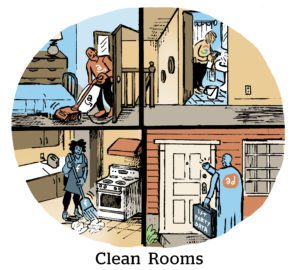
Over the past two years, data clean rooms have exploded onto the programmatic advertising scene, and they’re already at the center of some of the most exciting new partnerships and growth opportunities. But despite their rapid adoption, the definition of what a data clean room is – and all of the related nuance – is not well understood.

Google launched Google Analytics 4 (GA4) back in October 2020 to unify digital web and app analytics. Its push toward the new solution underscores the need for advertisers to implement a data strategy built on first-party data. But now the question is whether brands should prioritize the switch to GA4 before the sunsetting of Universal Analytics (UA) in July 2023 and what this transition means, writes Jessica Jacobs, global director of partnerships and growth at Incubeta.

Investment firm North Equity has amassed a portfolio of established media brands like Popular Science, Field & Stream and Saveur with a few new media upstarts mixed in, including The Drive, Task & Purpose, Donut Media and MEL Magazine. In 2021, North Equity launched Recurrent Ventures as its media division. Its CRO, Matt Young, spoke with AdExchanger about Recurrent’s acquisition strategy, its ambitions in CTV and gaming and why the company is prioritizing its private marketplace business to reduce its reliance on open web programmatic.

Here’s today’s AdExchanger.com news round-up… Want it by email? Sign up here. Pronounced She-In, As In “Ooh … She In Trouble Now” The fast-fashion company Shein, a gigantic but secretive Chinese manufacturer of fast fashion, is getting a lot of attention. Which Shein both does and does not want. On the plus side, Shein has […]

Netflix shocked the ad tech world with its selection of Microsoft to run its AVOD business. But the deal actually makes sense, and it’s helped calm nerves on Wall Street to boot. Plus: Why the IAB Tech Lab’s seller-defined audiences is slow to take off.

Here’s today’s AdExchanger.com news round-up… Want it by email? Sign up here. Game-Changer The NFL has a history of media and marketing innovation. If we’re keeping score, it was the first sports league to reach every TV in America, the first to invest in studio-style production and the first to mic players on the field. […]

This article is based on interviews with participants. Martin Kihn speaks to all the main players. It was inspired by Microsoft’s supposedly surprising selection as Netflix’s ad tech partner. But driven by the acquisition of AT&T’s Xandr, that’s just the latest chapter in a breathtaking adventure of pivots, write-downs, partnerships and potential.

The Digital Markets Act (DMA) is coming to the European Union. But rest assured – it will have implications for United States brands, too. The DMA will implement a clear set of rules prohibiting tech giants, including Google, Meta, Amazon and Apple, from engaging in specific practices that might be viewed as “anti-competitive.” While it seems that the act aims to create a fair playing field, the actual outcomes may be more nuanced, writes Chris Comstock, chief product officer of Claravine.

Multi-touch attribution is reaching an inflection point (finally). The majority of large advertisers (53%) now say they use MTA to track and optimize their spending across channels, according to new research from marketing trade org MMA Global. But why now?

The Acceptable Ads Committee, the group that establishes quality guidelines to whitelist ads on ad blockers, has a new president and he’s an old programmatic hand. Terry Taouss, a Cento vet and currently a principal at ad tech consultancy AdProfs, is taking on the role, replacing Marty Kratky-Katz, co-founder and CEO of Blockthrough.

The IAB Tech Lab’s seller-defined audience (SDA) spec is touted as a key contextual targeting alternative for the post-third-party-cookie digital ad ecosystem – one predicated on privacy-friendly addressability and publisher first-party data monetization. Some publishers are enthusiastic about testing SDA campaigns in the run-up to Google’s 2023 deadline for the phaseout of third-party cookies in Chrome. There is growing concern, however, about a marked lack of advertiser interest in doing the same.

Here’s today’s AdExchanger.com news round-up… Want it by email? Sign up here. No Compromise For Google Google’s reported offer to US regulators as a bid to avoid an antitrust suit was to spin off part of its ad business. But that news apparently landed with a thud. The Department of Justice is poised to move […]
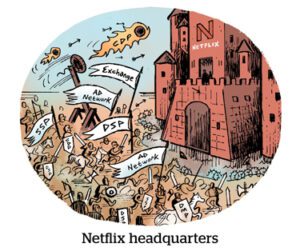
Just three months after Netflix surprised the world with the news that it plans to launch an ad-supported tier, the streaming leader has settled on its third-party vendor of choice: Microsoft. But why Microsoft? It wasn’t considered a serious programmatic contender until it acquired Xandr from AT&T (and that deal only closed last month). Still, something made Microsoft stand out from the crowd.
Google is signaling it may spin off its ad tech business. A DSP and SSP change would create new winners and losers and potentially open up access to walled-off inventory, says our guest, Ari Paparo, founder of Marketecture. Plus: How Google Analytics’ coming change will affect publishers.

Google may have a solution to the antitrust regulatory pressure it’s facing from governments around the world: a proactive spinoff. Alphabet, Google’s parent company, is exploring splitting Google’s digital ad business into a separate entity under the Alphabet umbrella. The question is whether Google’s proposed solution will pass muster with regulators, and if it does, who stands to win – and who stands to lose?

Unity will merge with ironSource in an all stock transaction that values the latter at $4.4 billion. The companies expect the merger to help deliver a $1 billion run rate by the end of 2024 and $300 million in annual EBITDA synergies the year after that.

If addressable ad IDs are the new keys to the kingdom, then you’ll find The Trade Desk at Epcot this summer. Which is to say, Disney and The Trade Desk announced an identity integration on Tuesday that will allow advertisers to activate against Disney’s first-party data programmatically via its clean room data product using Unified ID 2.0 (UID2) IDs.

Ad tech entrepreneur Chris Cunningham’s early-stage investment firm, C2 Ventures, has a new fund: just over $20 million for pre-Series A companies, plus $2.55 million for pre-seed startups. But there’s one thing he won’t be investing in, and that’s ad tech. Listen in to learn why.

Meta lost in court against French ad-tech champion Criteo, and it will now have to grant better access to its inventory. Meanwhile, France’s data protection watchdog, the CNIL, just deemed Google Analytics illegal – a move that the Italian data privacy authority has just followed as well. What happens now? It turns out there may be a server-side solution, writes Hugo Loriot, partner at fifty-five.
Here’s today’s AdExchanger.com news round-up… Want it by email? Sign up here. Get The Net Netflix isn’t just vetting third-party vendors for its pre-launch ad business (though it is vetting vendors, to be clear). The streaming leader is on the hunt for an executive to lead its incubating advertising business, The Wall Street Journal reports. […]

One of the most popular technical solutions to streamline campaign flights on connected TV is server-side ad insertion (SSAI). SSAI is technology that stitches together ads within a video stream before the stream loads on a user’s device. Most of the demand is coming from the explosive growth of CTV, but it can be used in any connected or over-the-top (OTT) video environments, including social.

The impending Google customer force-shift from Universal Analytics (UA) to Google Analytics 4 (GA4) represents a major change to how advertising ROI will be measured via Google’s services going forward. But publishers that spoke to AdExchanger about their migration plans aren’t feeling the same pressure as with, say, preparation for third-party cookie deprecation, Google’s other major upheaval scheduled for next year.

Netflix is planning to introduce an ad-supported model to attract new viewers, and chances are it will embrace programmatic advertising, too. Without the portfolio of strategic partners that NBC and Disney have, Netflix will need to catch up somehow. Programmatic is one enticing option for doing so, writes Nicole Scaglione, global VP, OTT and CTV business, at PubMatic.

Here’s today’s AdExchanger.com news round-up… Want it by email? Sign up here. Can A Tiger Change Its Stripes? Google offered to split its ad tech business into a stand-alone company (owned by Alphabet) as a concession to divert an antitrust suit, The Wall Street Journal reports. It’s unclear which products Google would transfer – although […]

Connected TV advertisers are still pining after show-level control. And PubMatic announced contextual targeting at the episode level is available to media buyers accessing CTV inventory through its platform.

Rather than relying on machine learning, SQREEM uses a mathematical AI model to track how systems change over time and predict audience behavior.

Given how much the market has changed since the Google trial began, and the wiggle room in the ruling itself, publishers aren’t expecting much relief from the court’s behavioral remedies.


Indie agency KWG says sell-side curation can target more high-performing inventory with better match rates and lower data fees than buy-side curation.

Infillion checked in with its latest acquisition on Friday: Foursquare. Apparently, if there’s a strategically interesting or distressed ad tech asset on the market, Infillion will find it.

A week ago, HBO MAX had its verified Reddit account overrun by a hacker group, which eluded notice for two days while it ran 108 different ad permutations targeting an unknown number of Redditors.