
Here’s today’s AdExchanger.com news round-up… Want it by email? Sign up here.
Get The Net
Netflix isn’t just vetting third-party vendors for its pre-launch ad business (though it is vetting vendors, to be clear).
The streaming leader is on the hunt for an executive to lead its incubating advertising business, The Wall Street Journal reports.
The new hire could be a decider for critical decisions, since Netflix may test and tinker with all sorts of ad revenue options. “Netflix has considered, among other things, creating an ad-supported option for each of its three tiers of service, which offer varying degrees of image quality and number of screens that can be used simultaneously,” people with knowledge of the matter tell the Journal.
Some options may not include ads, like promoting a studio with a special content bar on the Netflix homepage. Other tiers could serve ads between shows.
“We are still in the early days of deciding how to launch a lower-priced, ad-supported option, and no decisions have been made,” according to a Netflix spokesperson.
Two names reportedly in the mix for the Netflix gig are Peter Naylor, Snap VP of ad sales and former longtime ad sales leader at Hulu, and Comcast Advertising Chief Growth Officer Pooja Midha, who’s interviewed extensively.

Plot A New Graph
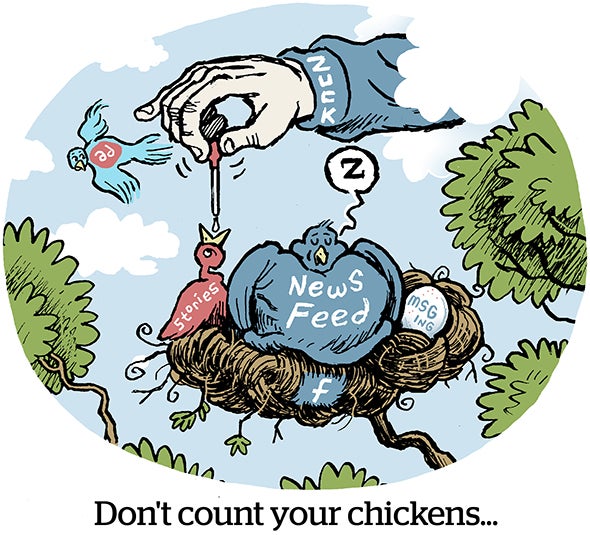
Facebook has a history of making major changes to its business model practically overnight. There was its explosion onto the ad scene, obviously, as well as the pivot to mobile (people think of Facebook as such an app-focused business, it’s easy to forget it began as a website) and its revenue shift from News Feed to Stories posts. Not to mention the whole “Meta” rebrand.
And Facebook has been making the same kind of ground-up overhaul over the past year, as it adapts to a world with global privacy laws and Apple ATT.
Eric Seufert sums up Facebook’s shift as going from the “friend graph” to an “open graph” model – the even more jargony way to describe the open graph is a “discovery engine.”
If you think that sounds like TikTok … you’re correct. Facebook wants to become more like TikTok.
The open graph model helps Meta in two prime ways. First, it incentivizes creators to create and post more content to its network, since the content can theoretically reach far more people with an algorithmic recommendation engine, rather than friends and followers. Second, it enlarges the pool of content seen by average users – and thus should increase time on platform.
Programmatic’s Persistent Propaganda Problem
Despite industry efforts to demonetize misinformation, major brands and government advertisers still serve programmatic ads to sites that promote the debunked narrative about the stolen 2020 election.
Online news watchdog NewsGuard spotted at least 1,975 brands advertised on 166 publishers that it classifies as publishers of falsehoods and conspiracy theories, Marketing Brew reports.
NewsGuard and Marketing Brew found ads from big-ticket brands including AT&T, Kia, Honda, Mastercard, Kohl’s, Logitech, Blue Cross Blue Shield, Amazon and Pottery Barn served on some pretty cringe-worthy sites.
In addition, ads from federal agencies like the CDC, the Department of Veterans Affairs and HealthCare.gov also appeared. That means federal tax dollars are funding content that watchdogs consider propaganda.
A previous NewsGuard report suggested about 2% of ad spend funds misinformation. Given these latest findings, it seems brand safety solutions are falling short of protecting advertisers from placing programmatic ads alongside propaganda and are even missing some of the lowest-hanging fruit when it comes to filtering inventory.
But Wait, There’s More!
Oracle Advertising just laid off staff, and some are furious that they’re facing huge losses in stock compensation. [Insider]
Google removes language in help doc calling hidden Search Console query data ‘very rare.’ [Search Engine Land]
Start-up tech funding falls by more than it has since 2019. [NYT]
Samsung targets B2B users of its new phone with a consumer-angled brand campaign. [MediaPost]
IAS announces audio ad verification certified for use on Pandora. [release]
Amazon Prime growth stalls in the US after recent price increases. [Bloomberg]
You’re Hired!
Crain Communications hires Jon Otto as chief commercial officer of ad sales. [Ad Age]







