
Dstillery Has A New Agentic AI Interface For Refining Audiences Faster
DS-1, a new agentic AI interface developed by audience platform Dstillery, aims to reduce manual inefficiencies within audience curation.

DS-1, a new agentic AI interface developed by audience platform Dstillery, aims to reduce manual inefficiencies within audience curation.
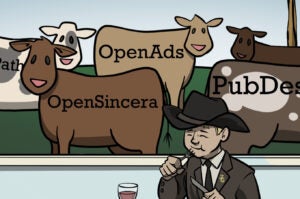
The Trade Desk has OpenPath, OpenAds, OpenSincera and, as of today, a new platform portal called OpenTTD.

Submit your comic caption idea by 5 p.m. ET on Mon., March 9, 2026 for the chance to win a free ticket to Programmatic AI in Las Vegas!
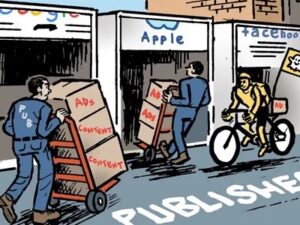
Criteo joins OpenAI’s ad pilot; Google considers making its own AI landing pages; and the Supreme Court passes its own judgement (kinda) on AI.

As the video landscape evolves, one thing is clear: CTV is no longer operating as a standalone line item. It is now a foundational component of fully converged, total video strategies. The implications are especially significant for regional and local advertisers.

Onetag’s acquisition of creative ad tech platform Aryel equips its curation solution with new tools for tweaking and testing interactive ad creative.

Yes/no binary logic was the right tool for programmatic. But autonomous AI agents can evaluate 10 million impressions per second, combining data from hundreds of sources, and human-defined targeting logic can no longer keep pace.

The surveillance state targets state employee’s vehicles; Belgium targets Google’s ad tech business; and brands embrace being targeted by trolls.

The strategic value of commerce data continues to rise, as Infillion snaps up Catalina. Then, a court filing reveals where agencies spend clients’ money.

Who says TV is the only media channel that could benefit from converged buying?

Enjoy this weekly comic strip from AdExchanger.com that highlights the digital advertising ecosystem …

The problems with FAST’s rapid growth; streaming viewers get a bot-powered alternative to subscriptions and ads; and IAS uncovers a mobile app fraud network that infected millions of devices.

PubMatic says adoption of its AgenticOS, combined with strong CTV and mobile demand, set the stage for double digit growth in the second half of this year.

During Thursday’s earnings call, CEO Cindy Rose announced a new plan to reposition WPP as a single company, rather than an agency holdco.

The Trade Desk, once a Wall Street darling, now faces the challenge of rebuilding goodwill across the investor community and the ad tech industry.

Last year was a massive success for Warner Bros. Discovery’s content – but maybe not so much for its financials.

LLMs now rely on YouTube as a top source for citations – and that includes sponsored creator content. Plus: Generative AI makes it easy for made-for-advertising publishers to expand their playbook.

Display advertising is old and busted. Streaming CTV is the new hotness. Obviously, those aren’t the exact words Magnite CEO Michael Barrett used, but it’s pretty much what the numbers say.

While the outcome of Paramount Skydance’s bid for Warner Bros. Discovery hangs in the balance, Paramount is laser-focused on driving streaming growth.

On Wednesday, and in time for the upfronts, Nielsen added more than 200 advanced audience segments in Nielsen ONE, its cross-platform analytics dashboard.

Ad verification used to be mostly about keeping brands away from the bad stuff. Now, verification providers have to prove that quality actually moves the needle, says Integral Ad Science CEO Lisa Utzschneider.

The future of publishing won’t be defined by where content lives, but by how it’s created, licensed, distributed and valued, writes David Kohl.
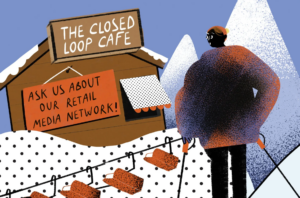
Buyers dig Netflix’s ad platform changes; OpenTable puts the “restaurant” in “RMN”; and Google and Amazon blame human error even when it’s AI’s fault.

Traffic didn’t drip. It dropped. In 2026, publishers are prioritizing stability over scale as AI, automation and curation reshape the sell side.

In pursuit of ad revenue, Dow Jones is betting on a tried-and-true strategy: direct relationships, first‑party audiences and a disciplined approach to using data to enrich ad campaigns.

59A develops brand algorithms by looking at both online and offline data points to determine who to reach and where to target them.

The future of retail media depends on a shift away from siloed in-store and online metrics to a full-funnel approach that reflects how customers actually shop.
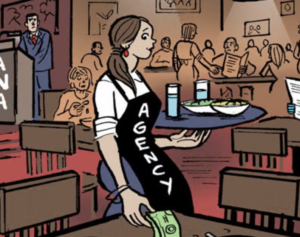
WPP airs some dirty laundry; HubSpot buys itself a media brand; and data centers are more politically unpopular than ever.
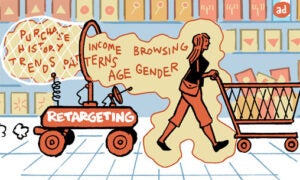
Infillion, an ad tech business built on M&A, is back with another acquisition. This time it’s Catalina, a century-old market research and shopper marketing company with roots in physical cash register machines.

OpenX and Givsly’s new curation solution lets political campaigns reach voters based on data sourced from nonprofits, rather than traditional party affiliation.