
Amazon Strives For Streaming Ad Dominance; Everything But The Media
Amazon touts its Marketing Cloud, but buyers have concerns; OpenAI’s ad biz may face challenges; and in-chat shopping isn’t all it’s cracked up to be.
Amazon touts its Marketing Cloud, but buyers have concerns; OpenAI’s ad biz may face challenges; and in-chat shopping isn’t all it’s cracked up to be.

From afar, it looks like Google had a rough year in antitrust court. But zoom in a bit and it becomes clear that the past year went about as well as Google could have hoped for.

Don’t ask whether any other company has created a similar product to yours; the answer is probably yes. But there are other ways to stand out.

Omnicom unveils the latest version of its ID and analytics tool; there’s a new Google Search update in town; and Omnicom Media addresses CTV ad frequency.

If there’s one thing Disney knows how to do well, it’s brand-building. Now, the massive media conglomerate is developing new tools specifically designed to help its advertising clients do the same.

NBCU’s early embrace of ad tech – led by Ryan McConville, its chief product officer and EVP of ad platforms – set the stage for a pandemic-fueled digital transformation that blurred the line between traditional TV and streaming. But that doesn’t mean linear isn’t still a top priority.
A few years ago, “data clean rooms” were all the ad tech trades could talk about. Fast-forward to 2026, and maybe advertisers don’t need to know what a data clean room is after all.

Agentic Alphabet Soup Another day, another attempt at making sense of agentic AI. On Tuesday, the IAB Tech Lab released its Agentic Roadmap, a framework designed to help the industry scale agentic buying and selling without rewiring existing workflows. Tech Lab CEO Anthony Katsur says the new road map will minimize fragmentation and confusion across […]

AdExchanger, part of the Chief Marketer Network, is launching Programmatic AI, a new spring industry event debuting May 18–20, 2026, in Las Vegas.
NBCU is testing agentic systems that can automatically activate campaigns across its entire portfolio – including live sports on linear.

Viewers aren’t just watching streaming content anymore; they’re living in it. And while they’re streaming, they’re telling us something important about how they want to experience advertising. They want to do more than watch; they want to engage.

OpenX’s new API suite provides ad buyers with a more detailed view of the bidstream and, as a result, more accurate targeting.
Publishers have been losing 20%, 30% and in some cases even as much as 90% of their traffic and revenue over the past year due to the rise of zero-click AI search.
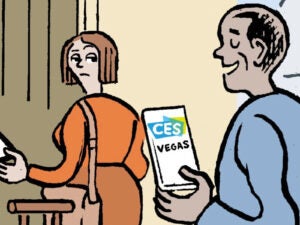
Ring In The New Year The “everything is an ad network” trend will live forever. There are always new advertising canvases and data sources to be plumbed. For instance, consumer wearables are primed to go off in 2026, Bloomberg reports, especially accessories and rings. That said, smart watches remain the top wearables choice by far, […]

Publishers can reach relevant audiences at scale and with greater specificity through Optable’s new planner agent.

What’s one data privacy shift or regulation that will most reshape digital advertising in 2026 – and who will be most unprepared for it?
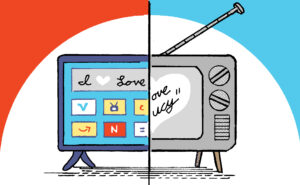
If any single event can be considered the jumping-off point for TV upfronts, it’s the Consumer Electronics Showcase (CES), which kicks off this week in Las Vegas, Nevada.

The era of “managed decline” is over; the era of existential clarity has begun. Publishers are no longer guessing what the post-platform world looks like. We are living in it.

ChatGPT ads might already be here; TikTok’s new ownership deal has marketers spooked; and California unveils a new consumer protection act.

AI search platforms are introducing ads. But if the ads don’t add value and maintain authenticity, platforms risk losing consumer trust.
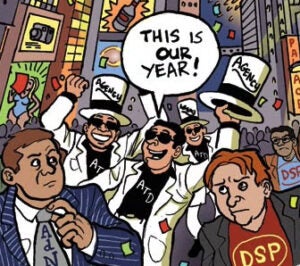
It’s been 15 years since this comic first ran in January 2011, and there’s something both quaint and timeless about it. Here’s to more (and more) transparency in 2026, and happy New Year!
From headline to punchline, AdExchanger’s weekly comics distill ad tech industry news into something our readers can laugh about. These are our faves of the year.

As brand safety standards evolve and oversight shifts from platforms to third-party vendors, Brittany Scott, SVP of global partnerships at Zefr, explains what the rise of generative AI – and Meta’s decision to step away from MRC brand safety audits – means for the future of media quality.

This year, programmatic companies faced tough decisions about privacy, awkward acquisitions and the cookie die-off that never quite happened.

The generative AI trend generated endless hot takes this year, but the ad industry also had plenty to say about growing competition between DSPs and SSPs. Here are AdExchanger’s top 10 most popular guest columns of 2025 and why they resonated.
Enjoy this weekly comic strip from AdExchanger.com that highlights the digital advertising ecosystem …
TV ad measurement is breaking down. Tatari’s Benjamin Heaton explains why signal loss and privacy shifts are reshaping how TV campaigns, and how it can be fixed.

AI is fueling advertising, and AI agents are running ads. As we close out 2025, take a moment to listen to this AdExchanger Talks interview with Paul Longo, GM of AI in ads for advertising, for his POV on both of those topics.

Who bought what and why this year? Here’s a (mostly) comprehensive list of all the notable ad tech, agency and digital content deals of 2025.
Private equity finds ecommerce publishers aren’t worth what they used to be; Salesforce rethinks its faith in agentic AI; and CBS News accidentally encourages people to pirate its content.