

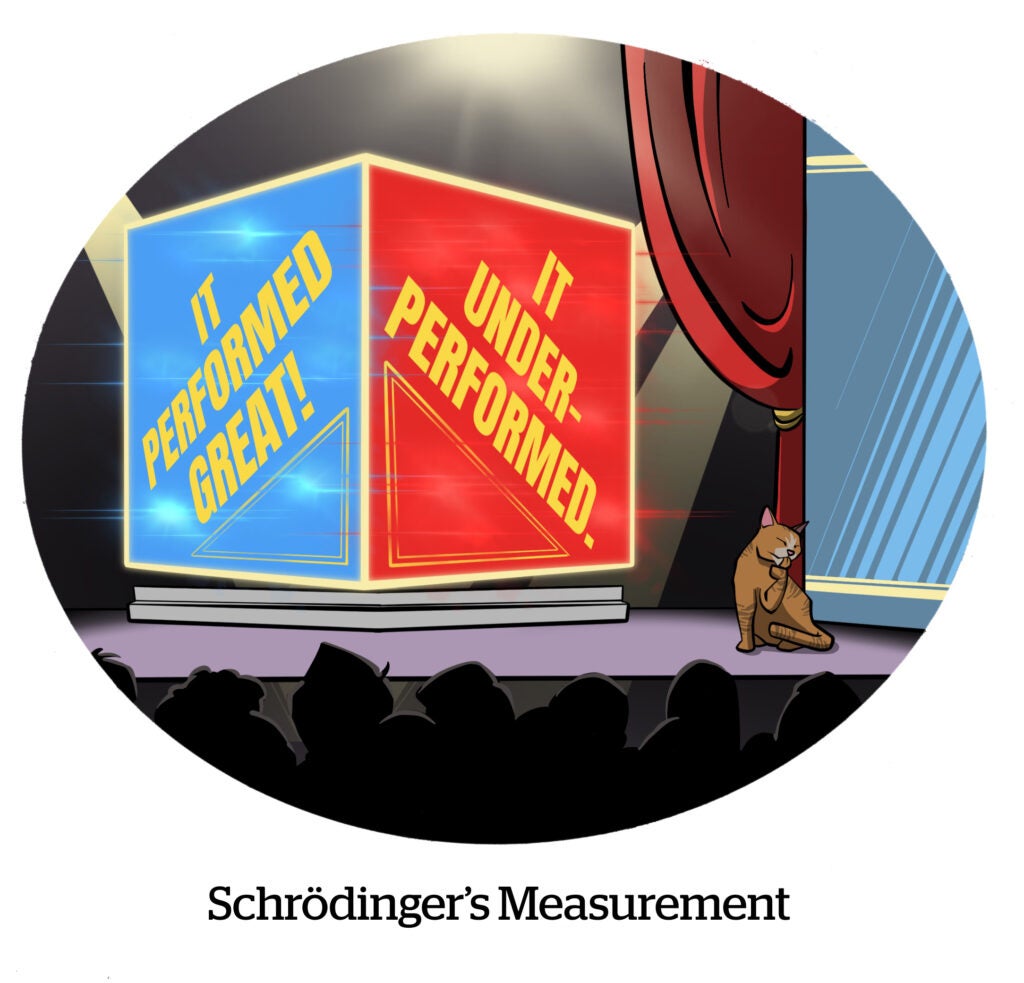
Let me introduce you to a phrase that’s been pinging around the back of my head for the past year or so: the “cult of performance.”
I decided to bring up this so-called cult now – frankly, the idea is still in the marinating stage for me – because of a Chewy ad I saw doing the rounds this week. Perhaps you’ve seen the ad or some discussion about a screenshot of it on LinkedIn or X. It features a close-up of a 1991 quarter featuring George Washington’s face. The coin is covered in squirming maggots.
Chewy’s account confirmed that the image was pulled from its catalogue. It’s actually a picture of a food product for insect-eating animals like lizards, with the coin present for scale.
The episode brought home to me how over the past few years, driven primarily by AI adoption, there has been a truly radical change to how quickly and easily brands will abandon old standards of quality – or even decency – in the name of performance.

Once upon a time, and not so very long ago at that, this Chewy maggot ad would have sent heads rolling down Madison Avenue and drawn reprimands across Chewy’s marketing org.
But nowadays, an AI-driven performance algorithm with access to Chewy’s product catalogue can identify an image with the highest likelihood to stop thumbs mid-scroll without a thought for quality.
Anything in the name of performance.
Creative thinking
It is plausible that the platform AI behind the Chewy maggot ad first used the creative to target lizard owners. But that’s a side point. The AI clearly discovered that this image performs and decided to promote it.
Never mind that it performs because it’s gross. People are probably stopping on it because they can’t believe it’s actually a Chewy ad.
But once you train the machine to worship performance above all else, and allow it to generate creative, AI doesn’t need a product image in a catalogue.
Skechers, for example, has been running an AI-generated out-of-home campaign since last year in New York City, Seattle and other cities. The images feature hypersexualized young girls squatting in a way that calls attention to their crotch region, which has been oddly accentuated by AI.
If not for the obvious fact that the images are AI generated, heads would again be rolling within the shoe company and its agency. No human creative could submit the same ad without raising major red flags about their judgement.
Relatedly, when an obscure online-only Chinese toothpaste brand churns out AI-generated product review posts, nobody is much surprised. What’s new is that the same behavior now also barely raises an eyebrow within large, well-funded startups and even multi-billion-dollar public companies.
If you asked a CMO just a few years ago whether they would ever make fake CGI product review ads, the answer would have been a hard no. To do so would have been genuinely scandalous.
The cult of performance has changed that mentality in a shockingly brief span of time.
The back end
But this so-called cult isn’t just about creative decisions.
Yes, retailers and brands need to safeguard their product feeds and place restrictions on AI-based ad-buying tools, like Google’s Performance Max, Meta Advantage+ Shopping Campaigns and Amazon’s Performance+. Otherwise, these tools will dredge up the yuckiest images from deep within the sewers of your catalogue or generate who knows what on the fly. It could be highly sexualized and anthropomorphized fruit, a hyper‑zoomed shot of plaque and gums or whatever else happens to be stopping thumbs this week.
That’s the front end of the cult of performance, what the creative looks like and where it shows up. But there’s a backend, too, where platforms are making quiet changes that reinforce the value of “performance” regardless of whether it’s good for your brand.
For example, Google advertisers are starting to see the word “steer” more and more often in Google communiques. It’s become a preferred nomenclature as Google’s AI products – AI Max for Search and PMax – take more direct control over search keyword decisions.
Just as ecommerce advertisers must put careful guardrails around their product feeds and product data to prevent a high-performing AI from doing something totally weird with it, Google Search advertisers must constantly audit and take proactive measures to prevent Google’s AI from targeting, say, people searching for the brand’s own name and related terms.
If an advertiser puts Google’s AI ad products in the driver’s seat and hands over the keys, the first thing the AI will do is dramatically increase bids on the brand’s name and other strong signals of an organic purchase. Even if your business is the first organic search result, Google’s AI will still want you to buy the sponsored placement above it.
The biggest buyers of garbage MFA inventory are AI-powered platform ad products, which target people in cheap – and therefore often discreditable – locations around the web to generate attributable clicks and impressions.
This is also considered performance.
Or take Meta, which in March changed its attribution framework, creating a new category called “engage-through attribution” that’s meant to more effectively credit social ads than a search-style clickthrough model would.
Also in March, but more quietly, though, Meta changed what it calls “safe zones” in ads.
Have you, as an Instagram or Facebook user, noticed that more ads seem to open when you didn’t mean to click or swipe? Or, as an advertiser, have you seen text overlays or calls-to-action in the bottom half of your creative mysteriously cropped out or removed?
That’s because Meta has expanded the surface it uses to generate ad engagement.
Meta, in other words, is generating performance.
Zoom out from Meta’s tweaks, though, and you hit the real problem. The attribution that underpins the entire cult of performance is deeply flawed. Yet advertisers are handing their brands over to AI models that probably think “drinking the Kool-Aid” is a reference to a super-successful Kool-Aid marketing campaign.
Talk about a thumb stopper.








