

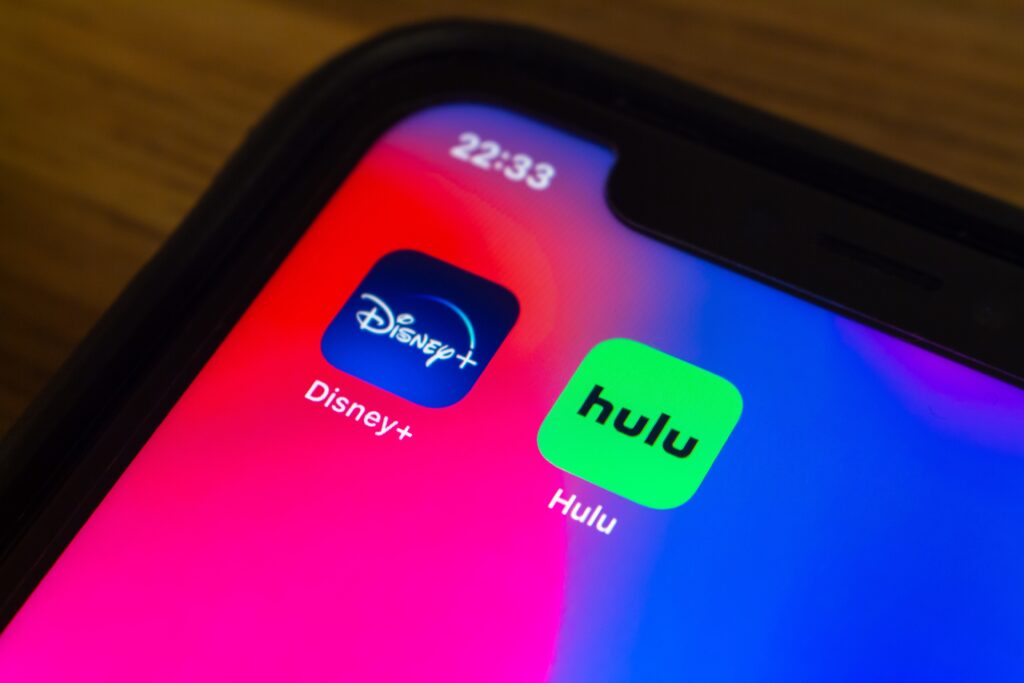
Ever open the Disney+ app and experience cognitive dissonance when shows like “The Handmaid’s Tale” and “It’s Always Sunny in Philadelphia” appear in the recommendations?
Well, expect more of that in the future.
On Wednesday during Disney’s quarterly earnings call to investors, CEO Robert Iger announced that Hulu will be fully integrated into Disney+ next year into a “unified app experience.”

This comes just a few months after Disney completed its deal to buy Comcast’s share of the streaming service. The deal was first announced in 2023 and finally closed in June this year.
While the Hulu app will likely disappear, the brand will not.
Per Iger, Hulu will instead serve as Disney’s “global general entertainment brand” starting this fall, when it will replace the Star logo that currently appears in international markets.
Knock knock, Hulu’s there?
Disney had already ported Hulu’s content over to the Disney+ app last spring, partially as a way to sell a cable-like bundle of both services.
So far, the strategy has worked. According to the company’s Q3 earnings report (Not Q2, because Disney starts their fiscal year in October rather than January), Disney+ and Hulu gained 2.6 million more subscribers compared to last quarter for a new total of 183 million.
Once the new ESPN Direct launches on August 21, all three apps – while there are still three, of course – will be sold as a bundle for $29.99 a month for the first 12 months. Content from ESPN, a subsidiary of The Walt Disney Company, will also be available on Disney+ the same way that Hulu content currently is.
More importantly for Disney’s streaming business, all of its streaming services will be integrated onto the same tech stack.
Disney already sells Hulu and Disney+ advertising together under one unified ad platform, but Iger said further unifying the apps will “give our sales organization a chance to package them far more effectively than they have before.”
All sports, all the time
In addition to the Hulu announcement, Disney also discussed some recent news related to its upcoming ESPN streaming service.
First, the network recently reached a $1.6 billion agreement for exclusive streaming rights to the WWE’s premium live events, including WrestleMania and SummerSlam, for the next five years.
Yesterday, it also came out that ESPN will be acquiring the NFL Network and RedZone channel from the NFL in exchange for a 10% stake in ESPN.
As part of the deal, ESPN will continue to broadcast games on linear television but will also have streaming rights for seven more games that were part of the NFL Network’s offering.
However, the deal won’t have a meaningful impact on Disney’s finances until it closes at the end of the next calendar year, said Senior EVP and Chief Financial Officer Hugh Johnston.
Merge around and find out
Speaking of finances, being a consolidated global media empire does have some drawbacks.
Case in point: Last year, Disney completed a merger with Indian conglomerate Reliance Industries to combine Star India, Viacom18 and streaming platforms JioCinema and Hotstar. Now that merger is having an impact on the company’s bottom line.
Overall, revenue grew a modest 2% year over year for the quarter, from $23.2 billion in 2024 to $23.7 billion in 2025.
Direct-to-consumer revenue, which includes streaming services, increased 6% year over year from $5.8 billion to $6.2 billion. That total would have been 3% higher except for the recent inclusion of JioHotstar (previously known as Disney+ Hotstar) into last year’s figures.
Meanwhile, linear network revenue decreased 15% from $2.7 billion in 2024 to $2.3 billion in 2025. Advertising revenue for domestic linear networks has also reportedly declined as a result of decreased average viewership and lower rates, although Disney didn’t disclose specific numbers.
Similarly, an operating loss with Star India caused overall sports revenue to decline 5% YOY, from $4.6 billion last year to $4.3 billion.
Despite all these hiccups, Disney said it is still “pleased” with its performance in Q3.
But all things considered, it’s less surprising that all the Star logos are getting replaced everywhere else.









