Amazon Ads And The Amazon DSP Get An Agentic Rebrand
Amazon Ads has overhauled its DSP and the sponsored product and search-based ad console for on-platform ads, the company announced at its unBoxed event in San Francisco on Tuesday.

Amazon Ads has overhauled its DSP and the sponsored product and search-based ad console for on-platform ads, the company announced at its unBoxed event in San Francisco on Tuesday.

Indie agency KWG says sell-side curation can target more high-performing inventory with better match rates and lower data fees than buy-side curation.

Adapting other channels’ strategies might be what gaming platforms need to do to get advertisers comfortable spending more. Leaning into gaming’s differentiators will come later, after bigger budgets arrive.

It’s the end of an IPO era for ad tech; Business Insider looks for solutions to its cratering traffic; and Amazon and Walmart’s AI chatbots face criticism.

Walmart-owned Sam’s Club has a new AI-powered pitch for brands: Target the next purchase, not the last one.

Google tests out a “pay per value” AI licensing scheme; Netflix, Amazon and YouTube join forces; and Apple may soon launch integrations with third-party LLMs.

While Eric Seufert’s “everything is an ad network” mantra keeps being proven correct, a new truism is also taking shape: “Wherever an advertising business emerges, the measurement challenge follows.”

Two Big Tech moments capped the summer: The FTC sued Amazon over its kinda-sorta second-price auctions, alleging deceptive practices. And Judge Brinkema declared that Google will not have to spin off its ad server.

McGrath left Prebid in June following five years as board chairman after stepping down as SVP of product management at Magnite. But now, overseeing Prebid will be his full-time job.

Shunned by streamers, cable news builds its own app bundles; Grindr pays $35 million to settle a UK lawsuit over selling data to advertisers; and LG TVs can be hacked to record audio.

AI needs a babysitter: Google was outbid on Spirit Airlines’ data; and AI-generated food makes for terrible ads.

Buy-side experts said it’s another example of a Big Tech platform taking advantage of the lack of transparency built into programmatic ad auctions. And they’re not optimistic change is coming.
This week, the Commerce Media Newsletter catches up with a startup from outside the world of data-driven advertising, but with an interesting position when it comes to ecommerce advertising. That’s Clearco, a Canadian fin tech company founded in 2015.

AI is creating new problems for advertisers; Amazon Prime’s new privacy feature irks customers; and the Trump administration sides with OpenAI in the copyright lawsuit brought forth by the NYT.

The FTC sues Amazon, alleging ad auction manipulation; some agencies are hyping that their ads are made by humans; and more people are paying for ad-free streaming.

The second wave of retail media platforms are all about winning incremental new dollars. Plus: A peek into Validity’s “State of CRM Data Report 2026.”
Simon Property Group, the largest shopping mall operator in the world, is taking its biggest step yet into the world of data-driven advertising. On Thursday, the company launched Simon Media Network, its version of a retail media network.

TTD is introducing agentic AI workflow improvements and automated audience building, which are quickly becoming table stakes for programmatic platforms.

The potential for ads in robotaxis; Crocs is back to seeing year-over-year growth; and ad-free streaming tiers continue to grow more expensive.
What’s with the myriad of retail media networks?; YouTube offers creators millions to refuse deals with Netflix; and political advertisers get a free pass.

“We’re deemed a new bucket, so a testing category,” AppLovin CEO told investors regarding its nascent consumer and ecommerce ads business. “And to graduate up takes time. This stuff compounds over quarters and years.”

Cuisinart’s marketing team has been eager to take advantage of generative AI-based creative.
Amazon’s advertising businesses earned a total $19.8 billion in Q2, the company reported in its quarterly earnings on Thursday. That’s up from $15.7 billion in Q2 2025, and good for a 26% year over year growth rate.
Amazon’s million-dollar sellers are revolting against changes that undercut their margins and change where their ads run. From inside a meeting of these discontented sellers, AdExchanger Senior Editor James Hercher shares how they are fighting back – and why Amazon made these changes.

Paramount+, unlike Netflix, announces a subscription-free option; Havas announces plans to go AI-first; and Faire’s Promoted Listings platform targets wholesalers, rather than individual customers.
Million Dollar Sellers, or “MDS,” is a group of Amazon sellers and specialists. And they’ve had it with Amazon’s advertiser and seller squeeze. But can they do anything about it?
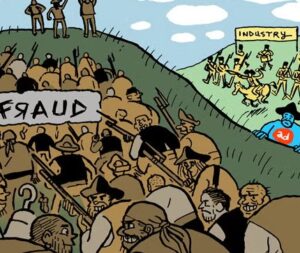
The purported best ways to counter ad fraud; CPG brands struggle in the face of GLP-1s; and the open web might be meeting its end.

Advertising in AI-native destinations and experiences is already starting to look less like a series of experiments and more like an emerging market.
Meta’s AI creative products still need work; the role of humans in agentic media buying; and how Vizio TV owners can opt out of sharing data with Walmart.

Every retail media network claims its data is different. PayPal Ads actually has a structural reason to back that up. AdExchanger Editorial Director Sarah Sluis sat down with Mark Grether, SVP and GM of PayPal Ads, to talk about what it means to sit horizontally across 25 billion transactions, 400 million accounts, and 30 million […]
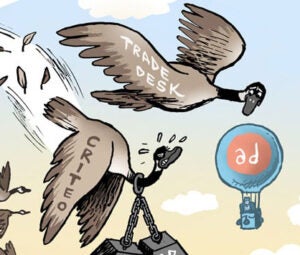
Criteo has two potential buyers; publishers consider blocking Google’s joint AI-scraping/search-indexing bot; and Microsoft’s billion-player gaming goal might make sense for mobile.

Agencies and marketers discussed the future of AI governance at AdExchanger’s Programmatic IO NYC this week. The main takeaway? Expect insurers to play an increasingly important role in managing AI compliance.

The Trade Desk is unable to serve ads to the Safari browser for Apple device owners that have downloaded iOS 27. Apple has been investigating the issue since last week.

The open web is done, stick a fork in it. Banner blindness is near universal, search traffic has run dry and publishers are struggling for oxygen. But what if that’s … not true?


Attention, publishers: Although you might not think of yourself as a data broker, in the great state of New Jersey, that’s not really your call anymore.

MMM can tell marketers what worked, but Lifesight’s open-sourced forecasting tool aims to tell them what to do next.

As programmatic buying becomes more common in audio, marketers and platforms fight the temptation to cram in as many placements as possible.