Despite the heat and the humidity, AdExchanger’s Cannes coverage continues, featuring all the hottest news and gossip straight from the Croisette.
Check out our latest Cannes coverage from editors Sarah Sluis, Allison Schiff and Lynne d Johnson in our separate Cannes briefing!
Look At These Ads! (Alexa, Play Despacito)
This year’s Cannes Lions also happens to overlap with Prime Day, which – despite the name – is now an almost weeklong deal event for Amazon Prime members.
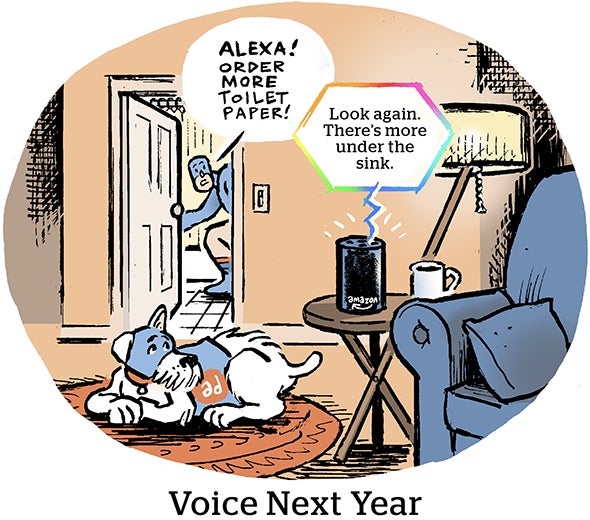
To commemorate the dual occasion, Amazon announced the launch of Alexa+ Agentic Ads on Tuesday, which it claims will allow customers to make purchases “without ever leaving the ad.” The ads come with a visual component that appears on Amazon Echo Show device screens and will have call-to-action buttons in addition to vocal commands, such as “Alexa, order Papa Johns.”
Beyond the advertising industry, however, the increased ad load on Amazon devices has not been met with much enthusiasm. Both users and tech reporters alike have complained about their devices being “ruined” since Amazon Echo Shows started displaying more ads in 2024 (coincidentally, not long after the WSJ reported how many billions of dollars Amazon had lost on its device business in recent years).

However, maybe the backlash to Alexa’s increased ad load has a silver lining for advertisers. Fewer people buying or using Amazon devices because of ads means that the remaining users are less bothered by comparison – and maybe more likely to engage with ads as a result.
More Like PAC-GPT
AI-funded PACs (not to be confused with AIPAC, which is different) are among the biggest political ad spenders for this year’s midterms, the LA Times reports.
Between January 1 and June 15, PACs associated with OpenAI and Anthropic spent more than $38 million to support candidates from both major political parties, according to the Federal Election Commission.
Notably, most of the dollars seem to have been funneled toward Democratic candidates, despite the fact that Republicans have historically been more enthusiastic adopters of AI tech and GOP legislators have pushed back on state regulation. But, of course, AI companies have a vested interest in promoting AI-friendly Democrats as well.
Anthropic-backed PACs are now supporting more aggressive state-by-state pro-AI laws and actively backing candidates with similar views. For example, more than $20 million has gone toward advertising for the Democratic primary in New York’s 12th congressional district, including a full-page ad on the front cover of The Daily News.
AdImpact’s latest projections suggest that political ad spending will reach $11.6 billion for this year’s races, more than 20% higher than the last midterm and possibly higher than the 2024 presidential election. So expect to see a lot more AI super PAC ads through November as these races heat up.
One Shop? Stop
Ad agency holdcos are in a rush to build one-stop shops for big advertisers through tech acquisitions and AI investments. But that’s not what every major brand is looking for.
Procter & Gamble prefers to work with a variety of agency partners when marketing its massive brand portfolio, the company’s chief brand officer, Marc Pritchard, explained in a speech at the Cannes Lions, Ad Age reports.
P&G continues to work with its established agency partners, like Publicis Groupe, WPP and Wieden+Kennedy. But P&G has also added more than 80 new agencies in the past six months, and it now has internal teams dedicated to quickly onboarding new creative shops.
Meanwhile, P&G is also developing AI capabilities and prioritizing working with agencies that can integrate with its in-house tech. P&G sees AI as helping it more quickly produce creative assets for a variety of media channels, from traditional entertainment to influencers, and it weighs the value of new agency partners in a similar light.
So right now, Pritchard says, P&G’s main strategy is finding agency partners that can “[sprint] with our in-house team to generate the volume and variety of assets needed to win.”
But Wait! There’s More!
The IAB Tech Lab announces SupplyChain v1.1, an upgrade to the OpenRTB Supply Chain Object that now details which platform has technical custody of a bid request, in addition to the flow of payment. [release]
Meta is developing a prediction market to compete against Kalshi and Polymarket – but it wouldn’t wager actual money. [NYT]
EA’s head of advertising Alex Dao details how the company is rethinking its outreach to brands. [Ad Age]
President Trump threatens to sue ABC again, this time for reporting on issues with the Lincoln Memorial Reflecting Pool. [CNBC]
Meanwhile, ABC has asked its viewers to protest the FCC for challenging the idea that “The View” counts as a “bona fide news program,” thus making it exempt from political equal time requirements. [Ars Technica]
Thanks for reading AdExchanger’s Daily News Roundup. Want it by email? Sign up here.