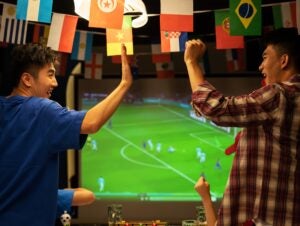
The cinematic trope of people stopping to watch the news on a storefront TV display feels pretty out of date today. But sometimes, life can still imitate art – like in New York City when the Knicks started winning the playoffs and massive, impromptu watch parties popped up throughout the city.
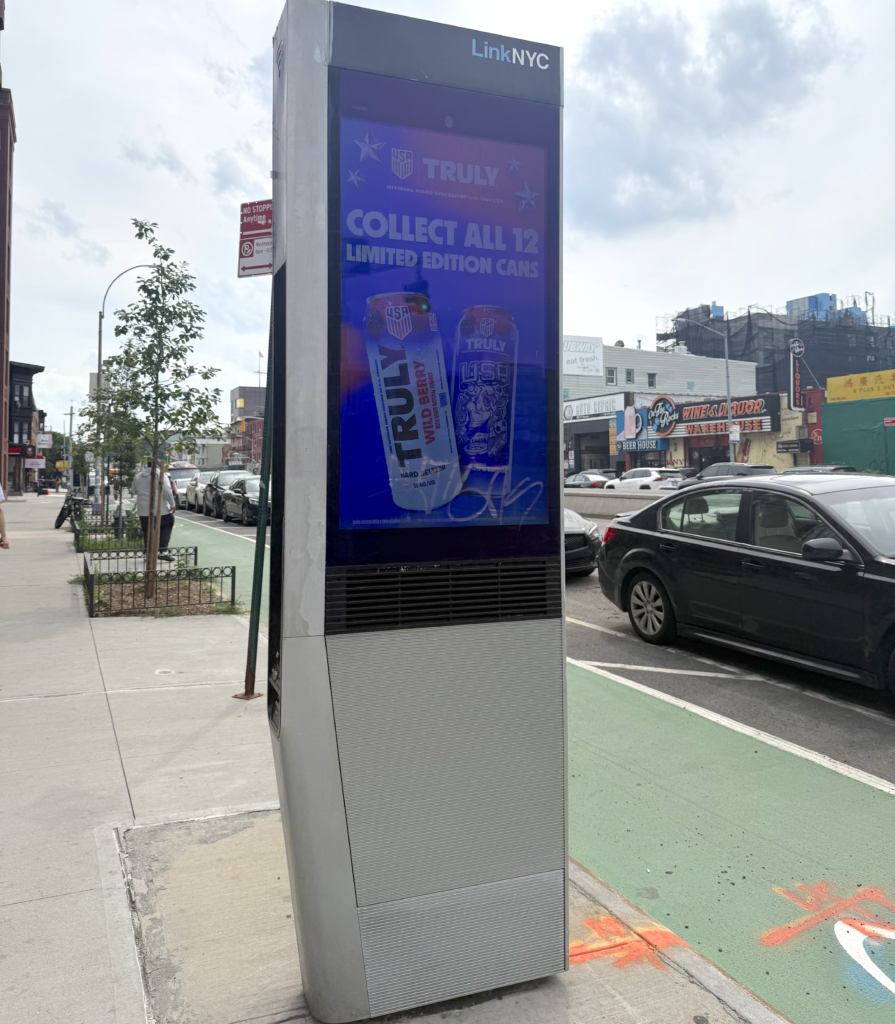
Even City Hall joined in on the fun when Mayor Zohran Mamdani announced that the broadcasts of Games 4 and 5 would be livestreamed for free on select LinkNYC screens. For the out-of-towners, these devices are digital kiosks that offer complimentary WiFi, audio calls and out-of-home advertising displays. Essentially, they’re meant to be the modern answer to phone booths.
The sports coverage didn’t stop when the Knicks won, either. Now the kiosks are playing weekly World Cup matches from Telemundo every Friday afternoon from now through the finals on July 19. And because the streams use an HLS feed that comes directly from the broadcaster, they run all the same ads that get shown to audiences at home on linear TV devices.
To learn more about the tech that made these out-of-home (OOH) TV experiences possible, I reached out to Intersection, the company that manages LinkNYC’s content and marketing support. (Another company, Boldyn, manages the WiFi infrastructure.) From talking with Intersection’s CEO, Chris Grosso, I learned that LinkNYC didn’t need to do much to prepare – the kiosks were already capable of livestreaming.
“Anything you can do on a website, you can do on a LinkNYC screen,” Grosso said. “That’s how we set up the technology, to allow us to do that.”
However, it wasn’t until the Mayor’s Office pitched the idea of airing the Knicks games (and secured the proper broadcast rights, of course), that Intersection finally had the opportunity to moonlight as a source of lean-back entertainment. Or maybe lean-forward, depending on how close the game got.
How LinkNYC typically works
On most days, LinkNYC kiosks operate similarly to other digital OOH screens, like the kind often seen at bus stops and train stations. Meaning, they display ads for both national and local advertisers, like Truly Hard Seltzer or the New York City Landmarks Preservation Commission.
Intersection also manages similar screens in cities across the country, including Philadelphia, Chicago, Los Angeles and Austin. Rest assured, though, only New York City is getting the livestreams right now. Although, Intersection does tend to get a lot of interest from advertisers during local sports celebrations, like they did when the Philadelphia Eagles won the Super Bowl in 2024.
LinkNYC ads usually run for 15 seconds each alongside other community-oriented content, such as weather reports, fun facts about local history and even municipal government PSAs. But during the two-hour blocks that games are streaming, those ads don’t run at all.
Pre-empting your own inventory to indirectly show ads from other platforms may seem counterintuitive. But Grosso told me that he sees it as an example of “doing the right thing for the City of New York.” The fact that it’s also a really cool use of the tech doesn’t hurt.
Besides, only 200 out of roughly 4,000 kiosks are showing the World Cup matches, while the rest are still playing the normal ad load. (If you’re like me, though, and forget to check in advance which kiosks in your neighborhood are streaming the game before you leave your apartment on an exploratory mission, you end up seeing a lot of those ads in the process.)
Can we have TV outside today?
Where measurement is concerned, Intersection relies on third-party vendors, like Geopath, to help build a profile of audiences that move around different kiosks. Targeting is primarily based on audience demographics and geographic location, while ads are sold based on impressions.
Advertisers also rely on dayparting and contextual targeting, which is similar to the traditional TV advertising model.If an advertiser wants to reach families with small children, for example, they can’t zoom in at the household level like some CTV advertising models try to do; instead, they place ads where their audience is most likely to be, like near schools during peak pick-up and drop-off times.
While Intersection isn’t measuring its own livestream viewership the same way that, say, Nielsen might, they’ve done extensive research into how ads placed near sports bars and restaurants perform on game night. During the opening USA-Paraguay game, (not one that was streamed by LinkNYC), the company found that 98% of bars near its DOOH network saw increased foot traffic compared to an average Friday night.
“What you’ve seen is this trend toward a return to real life, where people want to experience these events with other people,” said Grosso. Which is exactly the same phenomenon that TV advertisers try to tap into when buying spots during major tentpole events.
Does that mean these kinds of streams are going to become more ubiquitous moving forward? Maybe, maybe not – these events were pulled together very quickly, Grosso said, and Intersection won’t know anytime soon how successful they were. But if there there is a viable business case, he said, advertisers might shift to running their own livestreams rather than using publisher feeds.
Honestly, at this rate, what won’t be considered TV in the future?
📣 🌟 We interrupt this program to give you a sneak preview of what’s ahead! Longtime CTV Roundup readers might notice some changes to our usual format in the coming weeks. We are going to start appearing in your inbox twice a week under a new name, Streamlined, which we think better reflects our mission to bring you all the latest streaming ad tech news. We’re also going to start sharing newsletters from our sister publication, Cynopsis, which is chock full of insights about the TV business.
In the meantime, let us know what you think via email (victoria@adexchanger.com).