
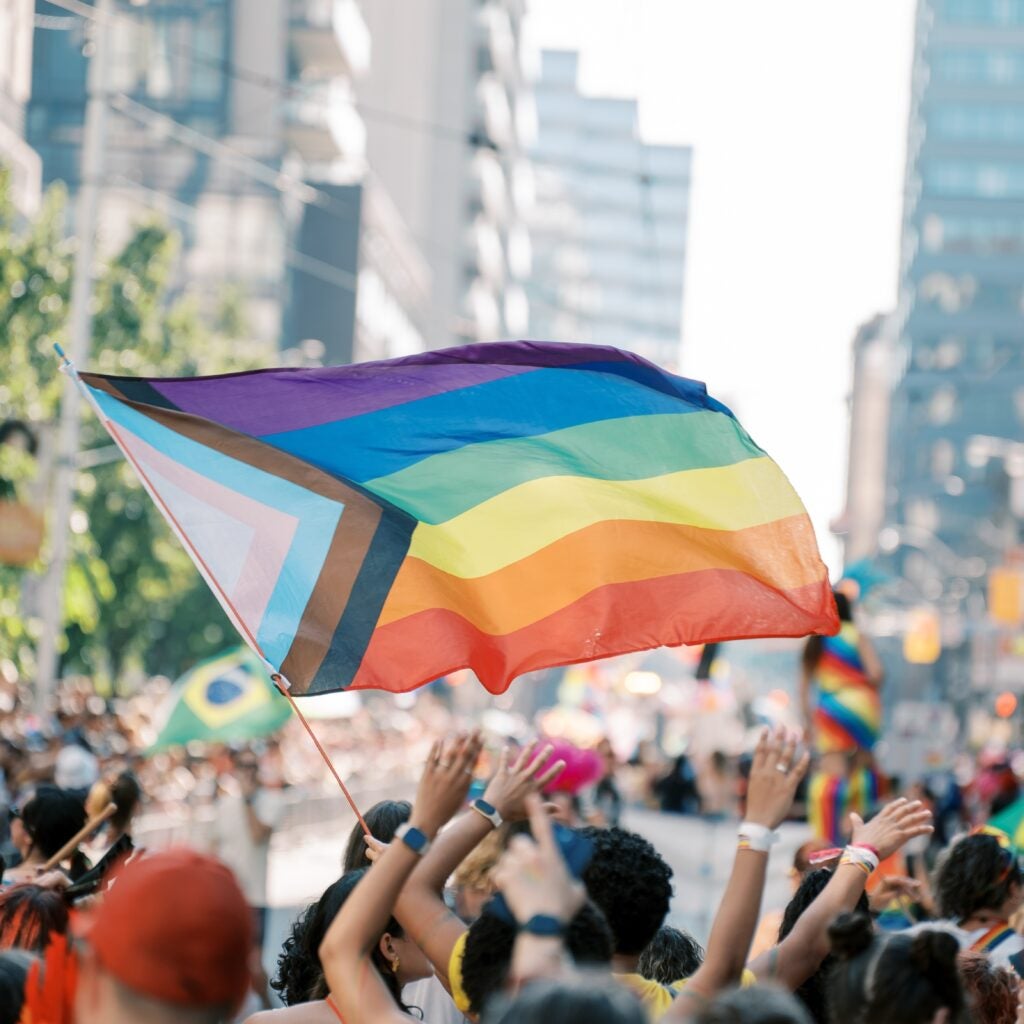
From canceled Pride parades and slashed LGBTQ+ program funding to bureaucratic bickering over LGBTQ+ content labels, the current political climate has caused shrinking corporate interest in connecting with LGBTQ+ people, including during Pride month.
It seems “Heated Rivalry” was more the exception than the rule.
This year, the Trump administration is threatening funding for LGBTQ+ organizations and the community’s access to health care. Meanwhile, advocacy groups are busy protesting the FCC chairman’s recent push to slap warning labels on LGBTQ+-related programming.
Simply put, many brands nowadays do not think the benefits of speaking to LGBTQ+ audiences are worth drawing the ire of the current administration amid its attacks against DEI, said Mark Tevis, EVP of sales and partnerships at Revry, a free ad-supported streaming platform that specializes in queer storytelling. Revry is one of many companies and organizations seeing a drop in direct brand dollars as a direct result of political tension and intimidation.
Besides, marketers are more interested in chasing performance. (The advertising kind.)
“Marketers have become so beholden to benchmarks and efficiency metrics that genuine connection is being devalued,” said Justin Rivera, VP and managing director of the future of multicultural and thought leadership lead at OUT Core. (OUT Core is the agency Horizon Media’s official LGBTQ+ employee resource group.)
But ad performance eventually becomes moot if a brand doesn’t broaden its audience base and attract prospective customers that will sustain the business in the future. And odds are, many of those customers will be queer: LGBTQ+ people currently represent more than 9% percent of US adults, roughly one-quarter of Gen Z Americans and approximately $1.4 trillion in purchasing power in the US alone.
Sooner rather than later, “it will become virtually impossible for brands to grow revenue if they are not speaking to this population,” Tevis said.
Community is in vogue
The growth of LGBTQ+ communities – both in size and purchasing power – would explain the brands that are making an effort to connect with queer consumers, especially during Pride.
Meal delivery service HelloFresh made headlines with its risqué Pride campaign, and Fox-owned streaming service Tubi (ironically) launched a “Proud Tubi Gay” campaign. Absolut Vodka, Levi’s and Adidas are a few established brands that consistently run Pride campaigns, including this year. From Revry’s perspective, Tevis said, brands that have advertised on the queer streaming service over the last couple of years continued to do so, despite the drop-off in new advertiser growth this year. Tevis added that Revry’s programmatic ad deals have “gone up significantly,” though, which reflects the decrease in direct, intentional investment toward queer viewers in favor of a quick reach play.
But it’s not all doom and gloom.
This year wouldn’t be the first time brands pulled back spend toward reaching this audience upon receiving political and/or consumer backlash, said Mike Richter, co-founder and CEO of the media and live events company Unplugged Collective and founder of the consultancy Finnovar Media Partners. And when brands bow out, it creates more opportunity for companies that stick around – especially if they establish that they’re not going to run away when the going gets tough.
Queer community involvement and consistency is what drives long-term customer loyalty, the precursor to sustainable sales growth.
According to the creative agency Saylor, more brands are investing in more “360 support” around queer storytelling, characters and identity rather than one-and-done campaigns, said Sean Reed, head of accounts at Saylor. Among the brands investing in the queer community, many of them prefer doing so with year-round investments geared toward eliciting a deeper emotional connection with consumers that will hopefully turn into long-term customer loyalty compared to the competition.
These efforts include influencer collabs and community activations in spaces where LGBTQ+ people hang out all year round, he said, not only when it’s June.
Some recent examples:
- Peloton partnered with “Heated Rivalry” actor Hudson Williams, while co-star Connor Storrie has deals with the luxury brands Saint Laurent and Tiffany & Co.
- Meanwhile, iHeartPodcasts and Bubbler Media launched a new podcast this month, “gay-i,” which actively explores queer culture in media and entertainment. And yes, the debut episode was about “Heated Rivalry.”
- Levi’s made a new product line of queer-inspired fashion this year while continuing its annual $100,000 donation to human rights group Outright International.
- Ilegal Mezcal hosted its annual “Celebrating YOU” event at the iconic Stonewall Inn in New York City.
- I also went on a lesbian blind date that was sponsored by Applebee’s, if you needed an anecdotal example.
Cool story, but how do I measure that?
For marketers, these trends highlight the importance of playing the long game when it comes to connecting with LGBTQ+ audiences, said Reed.
Establishing trust with a vulnerable audience is a tricky dance that takes time to do correctly. According to Revry, this audience is highly skeptical of brand marketing efforts due to some marketers’ proclivity to slap a rainbow on their branding during June just to forget about the community come July.
According to recent survey data from Revry, 27% of respondents feel that most marketing to LGBTQ+ audiences is performative. Performative or short-term marketing efforts give queer consumers the “ick,” Richter said.
Brands that stick by LGBTQ+ consumers despite the backlash and bigotry stand to reap rewards. “Companies don’t survive on reputation; they survive on sales,” Richter said.
Revry’s data highlights purchase intent as one of those possible rewards. Among its survey respondents, 51% of consumers said they feel more loyal toward, and likely to purchase from, brands that stand firm under backlash. Why else do you think I started wearing Levi’s and making dinner plans at Applebee’s?
E.l.f. Cosmetics is another great example. Revry launched a “King of Drag” reality competition drag show last year, but it wasn’t easy to find a brand willing to sponsor the show in this political climate, Revry’s Tevis said. “We had no benchmarks to know how well the show was going to resonate,” he added, but e.l.f. took the risk. The show was popular enough that lesbian bars across the country were hosting watch parties, Tevis said.
As a result, 84% of Revry’s survey respondents said they considered purchasing an item from e.l.f. because of the brand’s presence in the show.
What’s next?
Generally speaking, however, most marketers need more concrete data and research like Revry’s before they’re willing to consider investing in queer audiences.
“We need more brands to share the results and impact they are seeing from LGBTQ+ investments, [as] these audiences are incredibly loyal and bring outsized influence and spending power,” said Gayle Troberman, co-founder of Bubbler Media and host of the iHeartPodcasts show “gay-i.”
Troberman added that the need for more demonstrable evidence of this community’s influence and purchasing power was behind the launch of “gay-i” on iHeartPodcasts this month. “Our intent is to increase visibility for the LGBTQ+ people working in marketing and advertising and start a conversation about this audience [when] too many brands are missing the chance to be inclusive and grow,” she said.
Exploring the reach and scale of the LGBTQ+ community is one way to highlight the degree of brand growth that’s possible for marketers that don’t ignore this audience.
The biggest proof of that potential, according to Horizon Media’s Rivera, is that LGBTQ+ community is not a siloed audience. “It’s a segment that cuts across race, age, income, geography,” he said. For brands, “reaching LGBTQ+ consumers is not narrowing your opportunity; you’re maximizing it.”
LGBTQ+ audiences don’t just watch gay things. This queer reporter loves to watch “Is It Cake?” on Netflix, “House of the Dragon” on HBO Max and “The Traitors” on Peacock, for example.
Generally speaking, marketers are increasingly aware that prioritizing reach is a critical part of achieving the long-term performance they’re seeking. Hence why the term “full funnel” is dominating ad-related announcements and conversations across the media industry.
Considering the LGBTQ+ community’s growth across nearly all sectors of mainstream media and society, the ad experts who spoke with AdExchanger said they expect more marketers will invest in building a meaningful and lucrative connection with queer consumers. The sentiment is especially true when anticipating a more accepting political atmosphere.
But change doesn’t happen overnight.
“For brands to future-proof their business, they need to build the relationships with the consumer of tomorrow – and they can do that today,” Rivera said. Standing behind the LGBTQ+ community “is a journey, not a race,” he said.