Topic

Latest

  • Post Third-Party Cookies, You’ll Need This First-Party Media Monetization Checklist

    One of the most overlooked caveats around the shift to first-party assets is that no successful monetization strategy can be built in isolation. A future-facing media monetization strategy must work in two concentrical contexts: within the media owner’s environment itself and within the advertising environment, writes Alessandro De Zanche, audience and data strategy consultant.

  • To Understand Where TV Is Going, Track The NFL; Ad Buyers Grapple With Real Data Emissions

    Here’s today’s AdExchanger.com news round-up… Want it by email? Sign up here. Game-Changer The NFL has a history of media and marketing innovation. If we’re keeping score, it was the first sports league to reach every TV in America, the first to invest in studio-style production and the first to mic players on the field. […]

  • Back To The Future: An Oral History Of Microsoft & Advertising

    This article is based on interviews with participants. Martin Kihn speaks to all the main players. It was inspired by Microsoft’s supposedly surprising selection as Netflix’s ad tech partner. But driven by the acquisition of AT&T’s Xandr, that’s just the latest chapter in a breathtaking adventure of pivots, write-downs, partnerships and potential.

  • Gayle Troberman, CMO, iHeartMedia

    Listening To The Programmatic Beat, With IHeartMedia CMO Gayle Troberman

    Gayle Troberman, iHeartMedia’s CMO, talks up iHeart’s programmatic advertising ambitions and the power of audio to engage – in some cases even more deeply than video. Also in this episode: Lessons learned from 16 years as Microsoft’s chief creative officer.

  • Chris Comstock, chief growth officer, Claravine.

    What The Digital Markets Act Means To US Brands and Consumers

    The Digital Markets Act (DMA) is coming to the European Union. But rest assured – it will have implications for United States brands, too. The DMA will implement a clear set of rules prohibiting tech giants, including Google, Meta, Amazon and Apple, from engaging in specific practices that might be viewed as “anti-competitive.” While it seems that the act aims to create a fair playing field, the actual outcomes may be more nuanced, writes Chris Comstock, chief product officer of Claravine.

  • Money Well Spent On Time Spent Streaming; More Retail Remedies For DTC

    Here’s today’s AdExchanger.com news round-up… Want it by email? Sign up here. Going With The Stream Broadcasters are all-in on streaming subscriptions as the metric du jour, but they are still awkwardly adapting to the market.  Linear TV bundles are lucrative – especially compared to streaming services that lose billions per year. But programmers can’t (or […]

  • Multi-touch attribution is reaching an inflection point (finally).

    More Marketers Are Adopting Multi-Touch Attribution, But There’s Still Some Frustration

    Multi-touch attribution is reaching an inflection point (finally). The majority of large advertisers (53%) now say they use MTA to track and optimize their spending across channels, according to new research from marketing trade org MMA Global. But why now?

  • Programmatic Vet Terry Taouss Is The New President Of The Acceptable Ads Committee

    The Acceptable Ads Committee, the group that establishes quality guidelines to whitelist ads on ad blockers, has a new president and he’s an old programmatic hand. Terry Taouss, a Cento vet and currently a principal at ad tech consultancy AdProfs, is taking on the role, replacing Marty Kratky-Katz, co-founder and CEO of Blockthrough.

  • Publishers Want To Test Seller-Defined Audiences, But Buyers Aren’t Interested While Third-Party Cookies Are Still In Play

    The IAB Tech Lab’s seller-defined audience (SDA) spec is touted as a key contextual targeting alternative for the post-third-party-cookie digital ad ecosystem – one predicated on privacy-friendly addressability and publisher first-party data monetization. Some publishers are enthusiastic about testing SDA campaigns in the run-up to Google’s 2023 deadline for the phaseout of third-party cookies in Chrome. There is growing concern, however, about a marked lack of advertiser interest in doing the same.

  • TvScientific On Why Performance Marketing Can Work On CTV, Too

    Most marketers agree that digital and social are performance channels, whereas they’re less convinced that performance marketing works on CTV because it’s a less interactive, lean-back experience. But CTV is a lot more like digital than many marketers think, said Jason Fairchild, CEO of TV performance marketing platform tvScientific. “CTV is like digital in that you don’t have to guess at what works – you know.”

  • Could Amazon Ditch Private-Label Brands?; Bringing Super-Highway Fees To Big Tech

    Here’s today’s AdExchanger.com news round-up… Want it by email? Sign up here. Amazon’s Private Parts Amazon has been reducing the number of private-label products it sells, and leaders have also “discussed the possibility of exiting the private-label business entirely,” The Wall Street Journal reports.  Many Amazon private-label product lines have slow or diminishing sales. But there’s […]

  • An arrow pointing down (like the market).

    LUMA: Ad Tech Had A Bad Q2, But There Were A Few Bright Spots

    It would be nice if we never had to hear the word “uncertainty” ever again … but too bad, because Q2 happened, and it wasn’t pretty for ad tech. The public ad tech and mar tech stocks tracked by LUMA Partners, which released its Q2 market report last week, fell more than 30% across the board year-to-date as of the end of the second quarter.

  • RoC Skincare’s Commerce Marketing Strategy Goes More Than Skin Deep

    DTC brands are struggling to get by without the Facebook ad engine. Legacy brands are flummoxed by ecommerce. One company that’s hoping to split the difference is RoC Skincare, which spun out of Johnson & Johnson and was acquired by the private equity firm Gryphon in 2018.

  • Can Standardized Content Taxonomies Level The Playing Field For Publishers?

    Scale. That’s the dirty five-letter word that keeps advertisers and agencies spending their budgets with Google and Meta. Even the largest and most prestigious publishers can’t come close to delivering that kind of scale. But one area where publishers have an advantage over the duopoly is content.

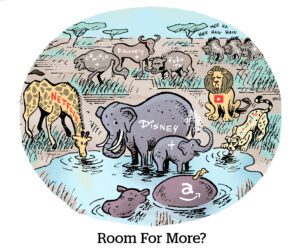
  • Comic: Room For More?

    A weekly comic strip from AdExchanger.com that highlights the digital advertising ecosystem…

  • DOJ Rejects Google’s Antitrust Concessions; Instacart+ Plugs Into The Retail Media Network Network

    Here’s today’s AdExchanger.com news round-up… Want it by email? Sign up here. No Compromise For Google Google’s reported offer to US regulators as a bid to avoid an antitrust suit was to spin off part of its ad business. But that news apparently landed with a thud.  The Department of Justice is poised to move […]

  • Why Netflix Chose Microsoft As Its Ad Tech And Sales Partner

    Just three months after Netflix surprised the world with the news that it plans to launch an ad-supported tier, the streaming leader has settled on its third-party vendor of choice: Microsoft. But why Microsoft? It wasn’t considered a serious programmatic contender until it acquired Xandr from AT&T (and that deal only closed last month). Still, something made Microsoft stand out from the crowd.

  • Cadent Is Bringing ‘Issue Advocacy’ Segments To TV

    Advanced TV platform Cadent announced a partnership with data provider Tunnl with an eye on what’s known as issue advocacy segments, which are different from general political ad segments. Issue advocacy campaigns go beyond political affiliation and aim to reach people based on the “hot button” issues that voters are concerned with, such as climate change or reproductive rights.

  • The Big Story Podcast

    The Big Story: Imagining A Google Ad Tech Spinoff

    Google is signaling it may spin off its ad tech business. A DSP and SSP change would create new winners and losers and potentially open up access to walled-off inventory, says our guest, Ari Paparo, founder of Marketecture. Plus: How Google Analytics’ coming change will affect publishers.

  • Want Better Targeting And Lower Fraud? Avoid CTV Open Auctions

    Open auctions appear to democratize and simplify CTV ad buying because they let marketers define parameters for viewers or inventory, enabling them to place ads quickly and cheaply across the ad-supported streaming services. But there’s a better way – open auctions are risky, and the emphasis is placed on price and meeting broad criteria, writes Ruby Resendez, director of digital solutions at Stirista.

  • We Have A Winner! (And It’s Microsoft); Can TikTok Steal Google’s Search Lunch?

    Here’s today’s AdExchanger.com news round-up… Want it by email? Sign up here. Get The Net! Corks are popping in Redmond, Washington, home of Microsoft, after news that Netflix selected Microsoft Advertising as the global sales and technology partner for its ad business.  “Microsoft has the proven ability to support all our advertising needs as we work […]

  • Who Are The Winners – And Losers – If Google Spins Off Its Ad Business?

    Google may have a solution to the antitrust regulatory pressure it’s facing from governments around the world: a proactive spinoff. Alphabet, Google’s parent company, is exploring splitting Google’s digital ad business into a separate entity under the Alphabet umbrella. The question is whether Google’s proposed solution will pass muster with regulators, and if it does, who stands to win – and who stands to lose?

  • fist bump (by Nate Neal)

    Unity Is Set To Acquire IronSource For $4.4 Billion

    Unity will merge with ironSource in an all stock transaction that values the latter at $4.4 billion. The companies expect the merger to help deliver a $1 billion run rate by the end of 2024 and $300 million in annual EBITDA synergies the year after that.

  • grilled seasoned chicken drumstick held up on fork

    El Pollo Loco Launches First TikTok-Only Campaign To Boost The Brand With Younger Audiences

    El Pollo Loco began as a small restaurant chain in the 1970s, first in Mexico and later in Southern California. The brand only started leaning into digital ad channels in 2019, and today, it spends half its media budget on digital – a huge portion of which is reserved for TikTok. Last month, El Pollo Loco launched its latest campaign, “Abuela Approved” – its first TikTok-only campaign.

  • Publishers Deserve To Be A Priority For Ad Tech

    Digital media is undergoing rapid evolution. However, from CTV adoption to industry protocols around user privacy, growth and innovation tend to focus first on advertiser challenges, writes Andrew Smith, SVP of publisher products at DoubleVerify. Publishers need a seat at the table, too, he said, rather than being forced to make do with limited resources and bridge gaps in tech stacks.

  • Subscription Conniptions; And Why Streaming Platforms Have Issues With Ad Volume

    Here’s today’s AdExchanger.com news round-up… Want it by email? Sign up here. Death By A Thousand Subscriptions News subscriptions. OK. Entertainment subscriptions, sure. Gaming subscriptions … I can see it.  But subscriptions have now taken over the economy.  This year, Sweetgreen and Taco Bell started testing subscription offers, and Alaska Airlines also began testing a subscription […]

  • Disney Integrates With The Trade Desk And UID2 In Pursuit Of Better Addressability

    If addressable ad IDs are the new keys to the kingdom, then you’ll find The Trade Desk at Epcot this summer. Which is to say, Disney and The Trade Desk announced an identity integration on Tuesday that will allow advertisers to activate against Disney’s first-party data programmatically via its clean room data product using Unified ID 2.0 (UID2) IDs.

  • Dirty, Dull And Dangerous, With C2 Ventures Founding Partner Chris Cunningham

    Ad tech entrepreneur Chris Cunningham’s early-stage investment firm, C2 Ventures, has a new fund: just over $20 million for pre-Series A companies, plus $2.55 million for pre-seed startups. But there’s one thing he won’t be investing in, and that’s ad tech. Listen in to learn why.

  • How Carter’s Juggles A Marketing Measurement Overhaul

    There’s a disconnect between those ad buyers in the trenches of online advertising and their own corporate leaders up the C-suite, who are accustomed to determining marketing group budgets based on ROI and other basic advertising KPIs that, frankly, are going haywire right now. One way to deal with that disconnect is to add someone who speaks both languages, as it were.

  • Hugo Loriot, partner at fifty-five

    The Future Of Google Analytics Is Server-Side – Here’s Why

    Meta lost in court against French ad-tech champion Criteo, and it will now have to grant better access to its inventory. Meanwhile, France’s data protection watchdog, the CNIL, just deemed Google Analytics illegal – a move that the Italian data privacy authority has just followed as well. What happens now? It turns out there may be a server-side solution, writes Hugo Loriot, partner at fifty-five.