
Trawling The Google Trial Exhibits For Privacy-Related Tidbits
The discovery process in the lead-up to Google’s ad tech antitrust trial has unearthed nuggets of information that aren’t directly related to the case, yet are no less fascinating.

The discovery process in the lead-up to Google’s ad tech antitrust trial has unearthed nuggets of information that aren’t directly related to the case, yet are no less fascinating.
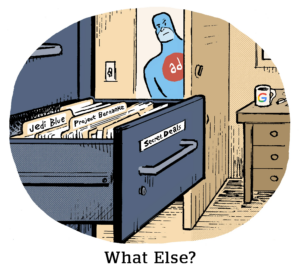
What do Hercule Poirot, Ben Bernanke, Star Wars and C.S. Lewis have in common? If you’re an ad tech nerd, you’ll know the answer immediately.

The IAB’s annual advertising outlook has mostly rosy news. Plus, can sludge videos be wielded for good – or, at least, for effective political organizing?
In today’s newsletter: Google paid $445 million in rebates in 2018; publishers across the ideological spectrum blame brand safety for hurting the media biz; and Mark Zuckerberg apologizes to Congressional Republicans for Meta’s content moderation.

The publication still makes most of its on-site digital revenue from programmatic. But it’s doubling down on direct-sold custom content, especially when it comes to video and social media.

There’s a decent amount of overlap between many US state privacy laws – but there are also many significant differences. Take the Maryland Online Data Privacy Act.

Publishers are in the business of selling their readers’ attention to advertisers. But in response to consumer preferences and regulatory pressure, publishers should reposition themselves as champions of data dignity.

In today’s newsletter: Walmart’s hottest growth drivers are ads and subscriptions; why The Trade Desk’s UID 2.0 could be regulators’ next target; and how the growth of CTV content fortresses is preventing breakout streaming hits.

With a landmark ruling potentially forcing Google to change its business practices, who is actually likely to steal some of its search market share? And what should marketers do about it?

The trajectory of digital advertising remains unchanged. There are plenty of signs that the investments advertisers have made in cookie alternatives are already paying off.

Not only will hashing data not anonymize it, but regulators, including the Federal Trade Commission, consider hashed identifiers to be personal information.

The decision by WFA leadership to succumb to Elon Musk’s pressure is disappointing and dangerous – but it presents an opportunity to rethink our industry’s broken approach to brand safety, writes Arielle Garcia.

Google is a monopolist. We bring on a guest that’s both a lawyer and a CEO of a search ad business to offer his perspective on the antitrust ruling, and what happens next for Google in light of this decision.

ChannelMix is InMarket’s fifth deal within as many years.

Recent moves by major ad tech players prove the industry doesn’t actually need cookies. But Chrome’s cookie pivot doesn’t clarify what will happen to the 1% of its audience that’s already cookieless or what will become of plans to deprecate the Android Ad ID on mobile.

In today’s newsletter: The DOJ sues TikTok alleging COPPA violations; Disney wraps a competitive upfronts season as it faces stiller competition for streaming ad budgets; and more than $107 million was spent on ads for AI products in the first half of this year.
What will Chrome’s third-party consent look like? We offer our best guess. Plus, we spotlight the controversy around ID bridging. The tactic supplies IDs for cookieless inventory through a spectrum of approaches, and not all of them are buyer-approved.

For some, Chrome’s news that it’s keeping third-party cookies was a moment of vindication. But was it a cruel blow to partners that tested the Privacy Sandbox in good faith?

Google is keeping third-party cookies in Chrome, and here’s what ad tech Twitter (X, whatever), has to say about it.

If Chrome imitates Apple, there may be a de facto deprecation of the third-party cookies, since potentially only a slim percentage of users would consent to tracking. In that case, advertisers would still have to primarily rely on cookie alternatives, including the Privacy Sandbox.
Keep the cookies; hold for consent. We unpack Google’s reversal on third-party cookies and what it means for the ad industry, which was preparing for a cookieless future.

The FTC is ordering data from eight companies, which Commissioner Lina Khan describes as part of a “shadowy ecosystem of pricing middlemen,” in pursuit of visibility into “surveillance pricing.”

Despite setbacks, the mobile advertising industry has not only recovered but thrived post-ATT. What can overcoming the impact of ATT teach us about overcoming the latest uncertainty around the future of the cookie?

If advertisers don’t adopt strategies in adherence with the strictest privacy laws, they are likely looking at a future of continuous pivots, wasting time and money, writes Rachel Gantz.
We set the scene for Google’s upcoming antitrust trial in September, including details from the recently released witness list, a who’s who of the ad tech world.

The Connected Commerce Council (CCC), a lobbying organization based in Washington, DC, hosted a virtual press conference to spotlight small businesses and their concerns with the APRA, the latest attempt at setting national privacy standards.

Third-party cookies weren’t getting the job done for Indeed. So, two years ago, Indeed began working closely with LiveRamp to create a new audience engagement strategy that isn’t as vulnerable to third-party cookie deprecation.

Sophia Cao, RTB House’s newly appointed director of private advertising advocacy, knows how to play nice in the sandbox – because, well, she used to work there.

With a multifaceted approach, companies can manage the risks while reaping the rewards of more consumer-conscious ad targeting strategies.

Ad tech faces a GDPR compliance paradox. Plus, TikTok will make it harder to target teenagers and plans to give users more control.

OpenX CTO Joel Meyer, who was named Prebid’s new chairman, previews the org’s next phase and helping publishers navigate competing agentic protocols.

Alphonso – LG’s ad tech division – finally has a way out of its legal drama with parent company LG Electronics. Actually, it has three potential options.

Much like the ecosystem of life that surrounds a blue whale, a market of AI SaaS vendors is springing up around the biggest AI companies. And AI data startup Micro1 is emblematic of the shifting nature of these early-stage AI vendors.


How long does it take you to decide what to watch after you turn your TV on?

Just in time for new TV programming to hit the screens in September, Nielsen is rolling out a few upgrades to its video measurement currency that will go live by the end of August

According to Horizon Media’s Bob Lord, most agencies are trying to solve the wrong problem by obsessing over cost efficiency at a time when AI has quietly unlocked something far more valuable: the ability to become a growth partner to advertisers.