SafeGuard Privacy’s MSCA Tool Aims To Simplify The Chaos Of Compliance
Privacy lawyers and ad tech folks often don’t speak the same language. But at least now they’ve got an acronym in common: MSCA.
The IAB Tech Lab is proposing that ad auctions move to a Trusted Server from the browser. Why its prototype attracted controversy. Plus, should data privacy be viewed as a badge of honor, or a baseline standard?
The UK’s Information Commissioner’s Office has three strategic priorities in 2025, and, you guessed it, online tracking is one of them.
It’s difficult for advertisers to enter into contracts with every company to which they disclose personal information. However, difficulty is no longer an acceptable excuse.
Why should establishing consumer trust be a differentiator – and wouldn’t it be great if that was just every company’s MO?
Many in the industry see Google’s fingerprinting reversal as an irresponsible move due to privacy concerns, particularly in regions with strict data regulations.
The Trade Desk’s weak Q4 emboldened the company’s critics; DOGE’s cuts to federal agencies are hurting ad agencies; and President Trump fires the two remaining Democratic FTC commissioners.
The assumption often is that lawyers are the ultimate party poopers who want to stop innovative product people from doing what they do best. But that’s not the case at all.
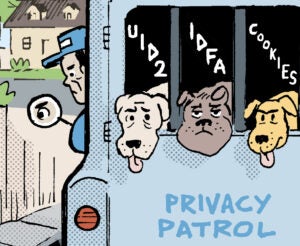
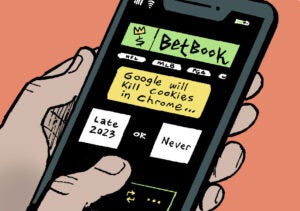
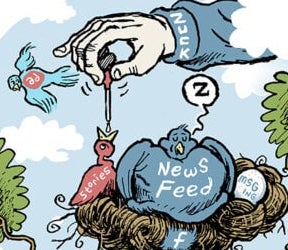
Enjoy this weekly comic strip from AdExchanger.com that highlights the digital advertising ecosystem …
Just because curated PMPs and direct-to-DSP deals are trendy doesn’t mean they should be the focus of every publisher’s tech stack.
What’s in the tea leaves for the FTC’s new chair Andrew Ferguson, who took over in January? Kyle Kessler, a partner at Womble Bond Dickinson, weighs in.
GDPR may not be perfect, but it forced European companies to adopt a privacy-by-default position. For US companies, this is a clear signal: Change is inevitable.
T-Mobile may be considering an acquisition in the mobile data market; Google’s glitch shuts down ads for a weekend; and ad tech’s old guard is salivating over AI startups.
Now that Chevron is overturned, it will be easier for companies to challenge FTC regulations in court, arguing that they exceed the FTC’s mandate, writes OpenX’s Julie Rooney.
A concept known as data minimization – the practice of limiting data collection and retention to only what’s strictly necessary to achieve a specific purpose – is becoming a key tenet of privacy legislation around the world.
Curation is amazing – for SSPs. The question publishers continually ask is, “Is curation good for us?” That’s the wrong question.
If an alternative identifier is present in the bidstream, and no one transacts on it, does it make a sound? The availability of alt IDs in open auctions has steadily increased, but demand has yet to catch up with supply.
AirBNB starting an ad service business is “not a matter of if; it’s a matter of when.” Plus, Walmart is winning.
Google just shared a teeny tiny bit more info about its planned consent mechanism for Chrome, which will be “a one-time global prompt.” Pause for amazed silence (lol).
Under the new leadership, the FTC is signaling a pivot away from sweeping rulemaking efforts to let Congress play that role, writes Uplevel CEO Raashee Gupta Erry.
Fiat is taking luxury car-branded apartment complexes to the next level. Plus, the new FCC Chair is launching an investigation into NPR and PBS.
The IAB predicts what privacy laws might be passed by the new congress; AI-generated newsletters are competing with local news; and the IAB Tech Lab ramps up production of new OpenRTB specs.
Yahoo’s endorsement could drive further adoption of the IAB Tech Lab’s data transparency labels throughout the programmatic ecosystem after years of inaction.
Sen. Ron Wyden shared his stance on a federal privacy law, consumer data brokers and, for good measure, his thoughts on Meta CEO Mark Zuckerberg cozying up to President Trump. (“I thought it was god awful,” he said.)
To commemorate Data Privacy Day on Jan. 28, my gift to you is an update on something I think is about to get a lot more attention: universal opt-out mechanisms.
Attention, data brokers: If you operated in California last year, you need to register with the California Privacy Protection Agency (CPPA) by the end of this month.
A new storyline is emerging around curation, one in which publishers feel they’ve lost out to middlemen on yet another opportunity to monetize their audiences.
Nineteen states have passed comprehensive privacy laws, but how close are we really to a federal privacy law?
On Monday, Givsly, which calls itself a responsible ad platform, launched “values-based audience” segments built using data sourced from nonprofits.
Starting on February 16, Google said it will no longer prohibit fingerprinting for companies that use its advertising products. Oh, how times have changed.