
Here’s today’s AdExchanger.com news round-up… Want it by email? Sign up here.
Watch Party
Advertisers and creators have dinged Netflix in the past for its lack of transparency into streaming ratings. Netflix answered critics this week with a surprise data dump – its first real viewership report.
The report, which Netflix will release twice a year going forward, provides hours viewed, time of release and global availability for more than 18,000 titles from January to June 2023. A caveat, however: It only includes content with more than 50,000 hours of viewing and rounds to the closest 100,000.
So, what are people watching? Netflix originals made up 55% of people’s viewing hours, while licensed content like “Suits” and “Downton Abbey” represented 45%. Almost 4,000 shows had between 50,000 and 100,000 views.

Sharing viewership data is one way for Netflix to woo brands to its ad-supported tier, which has around 15 million subscribers, Business Insider reports. The amount of viewership is a factor that advertisers care about when they’re buying ads against streaming content, just as they do on linear TV.
But whether other streamers, under pressure from advertisers, start sharing more viewership information (*cough* Amazon *cough*) remains to be seen.
X Marks The Spot
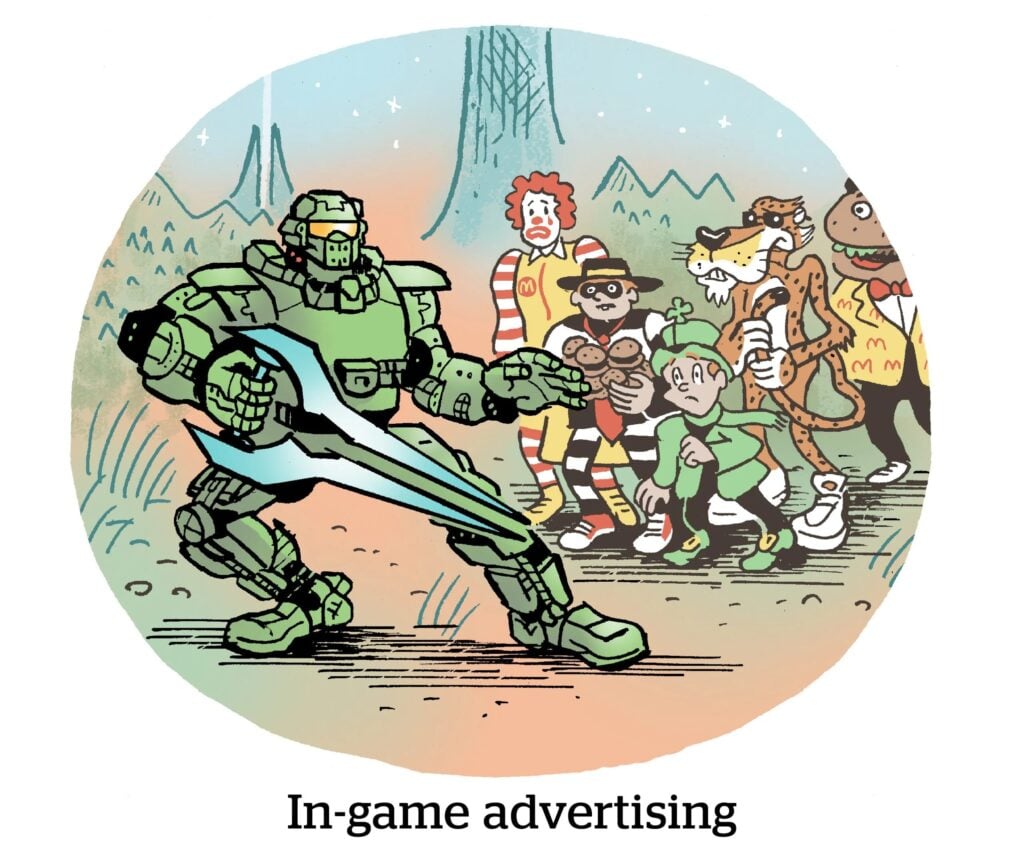
Microsoft’s relationship with Netflix and its investments in generative AI search get a lot of attention. But Microsoft Advertising’s real secret sauce is Xbox.
The LinkedIn identity graph, logged-in users and subscribers across almost all other Microsoft services are not integrated with the Microsoft Advertising ID. But Xbox cloud gaming subscribers are included.
Another interesting (and underreported) nugget comes courtesy of Microsoft Gaming CFO Tim Stuart, who disclosed that the company has considered making its Xbox Cloud Gaming service free for players who agree to see ads, The Verge reports. That’s a $16.99 value, so it represents nontrivial savings for the customer – and an interesting trade-off of subscription revenue in exchange for ad revenue and valuable data.
Another factor is that Bing’s most loyal search users aren’t really Microsoft stans, anti-Google privacy zealots, Outlook users or older folks; they’re Xbox cloud gamers. Xbox customers can link a Bing account to get generous discounts on the cloud gaming subscription and on-platform purchases.
Fair play to you, Microsoft.
Tag, You’re It
Instagram will soon introduce Suggested Product Tags for static image ads in the feed and Explore tabs.
The Meta machine learning system can detect when items in an Instagram ad are available via the advertiser’s product catalog.
“Ads with product tags have been available since 2019 and have been shown to improve ad performance (with up to 33% improved cost per incremental conversion),” according to a Meta account rep’s note to ecommerce agency Flat Circle CEO Rok Hladnik.
It should be pointed out that these are “suggested” tags, so buyers still must approve the product link. However, the general trend line in recent years for Meta (and Google, for that matter) has been to automate more aspects of the ad buying process, so long as it can be justified as a performance benefit.
Of course, it just so happens that Facebook and Instagram also desperately want to increase on-platform ecommerce activity. And guess who the biggest winner by far will be if advertisers aggressively tag products in posts and ads? Facebook and Instagram, of course.
But Wait, There’s More!
How new tech publication 404 Media is pitching itself to advertisers. [Marketing Brew]
Support for a TikTok ban crumbles, even among Republicans. [WaPo]
Why the CTV ad industry still needs to wean itself off the IP address. [Digiday]
Inside the rise of agency chief marketing and brand officers. [Ad Age]
You’re Hired!
T-Mobile poaches Warner Bros. Discovery’s Andrea Zapata as its VP of advertising data, measurement and insights. [NextTV]
Disney and ESPN vet David Coletti becomes iSpot’s first VP of sports research and insights. [Ad Age]
In-game ad platform Frameplay hires ex-Googler Vishal Arora as CTO and former Samba TV CRO Sandy Shanman as COO. [release]
Contextual advertising company Seedtag nabs Nexxen’s Chad Schulte as senior VP of US agency partnerships and strategy. [NextTV]









