Two years ago, it was so quiet on the M&A front that you could almost hear the tumbleweeds rolling through the conference rooms.
But, over the past two years, the ad tech deal machine began whirring again, albeit with slightly less vigor. Last year, which was a relative bonanza compared to the doldrums of 2023, was a hard act to follow.
Still, there were more than a few significant acquisitions in 2025, from ad tech OGs to AI startups. And the strategics were at it again, striking deals but being more selective.
Take T-Mobile’s acquisition of digital out-of-home platform Vistar Media in January, followed by its purchase of location data platform Blis less than two months later, and The Trade Desk’s acquisition of Sincera to bolster its DSP with deeper supply-path and ad-quality insights.

During the first three quarters of this year, strategic buyers accounted for the majority (71%) of scaled ad tech transactions compared with 58% during the same period last year, according to LUMA Partners.
So who bought what and why this year? Here’s as comprehensive a list as we could pull together (while still retaining our marbles), covering all the notable ad tech, agency and digital content deals of 2025.
January
The year began with T-Mobile’s Vistar deal for a cool $600 million followed by a little internal consolidation when Publicis Groupe combined its Leo Burnett and Publicis Worldwide agency networks into one massive new creative network called Leo.
Then came three deals in two days: DirectTV expanded its stake in addressable TV ad platform Invidi, TTD acquired Sincera, and ecommerce marketing company Rokt bought customer data platform mParticle for $300 million. (Our story about the Sincera deal was one of our top 10 stories of the year.)
January came to a close with cybersecurity platform CHEQ’s purchase of Deduce, a startup that detects AI-generated identity fraud.
February
Two noteworthy ad tech deals closed in February: Outbrain completed its acquisition of Teads early in the month, and Mediaocean completed its acquisition of Innovid a couple of weeks later.
In indie media agency merger news, PlusMedia and Cage Point came together to form a new shop called Mile Marker, and Havas acquired ecommerce and retail media agency Channel Bakers.
Shortly after that, Kevel (formerly Adzerk) picked up Nexta to add off-site retail media capabilities for walled gardens, AppLovin decided to offload its apps business, family safety and location app Life360 bought Fantix’s ad tech AI platform, and French consent management platform Axeptio acquired Brazilian CMP AdOpt.
And then a biggie: DoubleVerify bought Rockerbox, one of the last of the last independent multitouch attribution providers, in a deal valued at $85 million.
March
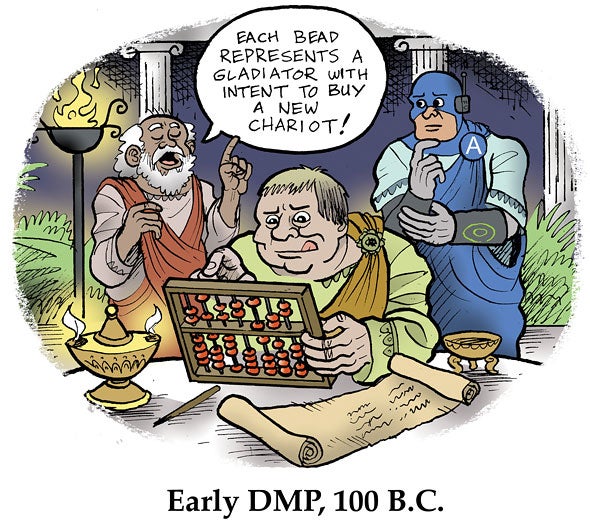
Lots of ad tech deals went down in March: Viant bought lockr, which has infrastructure that helps publishers collect and use their own data for digital advertising; T-Mobile snapped up Blis for $175 million; and Publicis bought one-time data management platform Lotame.
🎙️But why did Publicis buy a nearly 20-year-old DMP, and how will it fit into Epsilon’s identity graph? We’ve got a podcast for that.
In other news: Canadian tech investment firm Redbrick acquired Paved, a programmatic newsletter platform for publishers; MNTN sold its creative agency Maximum Effort back to its original owner, Ryan Reynolds; food delivery app Wonder bought Tastemade for around $90 million; Google announced plans to buy cybersecurity firm Wiz for $32 billion (its largest-ever acquisition!); Yahoo sold TechCrunch to media investment firm Regent; and customer data platform Braze bought OfferFit, an ad startup that offers A/B testing and personalized pricing.
Oh, and R/GA’s management completed a buyback from IPG, regaining full independence as a standalone digital agency for the first time in 23 years.
April
April was a bit of an M&A grab bag, kicking off with WPP’s acquisition of data clean room and collaboration startup InfoSum.
Then Redbrick struck again by buying Quartz and product review publisher The Inventory from G/O Media. Indie agent Acadia acquired fellow ecommerce marketplace ad agency Crush, and retention and analytics platform Yotpo picked up Israeli CDP Coho AI.
Meanwhile, Pinterest was poking around. It reportedly reviewed five potential ad tech acquisitions but didn’t buy anything. (Fast-forward to December for an update.)
The month closed with digital OOH platform GSTV’s acquisition by PE firm MidOcean Partners for between $500 million and $600 million; French CMP Didomi’s acquisition of French tag management platform Addingwell; and Marketecture’s purchase of AdLand, a library of TV creative going back to the 1970s.
Also, everyone wanted to buy Google Chrome, apparently (lol).
May
And then we put the M&A in May.
- Instacart acquired Wynshop, a startup that provides online storefronts to grocers.
- Social-focused digital media brand Gallery Media bought fashion site Coveteur.
- Roku acquired subscription streaming service Frndly TV for $185 million (but sadly didn’t have money left over for vowels).
- Multicultural ad network Snackable Media acquired ad ops platform AdGrid. (Snackable Media was founded by Justin Barton, who leads digital strategy at Black Enterprise.)
- Perion acquired Greenbids, an AI-powered optimization and carbon reduction startup, for $65 million.
- Charter and Cox Communications agreed to a $35 billion merger.
- Salesforce bought cloud data management firm Informatica for roughly $8 billion.
- More from Marketecture: Ari Paparo struck again with the acquisition of Serial Marketers and AI Marketers Guild, two community-based resources for marketers.
- OpenAI acquired former Apple design chief Jony Ive’s hardware startup, io, for $6.4 billion. They’ve yet to release a product. You’ll probably have to wait until 2027 for that.
- And Publicis snapped up influencer marketing platform Captiv8.
Then, in far less pleasant news, Vox Media sold gaming news site Polygon to Canadian media company Valnet and then laid off most of its writers.
June
We saw a bunch of consolidation in June, including across measurement, retail analytics and ecommerce, along with a few big players that grabbed streaming and creator assets.
In early June, Circana completed its acquisition of shopper data platform NCSolutions; TechCrunch quietly shut down its European operations after getting sold to a PE firm in March; and Newsweek acquired a health care ad platform called Adprime.
And then the saga began: Warner Bros. Discovery announced plans to redevide its assets into two publicly traded companies, with one company focused on streaming TV and the other on its linear networks. Analysts theorized that the move was in anticipation of a sale, which turns out to have been a prescient POV.
Meanwhile, Disney agreed to pay an additional $438 million to complete its purchase of Hulu, bringing the total price tag to just over $9 billion, and MLB acquired an undisclosed minority stake in social-native sports media startup Jomboy Media.
DoorDash deepened its ad push with a $175 million acquisition of retail search ad startup Symbiosys, while PMG scooped up ecommerce analytics firm Momentum Commerce. Crisp, a CPG/retail data analytics firm founded by former Tapad CEO Are Traasdahl, acquired Cantactix, an in-store analytics company that helps retailers optimize their shelf space. And audience platform Alliant picked up data insights and analytics company AnalyticsIQ to beef up its audience graph.
In other news, Omnicom and IPG finally got the FTC’s blessing to merge after agreeing not to steer ad dollars away from publishers based on political viewpoints.
July
July brought AI and consolidation.
Grammarly acquired email efficiency tool Superhuman (and later rebranded to Superhuman), and G/O Media sold gaming news site Kotaku to Keleops, the European media company that owns Gizmodo.
Didomi made its second acquisition of the year, merging with privacy platform Sourcepoint, and Hearst acquired The Dallas Morning News for $75 million, ending 140 years of local ownership.
Rokt also made its second acquisition of 2025 with Canal, which lets retailers offer curated products from DTC brands at ecommerce checkouts. And ONAR, a mar tech and agency holding company, acquired customer and lifetime value analytics startup Retina.ai.
Moving right along, performance media agency Brainlabs acquired fellow indie media agency Exverus Media, Amazon acquired an AI-based wearable device maker called Bee, travel industry news and data company Skift bought a women-focused community and events business, and intelligence platform Contentsquare entered an agreement to buy another intelligence platform called Loris AI.
Also: Fyllo regained its independence via buyback from Samba TV to refocus on advertising in regulated industries, the FCC finally approved the merger of Paramount and Skydance, and Publicis said it’s in the market to buy an AI company.
August
M&A cooled down a bit in the summer, but there were still a few interesting tie-ups, including TV station group Nexstar’s acquisition of its competitor, Tegna, for $6.2 billion.
Meanwhile, the NFL sold several of its NFL Media assets to ESPN, including RedZone and its fantasy football business, in exchange for equity in the network; investment firm H.I.G. completed its acquisition of Kantar Media; and Spectrum Reach bought cloud-based order management system ShowSeeker.
Also, Shell shuttered its Volta ad unit, which sold ads on EV charging station screens. (More on that later.)
September
September started off with identity solution provider Roqad’s acquisition of Zeotap’s third-party data division, digital ad platform Ad.com’s purchase of ad monetization Underdog Media and Empower’s acquisition of Ocean Media to form the second-largest independent North American media agency based on billings.
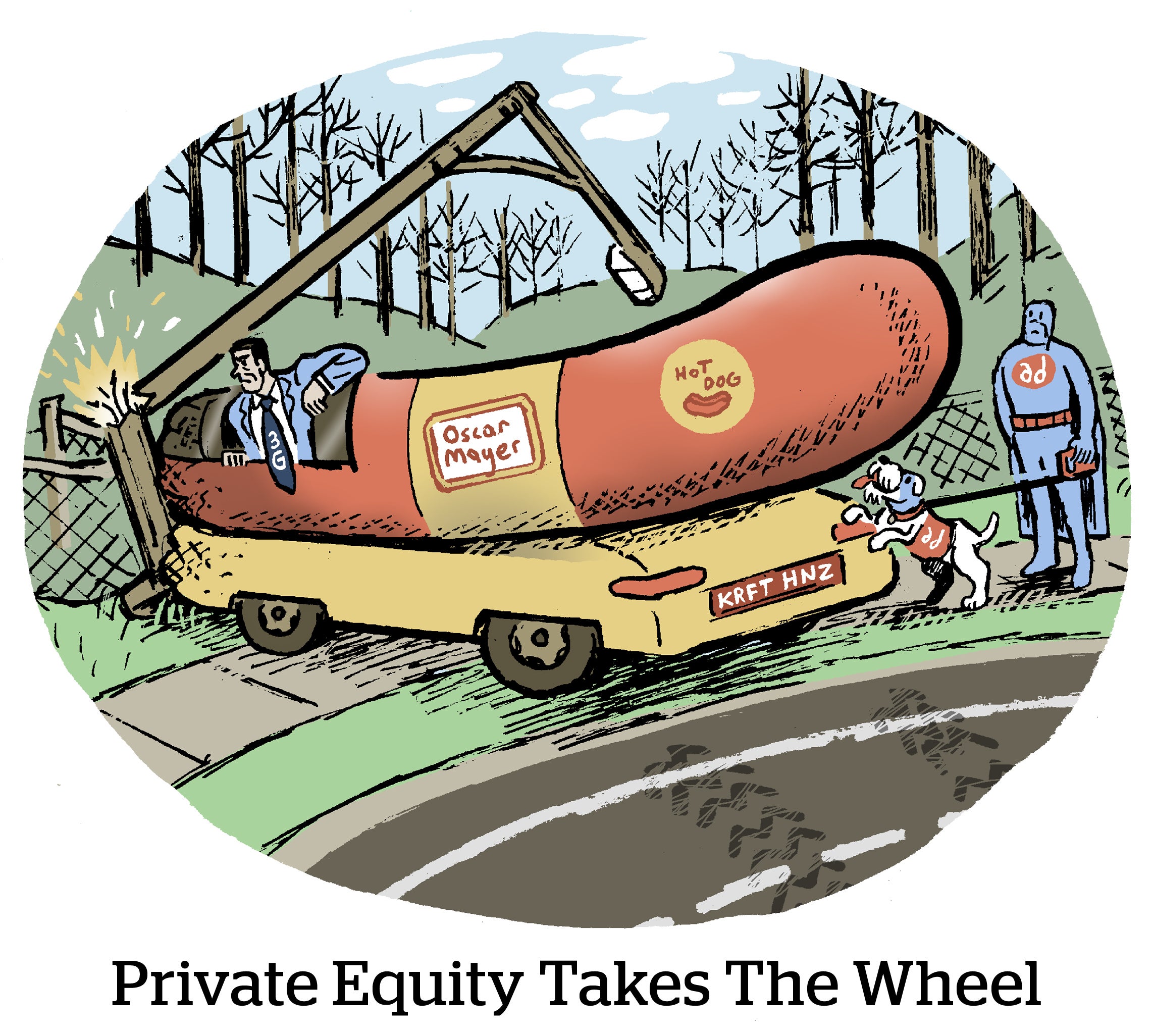
Then, Kraft Heinz announced plans to split into two publicly traded companies – one focused on global shelf-stable brands like Heinz and Philadelphia, the other on North American staples like Oscar Mayer and Lunchables – to simplify operations and boost performance. The separation should be finished by late 2026. (Only mentioning this one so we can reuse our Weinermobile comic.)
And then things got a little wild, with five ad tech acquisitions in the span of a single week: Magnite bought streamr.ai, a CTV ad platform for SMBs; AI-powered video product placement startup Rembrand merged with Spaceback; sports-focused publisher and media platform Minute Media (which owns Sports Illustrated and Players’ Tribune) bought VideoVerse, which helps make clips from video content; marketing agency Incubeta acquired data science consultancy RocketSource; and health care DSP DeepIntent sold a $637 million majority stake to PE firm Vitruvian Partners. (🎙️ If you want more on these, we’ve got a whole podcast for you.)
Phew. But wait, there’s more.
Enterprise software company Atlassian bought The Browser Company, which developed AI browser Dia, for $610 million; Italian tech conglomerate Bending Spoons bought video platform Vimeo at a $1.38 billion valuation; Literally Media acquired entertainment outlet Den of Geek; and game studio EA announced a $55 billion private buyout with new investors, including Jared Kushner’s Affinity Partners and Saudi Arabia’s Public Investment Fund.
But there were some core ad tech deals, too: Verve Group acquired search intelligence platform Captify; PE firm Novacap took Integral Ad Science private for $1.9 billion (that one closed in December); and Zeta snapped up Marigold’s enterprise software business for $325 million.
 October
Onward and upward into October: People Inc. scooped up food publisher and creator network Feedfeed; Democratic strategist and former Obama advisor Ashley Allison bought The Root from G/O Media, putting it back under Black ownership; and Bending Spoons made another play with its roughly $1.5 billion acquisition of AOL from Apollo-owned Yahoo.
Meanwhile, Paramount Skydance acquired The Free Press for $150 million and made its founder, Bari Weiss, the editor-in-chief of CBS News, while design platform Figma bought Weavy, an AI-based video- and image-generation company.
And in M&A news that never was, Google apparently hired an investment bank to evaluate a potential sale of its ad exchange unit in 2020.
Oh, and the drama began: Warner Bros. Discovery rejected an acquisition bid from Paramount Skydance for being too low.
November
In November, the leaves began to fall, and the deals continued to pile up.
Omnicom officially closed its $13 billion merger with IPG after getting EU approval (and IPG slashed 3,200 jobs beforehand in anticipation), while Havas CEO Yannick Bolloré denied rumors of WPP takeover talks.
Alternative identity provider ID5 made its first-ever acquisition, buying identity resolution provider TrueData; Fubo merged with Hulu (finally); and Life360 made another ad tech acquisition, buying publisher-focused ad platform Nativo for $120 million.
Meanwhile, OOH SSP Broadsign acquired fellow DOOH startup Place Exchange; in-theater-ad network National CineMedia merged with another ad network for movie theaters, Spotlight Cinema; and Adobe snapped up SEO tech business Semrush for a cool $1.9 billion.
Over in the media world, Daily Mail owner DMGT bought its rival, The Telegraph, for $650 million, and Australian startup Jolt, which operates electric-car charging stations and sells advertising, acquired Volta from Shell.
December
The year closed with a flurry of deals, including Netflix’s plan to acquire Warner Bros. for $83 billion, which still needs regulatory approval. (Sorry, Paramount Skydance.)
Omnicom and IPG consolidated by combining their creative divisions, folding FCB into BBDO and DDB with MullenLowe into TBWA.
Then, it snowballed from there. TV advertising company Cadent acquired VuePlanner, which specializes in contextual advertising and media planning for YouTube; Pinterest bought performance-focused CTV startup tvScientific; and, uh, Trump Media is merging with a nuclear energy company called TAE Technologies in a deal worth $6 billion. 🤷♀️
And, finally, TikTok signed a deal to sell its US unit (!). The deal, which is set to close on Jan. 22, involves Oracle, Silver Lake and Abu Dhabi-based MGX taking a collective 45% ownership stake in the US entity, which will be called “TikTok USDS Joint Venture LLC.” Rolls right off the tongue. The rest of the company (roughly one-third) will be retained by affiliates of existing ByteDance investors, and ByteDance itself will keep the rest.
If you reached the end, we appreciate you! 🙌 Now it’s time for you to close your computer and acquire some eggnog.