
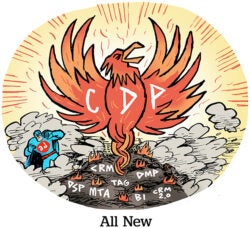
Putting The CDPieces Together
The wave of CDP consolidation is riding strong.
Last week, CDP Braze got into the mix with its $325 million acquisition of OfferFit, an ecommerce advertising startup that offers A/B testing and personalized pricing.
The OfferFit acquisition is almost an inversion of a deal from back in January when Rokt, which tests and serves offers on retail media networks by targeting post-purchase pages and messages, acquired CDP mParticle for $300 million.

To fund the investment required to develop a CDP business, “you need to be close to the source of value and recognize what actually matters,” mParticle Co-Founder and CEO Michael Katz told AdExchanger after the Rokt deal.
In other words, CDPs might collect and organize valuable data on customers, but the big money comes from applying that info for marketing purposes. CDPs have always taken a hands-off approach to targeting ads and monetizing customer data.
As OfferFit’s co-founders put it: “Constraints on reward functions or input data may be easier to scale across narrow use cases, but they don’t deliver what the market really needs, especially in large enterprises where even a minor performance uplift can translate into massive ROI.”
No Love Lost
AppLovin CEO Adam Foroughi responded in a blog post to the latest reports by short sellers targeting the company’s ad tracking and attribution practices.
The investors question AppLovin’s nascent ecommerce advertising business as unsustainable. That business line has become an object of scrutiny because it’s a question mark.
Google, Amazon and Meta self-attribute credit for sales like it’s going out of style. Marketers understand that those platforms over-attribute, but also that they provide opportunities for direct sales.
But AppLovin? It’s hard to imagine that those ads between mobile games are driving as many direct sales as Amazon or Google.
Foroughi defends AppLovin’s ad practices and attempts to discredit the short reports by suggesting people prompt Grok, X’s AI chatbot, as a way to “cut through the noise and see the bigger picture.” Which frankly is more damning than any of the short-seller reports. Grok? C’mon.
AppLovin’s shares are down from $510 in mid-February to $270 as of Friday. But the big question is what Google and, especially, Apple will do. The most recent short report alleges that AppLovin’s SDK passes snippets of third-party ID info to elude tracking opt-outs.
If Apple takes no action, AppLovin will disappoint the shorts. If Apple cracks down, though, it could be game over.
Rocket Juice
The federal ad tech antitrust trial in Alexandria, Virginia last year went through the “rocket docket” treatment, as Digiday puts it, with presiding Judge Leonie Brinkema seemingly quite eager to wrap the trial stage.
Except, now, months later – and long after many observers expected a decision to be handed down – people are restlessly starting to wonder what’s going on in the Eastern District of Virginia.
Mostly all we can do is idly speculate. For example, Alphabet CEO Sundar Pichai joined President Trump on inauguration day. Did any backroom dealmaking happen?
Or maybe Justice Brinkema and her clerks are simply being extra thorough with their review.
But as we wait, the media landscape is changing fast – and faster than the pace of a US district judge perhaps.
“As the rocket docket stalls, tech has not,” Digiday writes. “Regardless of the outcome, Judge Brinkema’s ruling will be applied to a very different media landscape to the contemporary picture.”
But Wait! There’s More
The EU will go easy on Apple and Meta in its antitrust rulings under the Digital Markets Act. [Ars Technica]
B2B marketers are finding that employee and leadership personal accounts outperform their own content marketing. [Digiday]
Google rolls out user choice billing on Google Play in the UK. [TechCrunch]
Whoops! Apparently all those Ghibli ripoff images are “melting” OpenAI’s GPUs, according to CEO Sam Altman. [Fortune]
You’re Hired
Samba TV hires Zac Pinkham as SVP of international. [release]






