
Step On The Gas
Chalk one up for digital out-of-home.
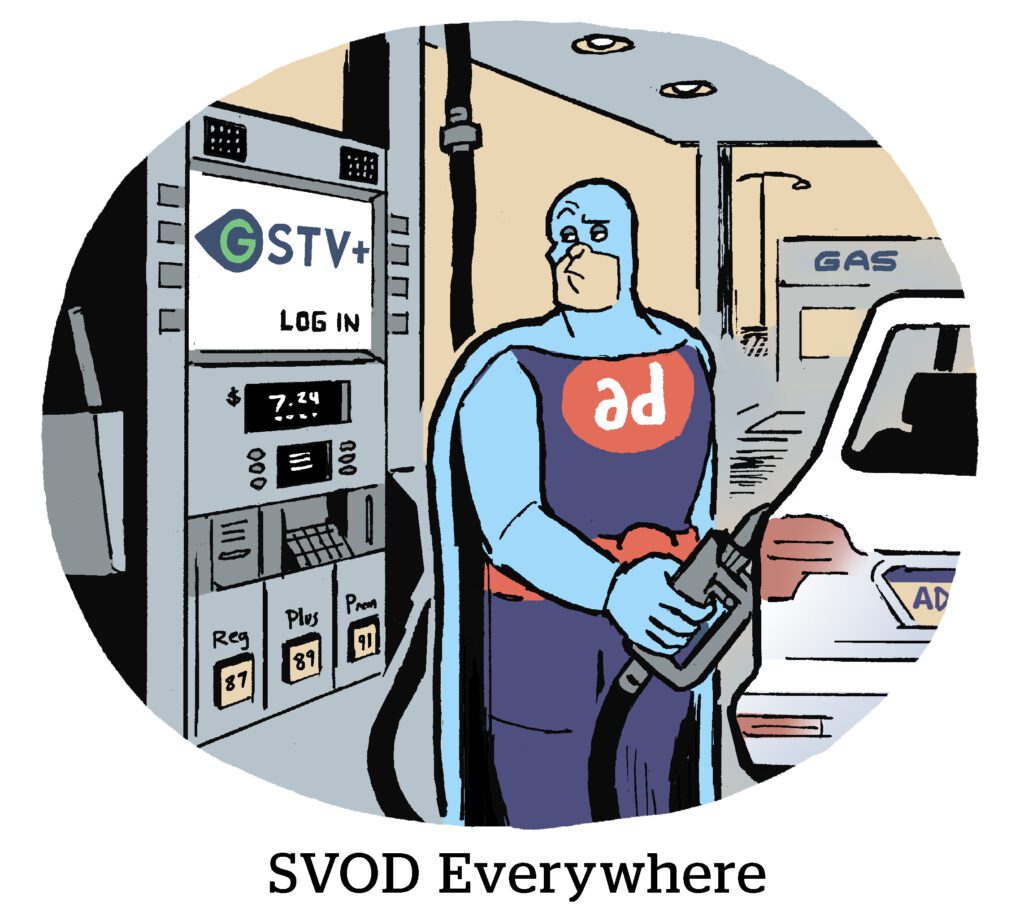
Because GSTV – originally “Gas Station TV,” a media and advertising company that runs videos on gas pumps – is being acquired by the private equity firm MidOcean Partners for between $500 million and $600 million, Bloomberg reports.

The new ownership might also use GSTV to promote its own brands. For instance, last year, MidOcean partnered with Kroger’s investment arm, and the two together acquired nutpods, a dairy-free creamer brand. MidOcean also owns the cosmetics brand Image Skincare (previously sold only through physicians, spas and professional channels, but has since launched a consumer business and is available at retail), Casper’s Ice Cream and Louisiana Fish Fry, which makes seasonings.
In 2022, GSTV launched what it calls AMPLIFY, a subset of its gas station screens that are at one-stop convenience stores or retail chains. These impressions, in other words, can be packaged into retail media digital place-based (DPB) campaigns. DPB ads are a real grab bag: DOOH, CTV, in-store audio or radio, mobile display or video, even paper coupons.
Every advertiser wants in-store real estate. And the gas pumps outside are the closest they can get to retail media without the retailer’s help.
The Asking Price
Even Amazon is responding on the fly to tariff policies.
Last Friday, Fortune reported that Amazon sellers are in a bind due to sudden price increases. The Amazon algo, especially whether a product gets placed in the coveted “buy box,” is finely attuned to price increases and disparities across the web.
An item that’s discounted exclusively at Target, say, will be penalized by the Amazon ranking algo. Amazon can’t require the lowest prices, but its algo heavily favors products where that is the case.
When a product’s price increases over time, the Amazon algo also dings sellers. It hates sudden price increases or when year-over-year or week-over-week prices are way off.
Tariffs are a wrench in the mechanics of Amazon’s algo, because certain products will dramatically rise in price. Also, there isn’t a clear relative correlation. One brand might have much higher increases in its supply chain compared to a direct competitor.
Some sellers report Amazon did a quick fix over the weekend to adjust the basic injustice of products being disqualified from the buy box due to new tariff rates. But Amazon isn’t done tinkering with its algorithm due to new global trade rules.
Mechanical Turks
It’s been an open secret for years that some tech companies use outsourced labor in the global south to sort through and annotate their AI training data.
New research conducted by the African Content Moderators Union and Swedish privacy nonprofit Personaldata.io illustrates just how many companies benefit from this kind of invisible work, Rest of World reports.
It’s not just AI startups you’ve never heard of, either. Big Tech giants like Meta, Google and Microsoft often use outsourcing firms to review large amounts of data and moderate content (something that Meta is specifically training AI models to do). Many of those firms employ workers in at least 39 different African nations where labor rights are often less strictly enforced.
In Kenya, at least one class action lawsuit has already been filed against data annotation provider Sama and its client Meta for the alleged exploitation and mass layoff of content moderators in the country.
Sama, by the way, also contracted Kenyan workers to OpenAI, where they were tasked with labeling and filtering out toxic language from ChatGPT’s training data and responses – for less than $2 an hour, Time reported back in 2022.
But Wait! There’s More
Meta is developing new ad products for ecommerce marketplaces that sell ads. [Adweek]
Amazon’s search and DSP businesses are popular backstops for brands that feel boxed in by price pressures. [Digiday]
Meta is using AI to sniff out kids who lie about their age on Instagram. [Fortune]
More than 100 public mid-market SaaS companies are getting caught in an AI-induced “squeeze.” [Business Insider]
ChatGPT responding to users saying “please” and “thank you” has cost OpenAI tens of millions of dollars in resources, according to CEO Sam Altman. [Quartz]






