Triple Whammy
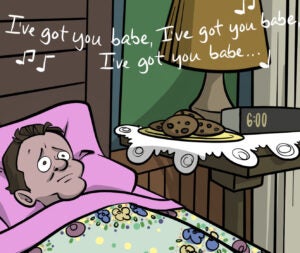
In October, Google confirmed that, as part of a test, it would break its own ad policy by double serving ads to a single search results page.
Guess Google liked what it saw, because now Google has been spotted triple serving ads to search pages, reports Search Engine Roundtable.
How is that even possible, you ask?
Well, consider local businesses and service providers. First, there’s the typical screen-topping sponsored search link, plus a sponsored link in Maps (known collectively in jargonese as the “Google Local Pack”). Then, for good measure, there’s another sponsored link that appears at the bottom of the first results page.
Just think, once advertisers are able to pay for placement in Google’s AI Overviews – the generative AI responses that sit atop some search responses – Google could even start quadruple tagging a page.
The triple-served ads are part of a test, according to Search Engine Roundtable, so the capability may never become a generally available option for advertisers. But it does continue a trend of Google sacrificing the user experience in favor of creating ever more ad attribution opportunities.
And the [Blocked] Goes To …
On Sunday night, the Academy Award for Best Picture went to “Anora,” a movie about a stripper-slash-sex-worker marrying the son of a Russian oligarch.
Among the films it beat out were “Emilia Perez,” a musical about a transgender Mexican cartel boss; “Nickel Boys,” which follows two black teens in a Jim Crow-era penal institution; and “The Brutalist,” in which a Holocaust survivor is abused by his rich American patron.
If you’re looking at that list and thinking, “Gosh, a lot of these words are not very brand safe,” you’re not alone. In fact, Adweek reports that 56% of Oscars content was likely blocked by advertisers due to the use of blunt keyword blocklists.
But according to contextual advertising firm Mantis, this issue extends beyond the Oscars. Just 43% of the content related to this year’s Super Bowl or last year’s Olympics was classified as safe.
Current events aside, some blocklists avoid entire franchises altogether. Mantis found “Star Wars,” “The Walking Dead” and “Thor” on agency blocklists – which, c’mon, guys, “Love and Thunder” wasn’t that bad.
Or is it just that marketers got squeamish about a movie where one character has cancer and another is known as a “god killer”?
Miss Independent
R/GA leaders have bought their agency back from Interpublic Group, Fast Company reports.
News of an impending sale first leaked to Ad Age last summer, but now it’s official. After 23 years of being owned by IPG (which will itself soon be subsumed into Omnicom), the creative agency will now be run via a partnership between R/GA’s global management team – which includes CEO Robin Forbes and Chief Creative Officer Tiffany Rolfe – and private equity firm Truelink Capital.
Truelink has also set aside a minimum of $50 million to support R/GA’s new innovation fund. This money will be used to invest in new talent and technology (especially AI) for the 48-year-old agency, which Forbes and Rolfe say they plan to run like a startup.
It also certainly can’t hurt that IPG gets to divest this from its balance sheet. Even before the Omnicom merger was announced late last year, IPG had already begun selling off its digital agencies.
But now that both holdcos plan to restructure ahead of their union in the second half of this year, we expect more divestitures are on the way.
But Wait! There’s More
Glitches, glitches. Disney and Hulu are really sorry you missed Mikey Madison getting her Oscar last night. [Adweek]
The latest round of ad tech earnings reports show public markets aren’t for the faint of heart. [Digiday]
All those indiscriminate mass government firings are hitting the FTC hard. [The Verge]
Google Ads had another bug, this time preventing some accounts from delivering ads at all. [Search Engine Roundtable]