
No Waiting for May – CES Is Where The TV Upfront Season Starts
If any single event can be considered the jumping-off point for TV upfronts, it’s the Consumer Electronics Showcase (CES), which kicks off this week in Las Vegas, Nevada.
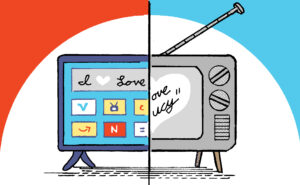
If any single event can be considered the jumping-off point for TV upfronts, it’s the Consumer Electronics Showcase (CES), which kicks off this week in Las Vegas, Nevada.

As brand safety standards evolve and oversight shifts from platforms to third-party vendors, Brittany Scott, SVP of global partnerships at Zefr, explains what the rise of generative AI – and Meta’s decision to step away from MRC brand safety audits – means for the future of media quality.

This year, programmatic companies faced tough decisions about privacy, awkward acquisitions and the cookie die-off that never quite happened.

The generative AI trend generated endless hot takes this year, but the ad industry also had plenty to say about growing competition between DSPs and SSPs. Here are AdExchanger’s top 10 most popular guest columns of 2025 and why they resonated.

H&R Block’s marketing strategy focuses on Gen Z and relatability, both during tax season and beyond.

Inside Coca-Cola’s pivot from TV advertising to influencer marketing; Netflix inks another exclusive video podcast deal with iHeartMedia; and Madison & Wall predicts slow US ad spend growth in 2026.
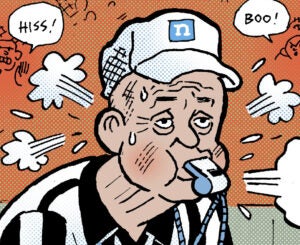
The VAB is accusing Nielsen’s Big Data + Panel of producing “instability, inconsistency and irrational” TV audience measurement results, particularly when compared to its legacy panel-only product.

CTV isn’t an emerging channel anymore. It’s a fully established, essential part of the media mix. Advertisers now understand its reach, flexibility and ability to drive measurable outcomes.
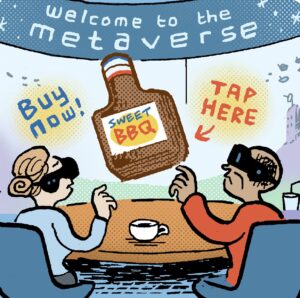
The grocery chain Albertson’s is trying to reduce the time and number of clicks it takes to add an item to an online shopping cart. It’s new click-to-cart product should help.

An important part of developing the in-house creative group at HexClad is to prove the return on investment, according to Head of Content Matt Duckor.

Almost everything in AI feels big. But are you looking at the next Gangnam Style or the birth of a new industry? Here’s how to assess whether an AI vendor is likely to matter in two years.

Marketers used to wait for obvious signals, like a product page view, a cart add or a keyword search, before triggering campaigns. But in today’s fractured landscape, those signals can arrive too late.

The Economist is charting its own course in the age of AI, says Nada Arnot, the 182-year-old publication’s EVP of marketing. It’s steering clear of licensing deals and lawsuits and partnering with Claude on its own terms.

For years, MFA was a mostly web-based problem. Now, generative AI has supercharged the made-for-advertising model, and it’s infecting social media feeds and vertical video platforms.

Thanks to mitigated tariff effects and the AI boom, WPP Media’s 2025 ad spend forecast has good news for marketers.
Fizz, a new discussion and news feed app that targets college campuses, is helping marketers reach college students authentically.

Broadsign may actually be building a platform that will make an attractive acquisition target down the road. And one of the major cross-platform Big Tech players feels like the most likely buyer.

Differin, which produces over-the-counter gels and patches to treat acne, wanted to reach teens facing their first breakouts – and do it in a way that felt real.

Manscaped’s CMO Marcelo Kertész on flipping its strategy from quick-win performance marketing to building a lasting brand with smarter, long-term growth.
On Tuesday, digital out-of-home (DOOH) ad tech startup Place Exchange was acquired by Broadsign, another out-of-home SSP.

E.l.f. Beauty’s “So Many Dicks” campaign targets corporate leaders via contextual advertising with the goal of increasing diversity in corporate boardrooms.

After pulling back on moderation, Instagram gets flooded with antisemites; BidSwitch builds a programmatic way for AI bots to pay to crawl websites; and nearly half of Gen Z dislikes AI content.

Leila Brillson spoke with AdExchanger about The Onion’s marketing strategy and the unique challenges – and opportunities – that come with monetizing the infamous satirical news site.

With its latest funding, Agentio plans to expand its team and to establish creator marketing as part of every advertiser’s media plan.

Most of what’s sold as “contextual” today still runs on the same keyword logic we used a decade ago. The industry didn’t reinvent contextual targeting; it simply replaced one keyword with a cluster.

Laser Eye Center struck the balance between human creative and AI usage by partnering with creative marketplace Kartel to generate ads for a local TV network.

Consumers don’t experience media in silos. They might stream a live game on their TV, scroll social feeds during halftime and research products on their mobile device later that night.
Omnicom revamps its revenue reporting; Amazon will now charge for access to its Selling Partner API; and brands seek sponsorship deals with all sorts of social creators.

The real challenge is drawing a clear line between the AI-generated content that adds value and the kind that erodes trust and leads to significantly lower ad effectiveness.
“You’ve got to really evaluate your [media] mix almost every day, but particularly when you’re on shelves and on Amazon,” AG1 CMO Paulie Dery, who joined in August 2024, told AdExchanger.

Brands have plenty of ways to boost search visibility—paid, organic, and earned. But if a CEO demands presence in customer journey recommendation engines and is ready to pay, what can a marketer do?

There’s MMM and MTA, but no single ad measurement works for brands with multiple points of sale. On Tuesday, Northbeam launched an incrementality tool to complete what it calls “the trifecta of digital attribution.”

If you want to know what privacy regulators think about online advertising, it’s not a mystery. Just listen to what they’re saying.

The effect wasn’t just limited to news content. The Reuters.com/lifestyle vertical also had some of its brand-suitable pages blocked.

Swivel and Olyzon’s new partnership brings buy-side and sell-side agents together as early examples of an agentic marketplace.

Inside how Jones Road Beauty is trying to turn messy, conflicting measurement signals into a single testing roadmap for its media mix.