
Will YouTube Win Its Fight For Premium Video Status?
Now that YouTube is barreling into the CTV space, legacy programmers are putting their collective foot down about what counts as premium content.

Now that YouTube is barreling into the CTV space, legacy programmers are putting their collective foot down about what counts as premium content.

After more than two years of building and testing, Meta is releasing brand suitability controls and third-party verification for its feed environments.

American retailers now see themselves as media companies. But in their publisher guise, retailers are in a strange and giddy situation.

Say hello to the US government’s latest attempt to force antitrust regulations on the digital advertising industry. It might sound familiar.

Insurance marketing tech platform Kissterra helps auto insurance companies develop personalized marketing strategies and tailored messaging based on data such as zip code, age group, mobile carrier and car types.

The ad tech industry is one of many on a long list of male-dominated fields. But the status of ad tech as just another brodeo is finally changing.

On Wednesday, Google shared details on its evolving criteria for blocking advertisers and publishers for ad fraud or misinformation. It also rolled out a new consumer-facing tool that offers transparency into the ads that brands serve through its platform.

Ad industry veteran and event stage mainstay Amanda Martin is taking on a new role as Mediavine’s SVP of partnerships and business strategy. Martin will be moving from the buy side to the sell side after a nearly eight-year stint at ad agency Goodway Group.

Bob Evans Farms has been working with an AI tech startup since last year to help evaluate ad creative and campaign concepts through the lens of diversity and inclusion.

Retail media networks have been adding ad tech audience extensions for the open web and CTV. Now, new startup Symbiosys wants to take retail ad platforms a step further into search and social.

We asked agency experts: With TikTok under the microscope and a potential US ban looming, what are you advising brands do?

Despite a sluggish macroeconomic environment and jittery consumers and businesses, US media ad spend is expected to increase by 3.4% in 2023, according to a Magna forecast released Monday.
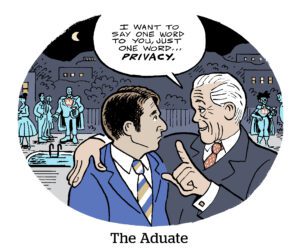
Sharing enough detail without being overwhelming is a difficult balance to strike, and there’s no perfect answer. But one thing is for certain: Privacy platitudes are for hacks or for those with something to hide.

Paramount, which is part of a new joint industry committee set on creating TV currency standards, held a conference to share a pulse check on TV currency and the JIC’s progress.

Based on TikTok CEO Shou Chew’s appearance before the House Committee on Energy and Commerce on Thursday, Congress isn’t buying TikTok’s claims of independence. And US legislators have no faith in any of TikTok’s proposals for safeguarding US user data.

Hulu might have a tolerable frequency rate, but it also has a much higher ad load than many of its streaming service competitors.

Supplemental insurance isn’t sexy. But with the right media strategy, even insurance brands can engage new (and younger) audiences.

DanAds is in growth mode, and its US expansion is in full swing. It also has its sights set on profitability by the end of the year. But the volatile market has DanAds rethinking its IPO.

This cough and cold season, Ricola ran shoppable influencer marketing campaigns across Instagram, TikTok and Snapchat to better attract and reach younger generations of customers.

Generative AI isn’t just for creating unsettling art, chatting with robots or, uh, attempting to break up marriages. Adobe has plans to weave generative AI tools into its real-time customer data platform.

This year, Nielsen plans to start filtering big data into its TV currency – including ACR.

Spotify is all about audio, obviously. But video advertising is a strategic priority for the audio streaming service. Emma Vaughn, Spotify’s senior director of advertising business development and partnerships, explains why.
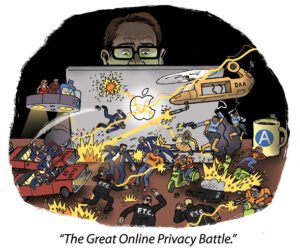
If programmatic ad tech was a canary in the coal mine for how data privacy would affect the online advertising industry, then some of the canaries have escaped and are creating businesses to help coal mine operators do better.

Warner Bros. Discovery decides to transact media with VideoAmp and Comscore currencies during its upfront this year.

In a world where people casually toss around the term “surveillance advertising” and Congress is pushing for a national privacy law, has the clock run out on self-regulation?

The alternative ID landscape is incredibly fragmented. So how are publishers – especially long-tail publishers that tend to be strapped for tech resources – supposed to pick the ID solutions that work best for them?

Publicis Groupe-owned Epsilon has been in the CRM business for 30 years, but the agency only launched a self-service digital CDP for enterprise clients late last month.

Now that short-form video giant YouTube is entering the TV measurement debacle, fresh debate is afoot.

The more the TV industry rallies around new video currencies, the more programmers and advertisers are zooming in on ACR as a must-have data set for measurement and targeting. But how does ACR work? And is it really privacy-safe?

Recurrent Ventures is ramping up its focus on programmatic direct and PMPs to make up for flagging open auction revenue. Marketers now have access to Recurrent’s 28 publisher brands through Audigent’s private marketplaces.