


While everyone else was out enjoying the first signs of spring this week, I stayed in bed watching “Wife Swap,” “My 600-Lb. Life” and “Everybody Hates Chris” to check out what the ads are like on Hulu.
The verdict? Hulu’s ad experience is a mixed bag.
Based on my two-day binge, Hulu seems to have a pretty good handle on its frequency capping. Unlike some other streaming services, I didn’t feel like Hulu was showing me the same ads over and over (and over).
But a tolerable frequency rate doesn’t make up for a less-than-impressive ad load – and Hulu has a much higher ad load than the other streaming services I’ve sampled recently.

Too many ads
I can’t get enough of reality TV, so I watched entire seasons of “Wife Swap,” “Hoarders” and “My 600-Lb. Life.”
All these shows are made up of 40-minute episodes, during which I was exposed to between four and a half to a whopping seven and a half minutes of ads. That’s a lot of ads for not even a full hour of content.
And it’s not like these shows are sexy new releases. The fact that an episode of “Wife Swap” from 2004 has over seven minutes of ads made me wonder whether Hulu considers people watching 20-year-old reruns to be a less valuable audience than viewers watching more recent releases or Hulu Originals.
Or maybe Hulu’s ad load is just that high.
So, I watched the first episode of the 2019 Hulu Original “Pen15” to find out. And the 30-minute episode had a solid 5 minutes of ads.
Guess Hulu’s ad load really is just that high.
The ads on Hulu were also served up in breaks as long as 90 seconds a pop. For comparison, the ad breaks on Peacock were never longer than 60 seconds. But Peacock also showed me the same ads over and over and over again, which took away from the pure jubilation of seeing fewer ads.
Which sparks a question for my fellow streamers: Would you rather see four minutes of the same ads or seven minutes of different ads? Let me know.
Pick your poison
Compared with other streamers that have a lower ad load, though, I thought Hulu’s breaks showcase a far more diversified roster of advertisers. And I found Hulu’s ad experience to be less annoying as a result.
No, I’m not just saying I prefer more ads because I get paid to write about them. But as a consumer, too much repetition feels like torture.
Like the other streaming services I’ve watched, Hulu advertisers are mostly large national brands. I saw ads for DoorDash, Verizon, Tide, Expedia, Febreze, Wendy’s, Liberty Mutual, Kia, Walmart, Meta, Budweiser, Chevy, Vitamin Water, Jameson, Amazon, Dodge Ram and Tinder. Only five of these companies showed me the same creative more than once.
And just like Peacock, Hulu also served me a whole bunch of pharma ads – roughly 15 within only a few hours. But unlike Peacock, most of the pharma ads I saw on Hulu weren’t repeats (apart from one or two).
Switch it up
Hulu’s ad experience was particularly interesting because the streamer makes use of different ad formats beyond classic 15- and 30-second spots.
An interactive ad unit for Progressive popped up to ask me which of three ads I’d prefer to see. I also saw pause ads from Progressive, ADT and Charmin. (In Hulu’s case, pause ads are when QR codes appear next to ad copy for a brand when a stream is paused.)
And although some advertisers hit me more than once, it was with different creative. I saw two or three variations of ads from Tide, Wendy’s and Tinder. From a viewer’s perspective, seeing different ads from the same brand is far less annoying than seeing the same ad creative on what feels like a loop.
Fair play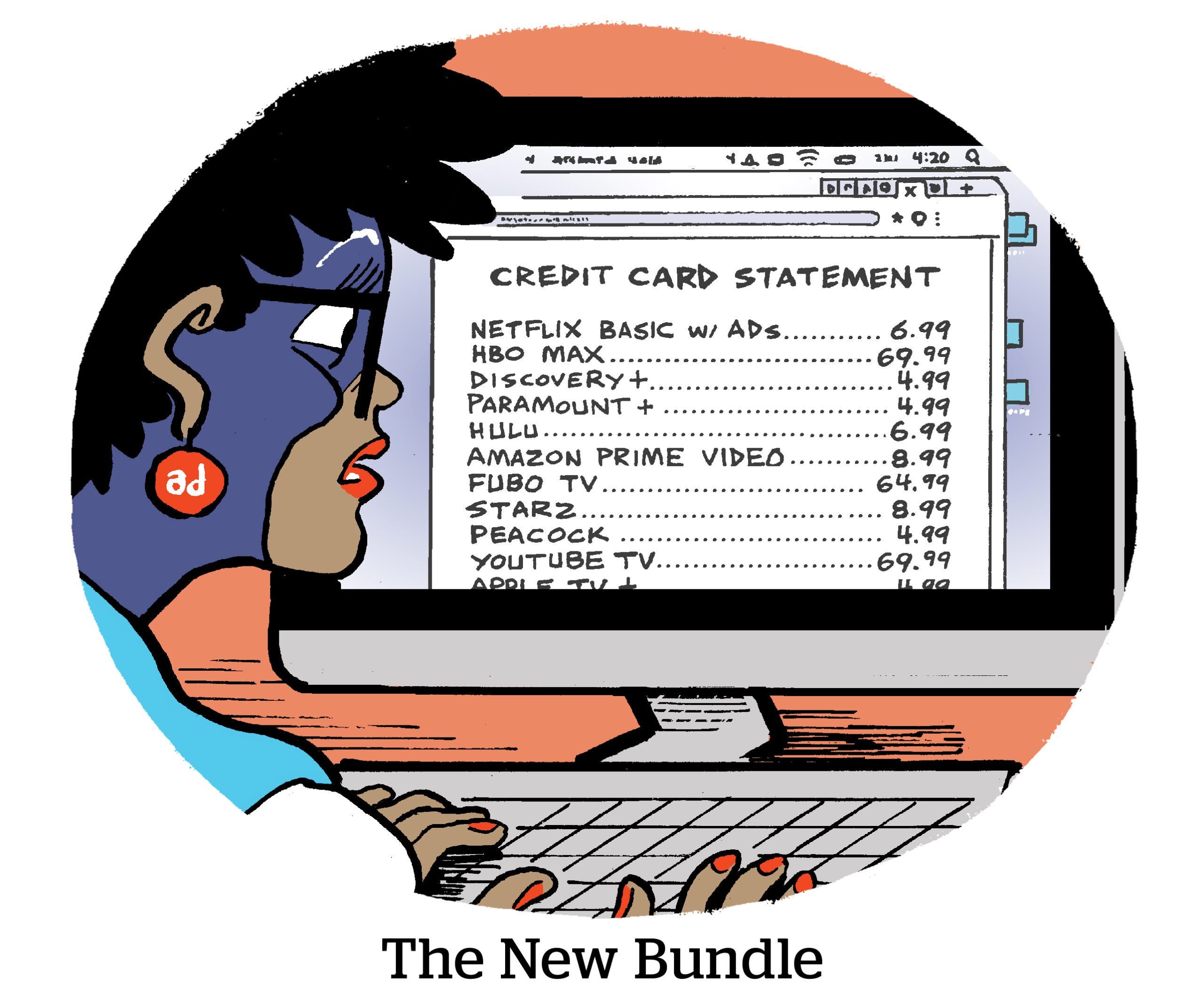
Still, just because I appreciate diversification doesn’t mean the value exchange felt very fair.
Hulu has a much higher ad load than many of its competitors, but the subscription price is similar, if not higher, than its comparatively ad-lite counterparts. (I echo the sentiment of my dad, who walked in on me watching Hulu and asked: “Wait – you have to pay HOW much to see all these ads?”)
Netflix with ads, for example, serves between four and five minutes of ads per hour of content and costs $6.99 per month. Peacock has roughly the same ad load and only costs $4.99 per month. Disney+ with ads is the same price as Hulu ($7.99 per month), but Disney+ also keeps its ad load to roughly five minutes per hour of content.
That good ol’ value exchange?
Hulu’s ads didn’t feel all that personalized, either (to use the programmer term of choice for “highly targeted”).
Within just a few episodes of “Wife Swap,” Hulu oscillated between showing me ads for dating services, pregnancy tests and the risks of nicotine followed by pharma ads for arthritis and joint pain. Clearly, Hulu isn’t sure whether I’m a young teenage girl who vapes or a middle-aged woman with joint pain. (Hint: I’m neither.)
And just as I began typing the words “at least Hulu got my gender right,” I was served an ad from Hims for erectile dysfunction. There goes that.
A targetless mishmash of ads does more than just confuse consumers. I think some advertisers would be pretty peeved to know their ads reached me and not the accurate, precise audiences Hulu likely promised to deliver on.
The perceived lack of targeting on Hulu is puzzling.
Hulu’s got a couple of years of a head start on Disney and Netflix, which is why Disney is emulating Hulu’s ad targeting capabilities on Disney+.
In my opinion, though, Disney’s goal says more about the limited targeting on Disney+ than it does about Hulu getting it right.
Let me know what you think. Hit me up at alyssa@adexchanger.com.








