
Advertisers Love Their CTV … Despite An Abundance Of Programmatic Landmines
Connected TV may be online advertising’s go-to golden child – but buyers beware. CTV buys can be risky, says Chris Kane, founder of Jounce Media.

Connected TV may be online advertising’s go-to golden child – but buyers beware. CTV buys can be risky, says Chris Kane, founder of Jounce Media.

Streaming is arguably the TV industry’s most powerful growth engine, but it’s still far from a mature business. Which is why programmers took ad tech off the backburner during their upfront presentations this year.

Forget Skynet. The robot revolution will be fought between large ad platforms (mainly Google, Meta and Amazon) trying to woo advertisers with generative AI and promises of better performance.

Programmers that held upfronts came bearing gifts for advertisers, most of which were packaged as improvements to ad targeting and/or buying.

The end of third-party cookies isn’t “Armageddon for marketers,” says Wendi Dunlap, Mediahub’s newly appointed EVP of business intelligence and audience science. It’s an opportunity to test, learn and do better.

It’s up to technology and media companies to decide whether AI will be an atomic bomb that annihilates countless jobs or if it will power the workforce’s next leap in productivity.
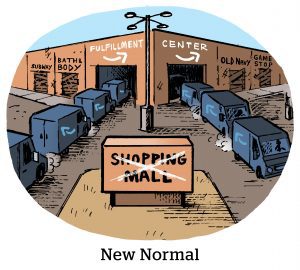
Retail media is due for a reality check, according to Max Willens of eMarketer/Insider Intelligence. Willens spoke at the Programmatic I/O conference.

Automation is also making its way onto TV advertising with a heavier focus on programmatic buying and better content recommendation algorithms.

Netflix addressed advertiser frustration with its lack of measurement and targeting at its first-ever upfront this week. Nielsen’s Digital Ad Ratings and EDO outcomes-based measurement will both be available to Netflix advertisers this year.

As broadcasters do their best razzle dazzle routines at the upfronts, streamers and MVPDs alike, including Roku and DirecTV, are busy building programmatic ad tech stacks.

In Q1 2024, Chrome will deprecate cookies for 1% of a randomly selected group of Chrome users and slowly expand deprecation to more users throughout the year.

Supply-path optimization conjures an image of SSPs and DSPs dueling it out to each render the other obsolete. But it’s actually not that dramatic.

Many DTC brands are turning to TikTok to boost ecommerce sales. Bushbalm is also using TikTok to encourage people to buy its products in stores.

Data clean room startup Samooha wants to make it easier for marketers who don’t have a data science background to securely access and share data regardless of where it sits. Because the dirty secret about clean rooms is they can be rather difficult for nontechnical people to use.

WaPo partnered with ActionIQ to overhaul how it markets to subscribers throughout the various stages of their subscription life cycle.

Why is there so much misinformation circulating online? Because, unfortunately, “it’s a great business,” says L. Gordon Crovitz, co-founder of NewsGuard, which estimates that advertisers are funneling as much as $2.6 billion a year programmatically to misinformation websites.

In addition to buy-side integrations, content curation, proprietary ad formats and flexible pricing models are also helping set SSPs apart.

Agencies are busy gearing up to buy client campaigns on alt currency this upfront season. But the transition to alt currency is a work in progress, and the industry isn’t dumping Nielsen entirely.

Startup Telly announced it’s giving away 500,000 smart TVs completely for free to the first 500,000 folks who sign up on its website. Signups for the TVs include an agreement that customer data can be used for targeted advertising.

Podcasting is still growing at a fast clip – two times faster than digital advertising overall. But it’s in the midst of a slowdown. In a sign of the podcasting pullback, Thursday’s IAB Podcast Upfront took place over one day, versus last year’s three-day event.

Smart TV manufacturers held NewFronts presentations where they bragged about their automatic content recognition (ACR) data, which the industry has been putting on a pedestal because it can add a level of consistency to TV measurement.

Meta is allocating an increasing percentage of the billions of dollars it spends annually on its infrastructure toward building the company’s “capacity for artificial intelligence,” says John Hegeman, Meta’s VP of monetization.

Historically, AppLovin made most of its revenue from its portfolio of apps. Now the company appears to be nearly finished with the bloodletting necessary to transform itself into a primarily software-focused business.

CEO Jeff Green pushed back against the idea that DSPs are increasingly competing with SSPs and vice versa, saying it was a fabrication of the trade press.

A few years ago, when the RMN trend was taking off, who would have thought that retailers would fully embrace the walled garden model. But that’s what appears to be happening.

Disney may be growing overall revenue, but it’s losing streaming subscribers. Going forward, Disney has two main priorities to keep the company moving in the right direction: content bundling and programmatic growth.

On the heels of the launch of its latest supply-path optimization product, PubMatic posted $55.4 million in Q1 revenue, growing 2% YOY.

DiGiorno is paying influencers to create original TikTok soundtracks for the brand to grow awareness among Gen Z.

BuzzFeed is sticking to its conviction that journalism is old news and influencer-led video and generative AI are the future.

The US now has nine state privacy laws on the books – and the list is only going to get longer over the next couple of years.